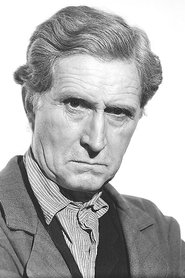

Abraham Lincoln
"Lincoln from prairie lawyer to Ford's Theatre"
Keys: Space play/pause · ←/→ 10s · F fullscreen · M mute · </> speed
About this film
A biopic dramatizing Abraham Lincoln's life through a series of vignettes depicting its defining chapters: his romance with Ann Rutledge; his early years as a country lawyer; his marriage to Mary Todd; his debates with Stephen A. Douglas; the election of 1860; his presidency during the Civil War; and his assassination in Ford’s Theater in 1865.
Cast & crew
More History films
View all →


More from D.W. Griffith
View all →
More about this film
About the production
Release dateSeptember 8, 1930
Budget$1,000,000
Box office$1,500,000
ProductionFeature Productions, United Artists
Filmed inHollywood, California, RKO Studios
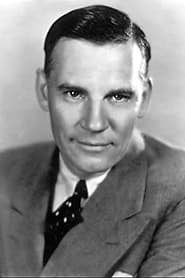
This was D.W. Griffith's first sound film, marking his transition from silent to talking pictures. The production faced significant challenges as Griffith, accustomed to the silent era, had to adapt his directing style for sound technology. Walter Huston spent months researching Lincoln's mannerisms and speech patterns, even studying photographs and historical documents to perfect his portrayal. The film's battle sequences were groundbreaking for their time, using hundreds of extras and innovative camera techniques to create realistic Civil War scenes.
Themes
Themes & topics
Historical background
Made during the silent-to-sound transition near 1930, Abraham Lincoln reached audiences through theatrical programs, fairground booths, or specialized distribution channels typical of its generation. A biopic dramatizing Abraham Lincoln's life through a series of vignettes depicting its defining chapters: his romance. Historians now read such works for what they reveal about production methods, national taste, and the expanding vocabulary of screen narrative.
Why this film matters
Archivists and programmers still screen Abraham Lincoln when tracing how popular entertainment evolved. Its subject—a biopic dramatizing abraham lincoln's life through a series of vignettes depicting its defining—gives later viewers tangible evidence of what drew crowds in its day. Home video, restorations, and festival sidebars keep the title circulating among students of film history.
Making of
The production of 'Abraham Lincoln' represented a critical moment in cinema history as one of the last great silent film directors transitioned to sound. D.W. Griffith, initially skeptical of talkies, was persuaded by United Artists to make his first sound film. The director's perfectionism clashed with the technical limitations of early sound recording, leading to numerous retakes and frustrations. Walter Huston immersed himself completely in the role, spending hours in libraries studying Lincoln's life and mannerisms. The famous Ford's Theater assassination scene required meticulous planning, with the crew recreating the theater's exact dimensions and the presidential box where Lincoln was shot. The film's battle sequences were filmed on a massive scale, with hundreds of extras and horses creating what were then considered the most realistic Civil War battle scenes ever put on film.
What critics said
Original trade coverage treated Abraham Lincoln as routine program filler rather than a landmark production—typical of steady studio output. Later criticism emphasizes preservation, stylistic comparison with contemporaries, and whatever cast or crew names later gained prominence. Contemporary writing is mostly historical: assessing completeness, influence, and place in a director's or studio's catalog.
Did you know?
- This was D.W. Griffith's first sound film after directing silent classics like 'The Birth of a Nation' and 'Intolerance'
- Walter Huston's portrayal of Lincoln was so convincing that he was typecast in historical roles for years afterward
- The film was originally intended to be even longer, with additional scenes about Lincoln's early childhood that were cut during editing
- Griffith reportedly struggled with the new sound technology, often forgetting that microphones could pick up background noises
- The Ford's Theater set was an exact replica, built to scale based on historical photographs and architectural drawings
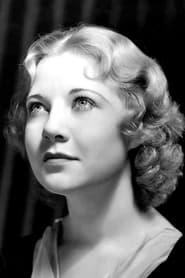
- Una Merkel, who played Ann Rutledge, was only 22 years old during filming despite playing a character meant to be in her late teens
- The film's premiere was attended by President Herbert Hoover and other Washington dignitaries
- Many of the extras in the Civil War battle scenes were actual Civil War veterans, though they would have been in their 80s and 90s
- The film's success led to Griffith being offered a contract for more sound films, though this would be his last major success
- Historical accuracy consultants were hired to ensure costumes, props, and dialogue were authentic to the 1860s period
Awards & recognition
- Academy Award for Best Actor nomination for Walter Huston
- Academy Award for Best Writing nomination for Stephen Vincent Benet
- Photoplay Magazine Medal of Honor for D.W. Griffith
Visual style
The film's cinematography, handled by Karl Freund and Hendrik Sartov, blended Griffith's silent-era visual style with the new requirements of sound filming. The camera work was more restrained than Griffith's earlier epics, partly due to the bulky sound equipment that limited mobility. The battle sequences employed innovative techniques including camera cranes and multiple angles to create dynamic action scenes. The Ford's Theater assassination scene was particularly notable for its use of deep focus and carefully composed shots that built tension while maintaining historical accuracy. The film's lighting techniques, especially in interior scenes, demonstrated the more sophisticated possibilities of sound-era cinematography.
Innovations
As Griffith's first sound film, 'Abraham Lincoln' showcased several technical innovations in early sound cinema. The production team developed new microphone placement techniques to capture dialogue while maintaining visual composition. The battle sequences featured pioneering sound mixing, combining multiple audio tracks to create realistic combat sounds. The film also experimented with location sound recording, though most scenes were shot on soundstages due to technical limitations. The recreation of Ford's Theater required innovative set design that accommodated both visual authenticity and sound recording needs. These technical achievements, while rudimentary by modern standards, represented significant advances in early sound filmmaking.
Music
The musical score was composed by Louis Silvers, one of the pioneers of film music composition. The soundtrack featured period-appropriate songs including 'Dixie' and 'Battle Hymn of the Republic,' strategically placed to enhance historical authenticity. Silvers incorporated folk melodies of the 1860s alongside original compositions that captured the emotional tone of Lincoln's life journey. The sound design was innovative for its time, particularly in the battle sequences where the team created realistic cannon fire and rifle sounds using early recording techniques. The film's use of music to underscore emotional moments established conventions that would influence historical dramas for decades.
What audiences thought
The film was a moderate commercial success, particularly in the American heartland where Lincoln remained a revered figure. Audiences responded positively to Huston's performance and the film's patriotic themes during a period of national crisis. Many viewers appreciated the film's educational value, with schools organizing field trips to see the historical epic. However, the film didn't achieve the blockbuster status of some other 1930 releases, partly due to competition from more contemporary stories that appealed to Depression-era audiences seeking escapism rather than historical reflection.
Film connections
Influenced by
- The Birth of a Nation
- Griffith's earlier epic style)
- Intolerance
- multi-narrative structure), Stage plays about Lincoln, Historical paintings and photographs of the period]
- influencedFilms
Where to watch
- Internet Archive: https://archive.org/details/abraham_lincoln
- YouTube: https://www.youtube.com/watch?v=YL-s4UoJc_8
- Wikimedia Commons: https://commons.wikimedia.org/wiki/File:Abraham%20Lincoln%20(D.%20W.%20Griffith%2C%201930).webm
- Dailymotion: https://www.dailymotion.com/video/x8hc3ef