


Across to Singapore
"the carefree youngest son of a seafaring family"
Keys: Space play/pause · ←/→ 10s · F fullscreen · M mute · </> speed
About this film
In 1857, Joel Shore, the carefree youngest son of a seafaring family, has a flirtatious friendship with Priscilla Crowninshield, and he eventually falls in love with her. However, unbeknownst to him, Priscilla has been betrothed to Joel's much older brother, Mark. The wedding is announced in church as a surprise, and Joel and Priscilla are both shocked, with Priscilla refusing to kiss Mark after the betrothal ceremony.
Cast & crew
More films like this
More Adventure films
View all →



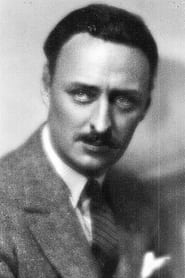
More from William Nigh
View all →

More about this film
About the production
Release dateApril 7, 1928
Box officeModerately successful for its time, though exact figures are not documented in available records
ProductionMetro-Goldwyn-Mayer (MGM)
Filmed inMGM Studios, Culver City, California, Various coastal locations in California for ocean scenes
This film was produced during the transitional period between silent and sound films. The ocean sequences were particularly challenging to film, requiring the use of studio water tanks and miniature ships for some shots. Joan Crawford was still relatively new to MGM when cast, and this film helped establish her as a rising star. The production utilized some of MGM's most elaborate sets for the Singapore sequences, which were constructed on the studio backlot.
Themes
Brotherhood and family loyaltyBetrayal and redemptionJustice and honorThe dangers of the seaCultural exoticism
Themes & topics
ship captainabandonmentSingaporebetrayalmaritime adventurebrother relationshipjustice questsilent filmexotic locationfamily honor
Historical background
Across to Singapore (1928) emerged during the silent-film era. In 1857, Joel Shore, the carefree youngest son of a seafaring family, has a flirtatious friendship with Priscilla Crowninshield, and he eventually falls in love with her. Archival records and catalog entries help place the work within film-history surveys of the period.
Why this film matters
Preserved under Wikidata ID Q1540341, Across to Singapore is valued as a screen drama within catalog and archive collections. Wikipedia's "Across to Singapore" entry connect it to broader histories of cinema exhibition and restoration.
Making of
The production faced significant challenges in creating realistic maritime scenes without the benefit of modern special effects. The crew built elaborate water tanks at MGM Studios and used a combination of full-sized vessels and miniature models. Director William Nigh worked closely with cinematographer Oliver T. Marsh to create atmospheric lighting that enhanced the exotic Singapore settings. Joan Crawford, still early in her career, was reportedly nervous working with established star Ramon Novarro but received guidance from both him and the studio. The film's editing was particularly important in creating tension during the ocean sequences, with intertitles carefully crafted to maintain narrative flow in the silent format.
What critics said
Survival status shapes reception: Across to Singapore is discussed mainly in preservation and film-history literature rather than in wide contemporary review columns.
Did you know?
- This was Joan Crawford's first leading role at MGM, though she had appeared in smaller parts before
- Ramon Novarro was one of MGM's biggest stars at the time, following the success of 'Ben-Hur' (1925)
- The film was released just as the transition to sound films was beginning, making it one of the last major silent adventures
- Ernest Torrence, who played the brother, was a Scottish actor known for his imposing presence in silent films
- The Singapore sequences were filmed entirely on MGM's backlot, as foreign location shooting was rare and expensive in 1928
- Director William Nigh was a prolific filmmaker who directed over 100 films in his career
- The film's title was sometimes marketed as 'Across to Singapore: A Romance of the Seven Seas'
- Some of the maritime footage was reused from earlier MGM productions to save costs
- The film was adapted from a story by Charles E. Scoggins
- Joan Crawford and Ramon Novarro would not work together again in their careers
Visual style
Oliver T. Marsh's cinematography employed the sophisticated lighting techniques that MGM was known for during this period. The film features dramatic high-contrast lighting for the nighttime ocean scenes, creating a sense of danger and mystery. The Singapore sequences utilize rich, textured lighting to evoke an exotic atmosphere, with careful attention to shadows and highlights to enhance the dramatic tension. The maritime photography required innovative solutions for filming on water, including the use of multiple camera angles and carefully choreographed ship movements. The visual style emphasizes the grand scale of the adventure while maintaining intimate character moments.
Innovations
The film demonstrated MGM's technical prowess in creating realistic maritime effects during the silent era. The production team developed innovative techniques for simulating ocean storms using water tanks, wind machines, and carefully timed camera movements. The miniature ship sequences were particularly advanced for their time, seamlessly integrated with full-sized footage. The film also showcased MGM's expertise in set construction, with the Singapore street scenes representing some of the most elaborate studio-built exteriors of 1928. The editing techniques used to create tension during the action sequences were considered sophisticated for the period.
Music
As a silent film, 'Across to Singapore' would have been accompanied by live musical performances in theaters. The original score was likely composed by MGM's music department and distributed to theater orchestras. The music would have featured nautical themes, romantic melodies for the dramatic scenes, and suspenseful motifs during the adventure sequences. Large urban theaters might have employed full orchestras, while smaller venues used piano or organ accompaniment. No original soundtrack recordings survive, as was typical for silent films of this era.
Famous quotes
A man's honor is worth more than his life!
The sea shows no mercy to those who betray their own.
In Singapore, truth is as rare as honest men.
Memorable scenes
- The dramatic sequence where Finch abandons Captain Mark in Singapore harbor during a storm
- Joel's emotional confrontation with the townspeople who believe him a traitor
- The climactic showdown in Singapore where Joel exposes Finch's treachery
- The perilous ocean voyage as Joel returns to Singapore to find his brother
What audiences thought
The film was moderately successful with audiences of its time, particularly appealing to fans of adventure films and Ramon Novarro's growing fanbase. The exotic Singapore setting and maritime adventure elements resonated with 1920s audiences hungry for escapist entertainment. Joan Crawford's performance attracted attention and helped build her early following. However, the film's release during the transition to sound meant it had a relatively short theatrical lifespan compared to earlier silent films. Today, it's primarily viewed by silent film enthusiasts and classic cinema scholars rather than general audiences.
Film connections
Influenced by
- Earlier maritime adventure films of the 1920s
- The tradition of silent film melodramas
- MGM's formula for adventure productions
- Literary traditions of sea stories and brotherhood narratives
This film influenced
- Later maritime adventure films of the early sound era
- MGM's subsequent adventure productions
- Films featuring similar brother betrayal themes
Film restoration
The film survives in complete form and has been preserved by film archives. Prints are held by major film institutions including the Library of Congress and the UCLA Film & Television Archive. The film exists in various 35mm and 16mm copies, though some show signs of deterioration typical of nitrate film from this era. It has not received a major restoration but remains viewable for archival and research purposes.
Where to watch
- Available for viewing at film archives and specialized cinema institutions
- Occasionally screened at silent film festivals and classic cinema events
- Some private collector copies may exist but are not commercially available
- Not currently available on major streaming platforms or home video formats