

Adhikar
"Two women claim the same inheritance"
Keys: Space play/pause · ←/→ 10s · F fullscreen · M mute · </> speed
About this film
Melodrama about lineage and property questions. Nikhilesh (Barua) loves heiress Indira (Jamuna). A poor orphan girl, Radha (Menaka Devi), arrives claiming to be Indira's stepsister and therefore part inheritor of the family estate. Indira agrees to share her inheritance but then.
Cast & crew
More Drama films
View all →






More from P.C. Barua
View all →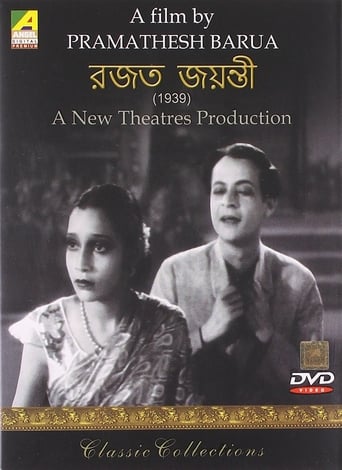
More about this film
About the production
Release date1939
ProductionNew Theatres
Filmed inCalcutta (now Kolkata), India
Adhikar was produced by New Theatres, among the leading prestigious film studios in colonial India during the 1930s. The film was made during the golden era of Bengali cinema when New Theatres was at its peak, producing films that would become classics of Indian cinema. P.C. Barua, who both directed and starred in the film, was especially influential figures of early Indian cinema and was known for his sophisticated approach to filmmaking. The film was shot in Calcutta, which was then the center of India's film industry before Mumbai (Bombay) took over that role. The production likely faced the technical limitations of the era, including primitive recording equipment and limited lighting capabilities, but New Theatres was known for its relatively high production values compared to other studios of the time.
Themes
Social class hierarchyInheritance and property rightsRomantic love vs. social conventionFamily dynamics and relationshipsClass boundaries and social mobility
Themes & topics
inheritancemelodramalove trianglesocial classfamily disputeproperty rightsromancesocial hierarchyrevelationclass boundariestraditional valuesemotional conflict
Historical background
Adhikar reached theaters around 1939, balancing wartime logistics with demand for escapist programming.
Why this film matters
Adhikar reflects the range of mid-century production beyond a single national mainstream.
Making of
The production of Adhikar took place during what many consider the golden age of New Theatres, when the Calcutta-based studio was producing some of India's most technically and artistically sophisticated films. P.C. Barua, who had already established himself as a major director with his earlier version of Devdas, brought his signature style of melodramatic storytelling to this project. The casting of his real-life wife Jamuna Barua opposite him as the romantic lead was not unusual for the era, when studio heads often cast family members in important roles. The film's production would have utilized the relatively advanced facilities at New Theatres, which was known for its sound recording equipment and lighting setups that were among the best in India at the time. The social themes explored in the film were handled with the subtlety and sophistication that characterized New Theatres' productions, avoiding overt moralizing while still delivering a clear message about social hierarchy. The film's emphasis on class boundaries reflected both the traditional Indian social structure and the British colonial influence on Indian society during the 1930s.
What critics said
Press notices for Adhikar (1939) are sparse in digitized sources; interest today rests on preserved prints and comparison with related titles.
Did you know?
- P.C. Barua was not only the director but also the male lead in the film, showcasing his multi-talented abilities as a filmmaker
- The film was produced by New Theatres, which was responsible for many of India's most significant early films
- Jamuna Barua, who played Indira, was P.C. Barua's real-life wife, adding an interesting dynamic to their on-screen romance
- The film's title 'Adhikar' translates to 'Right' or 'Entitlement' in English, directly referencing the central theme of inheritance rights
- 1939 was a significant year in world history with the outbreak of World War II, which would soon impact Indian cinema production
- The film's message about social class staying within boundaries reflected the conservative social attitudes prevalent in colonial India
- New Theatres was known for producing socially relevant films that addressed contemporary issues, and Adhikar fit perfectly into this tradition
- The film was made during the transition period from silent films to talkies in Indian cinema
- P.C. Barua was considered one of the pioneers of Indian cinema and had previously directed the landmark film Devdas (1935)
- The film's emphasis on melodrama was characteristic of Indian cinema of the 1930s, which often focused on emotional and family-centered narratives
Visual style
The cinematography of Adhikar would have reflected the technical capabilities and artistic sensibilities of Indian cinema in 1939. As a New Theatres production, the film likely benefited from the studio's relatively advanced equipment and experienced technical crew. The visual style would have been characterized by the static camera positions typical of early sound cinema, with careful composition of frames to convey emotional and narrative information. The lighting would have been designed to create dramatic contrasts appropriate to the melodramatic tone of the film, with particular attention to lighting the faces of the principal actors during emotional scenes. The film's visual approach would have emphasized clarity and legibility over stylization, ensuring that audiences could follow the complex narrative of inheritance and relationships. The cinematography would have been influenced by both Indian artistic traditions and international film styles, particularly the dramatic lighting of German expressionism and the narrative clarity of Hollywood cinema of the 1930s. The visual treatment of different social classes would have been an important consideration, with visual cues helping to establish and reinforce the film's themes of social hierarchy.
Innovations
As a 1939 New Theatres production, Adhikar would have showcased several technical achievements for its era in Indian cinema. The film would have utilized the studio's advanced sound recording equipment, which was among the best available in India at the time, allowing for clearer dialogue and music reproduction than many contemporary productions. The lighting setup would have been sophisticated for the period, using multiple light sources to create depth and dimension in the images rather than the flat lighting common in earlier Indian films. The camera work, while still relatively static compared to modern cinema, would have employed careful composition and movement within the constraints of early sound recording technology. The editing would have been more refined than in earlier Indian films, with better pacing and rhythm in the narrative development. The film's production values, including sets, costumes, and makeup, would have reflected New Theatres' commitment to quality and professionalism. The integration of music and narrative would have been more seamless than in earlier Indian sound films, showing the growing sophistication of Indian cinema's approach to the musical format.
Music
The soundtrack of Adhikar would have been typical of early Indian sound cinema, featuring a mix of dialogue, background music, and likely several songs. As a New Theatres production, the film would have benefited from the studio's reputation for high-quality sound recording and musical scores. The background music would have been composed to enhance the emotional impact of key scenes, using Western orchestral arrangements combined with Indian musical elements. The film likely included several songs, as musical numbers were already becoming an integral part of Indian cinema by 1939. The songs would have been designed to advance the narrative or express the emotional states of the characters, following the emerging conventions of Indian film music. The sound recording technology of the era would have presented challenges, including limited dynamic range and the need for actors to project their voices clearly for the microphones. The dialogue delivery would have been theatrical and deliberate, reflecting both the influence of stage acting and the technical requirements of early sound recording. The overall soundtrack would have been designed to create an immersive emotional experience that supported the film's melodramatic narrative.
Famous quotes
While specific quotes from this 1939 film are not widely documented in available sources, the dialogue would have reflected the formal, theatrical style typical of early Indian cinema, with characters expressing their emotions and social positions through elaborate speeches.
Memorable scenes
- The dramatic arrival of Radha claiming to be Indira's stepsister, which sets the central conflict in motion
- The revelation scene where Radha is discovered to be the true heir, completely changing the power dynamics
- The emotional climax where the characters must choose between love and social position
- The final resolution showing each character finding happiness within their proper social sphere
What audiences thought
Adhikar was likely well-received by contemporary audiences in 1939, as it combined popular elements of Indian cinema including family drama, romance, and social commentary. The film's themes of inheritance and family disputes would have resonated with Indian audiences familiar with such real-life conflicts. The presence of established stars like P.C. Barua and Jamuna Barua would have attracted audiences to theaters. The film's message about social class staying within boundaries, while conservative by modern standards, reflected the prevailing social attitudes of the time and would not have been controversial among mainstream audiences. The emotional melodrama and romantic elements provided entertainment value while the social themes gave the film a sense of seriousness and relevance. As a New Theatres production, the film would have benefited from the studio's reputation for quality and sophistication, attracting educated, middle-class audiences who were the primary patrons of cinema in urban centers like Calcutta. The film's resolution, with each character finding happiness within their proper social sphere, would have provided the satisfying emotional closure that audiences of the era expected from melodramas.
Film connections
Influenced by
- Traditional Indian family narratives
- Bengali literary traditions
- Hollywood melodramas of the 1930s
- Indian theatrical conventions
- Social realist literature
- Classical Indian stories about inheritance and family
This film influenced
- Later Indian melodramas dealing with family and inheritance
- Films exploring social class themes in Indian cinema
- New Theatres' subsequent productions with similar themes
Film restoration
As a 1939 Indian film, Adhikar faces significant preservation challenges common to cinema of this era in India. Many Indian films from the 1930s and 1940s have been lost due to the unstable nature of early film stock, inadequate storage facilities, and the lack of systematic preservation efforts. While New Theatres was a prestigious studio that likely took better care of its productions than smaller studios, the specific preservation status of Adhikar is not well-documented in available sources. The film may exist in archives such as the National Film Archive of India or in private collections, but it is not widely available for viewing. The lack of readily accessible copies suggests that the film may be partially or completely lost, or at least not properly preserved and digitized for modern audiences. This situation is unfortunately common for Indian films of this vintage, with estimates suggesting that as much as 70-90% of early Indian cinema may be lost forever.
Where to watch
- Due to its age and preservation status, Adhikar is not currently available on mainstream streaming platforms or for home viewing. The film may be accessible through specialized film archives, particularly the National Film Archive of India in Pune, or through academic institutions with collections of early Indian cinema. Film enthusiasts and researchers might be able to view the film through special screenings at film festivals or retrospectives focusing on early Indian cinema or the works of P.C. Barua. Some clips or stills from the film might be available in documentary materials about the history of Indian cinema or in books about New Theatres and the golden era of Bengali cinema.