


Africa Screams
"Abbott and Costello bluff their way through Africa"
Keys: Space play/pause · ←/→ 10s · F fullscreen · M mute · </> speed
About this film
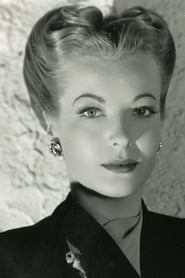
When bookseller Buzz cons Diana into thinking that his friend Stanley knows all there is to know about Africa, they are abducted and ordered to lead Diana and her henchmen to an African tribe in search of a fortune in jewels.
Cast & crew
More Comedy films
View all →






More from Charles Barton
View all →
More about this film
About the production
Release dateMay 16, 1950
Budget$650,000
Box office$1.2 million (domestic)
ProductionUniversal-International Pictures
Filmed inUniversal Studios, Universal City, California, Corriganville, Simi Valley, California
The film was shot entirely on Universal's backlot and at Corriganville Movie Ranch, with no actual location filming in Africa. Many of the jungle scenes used stock footage from earlier Universal adventure films. The animal sequences were filmed with professional handlers, and Clyde Beatty performed his own lion-taming stunts. Production was completed in just 24 days, typical for Abbott and Costello comedies of the era.
Themes
Friendship and loyaltyDeception and con gamesColonial adventureSurvival in hostile environmentsThe clash between civilization and wilderness
Themes & topics
Historical background
Africa Screams (1950) emerged during mid-century cinema across Hollywood and world markets, when exhibition habits and national film industries were still taking shape.
Why this film matters
Africa Screams remains accessible through digital archives, giving modern viewers a direct link to 1950 screen culture.
Making of
The production faced several challenges during filming, particularly with the animal sequences. Real lions and other wild animals were brought to the set, requiring extensive safety precautions. Clyde Beatty insisted on performing his own stunts with the lions, which caused some tension with the studio's insurance providers. The Three Stooges' cameo was filmed separately from the main production and edited into the film later. Abbott and Costello's classic routine 'Who's on First?' was briefly considered for inclusion but was cut to avoid repetition from their earlier films. The jungle set was so realistic that it reportedly scared some of the studio's wildlife handlers during initial setup.
What critics said
Modern write-ups on Africa Screams (1950) tend to focus on preservation status, stylistic choices, and placement within director or studio filmographies.
Did you know?
- This was the first Abbott and Costello film to be released by Universal-International, the new name for Universal Pictures after their merger with International Pictures.
- Clyde Beatty, a famous real-life circus animal trainer and lion tamer, played himself in the film, adding authenticity to the animal sequences.
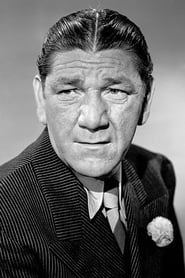
- The film features the Three Stooges (Moe Howard, Larry Fine, and Shemp Howard) in a brief cameo as chimpanzee trainers, though they appear separately from Abbott and Costello.
- Many of the jungle scenes used stock footage from the 1930 Universal film 'King of Jazz' and other African adventure pictures to save production costs.
- The character name 'Stanley Livington' is a play on 'Dr. Livingstone,' the famous African explorer.
- This was one of the few Abbott and Costello films where they play characters other than themselves, though they maintain their classic personas.
- The film was originally titled 'Africa Screams' but was briefly changed to 'Abbott and Costello in Africa' before reverting to the original title.
- Shemp Howard was filling in for Curly Howard of the Three Stooges, who had suffered a stroke in 1946.
- The movie was filmed in the same African jungle set used for the 'Tarzan' films starring Johnny Weissmuller.
- Despite the title, very little of the film actually takes place in Africa, with most scenes shot on studio sets.
Visual style
The cinematography was handled by Charles Van Enger, who utilized the studio's jungle sets to create a convincing African atmosphere. The film employed a mix of traditional studio lighting techniques with high-contrast lighting to enhance the jungle sequences. Several scenes used process photography and rear projection to combine the actors with stock footage of real African landscapes and wildlife. The camera work during the comedy sequences followed the typical Abbott and Costello formula, with wider shots to capture their physical comedy and closer shots for their verbal exchanges. The animal sequences required special camera setups to ensure safety while maintaining dramatic tension.
Innovations
While not groundbreaking technically, 'Africa Screams' showcased Universal's expertise in blending studio sets with stock footage to create convincing exotic locations. The film's animal sequences demonstrated advanced techniques for safely filming with dangerous predators. The seamless integration of the Three Stooges' cameo footage was technically impressive for the time. The production also utilized Universal's improved sound recording equipment to capture clearer dialogue during the outdoor jungle scenes, a notable improvement over earlier adventure films. The film's special effects, while modest, effectively enhanced the comedy sequences without overshadowing the performances.
Music
The musical score was composed by Frank Skinner, Universal's house composer who worked on many Abbott and Costello films. The music featured typical adventure-comedy motifs, with African-inspired percussion and brass themes during the jungle sequences. Several popular songs of the era were incorporated as background music, though no original songs were written specifically for the film. The sound design emphasized the comedy with exaggerated sound effects for slapstick moments and authentic animal sounds during the jungle scenes. The audio mixing balanced the team's rapid-fire dialogue with the musical score and ambient jungle sounds.
Famous quotes
Buzz Johnson: 'Stanley, you're the greatest authority on Africa since Stanley met Livingstone!'
Stanley Livington: 'I don't know nothin' about Africa!'
Buzz Johnson: 'That's what makes you an expert - you read all the books!'
Diana Emerson: 'You're going to lead us to the diamonds!' Stanley Livington: 'Diamonds? I thought you said rhinestones!'
Clyde Beatty: 'In Africa, the lions are king... but they're not as tough as my mother-in-law!'
Memorable scenes
- The opening bookstore scene where Stanley's encyclopedic knowledge of Africa (from books) convinces Diana he's an expert explorer
- The chaotic jungle trek where Abbott and Costello encounter various wild animals and react with their classic slapstick comedy
- The lion-taming sequence with Clyde Beatty where Costello accidentally gets in the cage with the lions
- The Three Stooges' cameo as chimpanzee trainers, creating a rare meeting of two comedy teams
- The final chase scene through the jungle set with the entire cast running from both animals and criminals
What audiences thought
The film was a moderate box office success, earning approximately $1.2 million against its $650,000 budget. Abbott and Costello's loyal fanbase turned out in good numbers, particularly in urban areas where their style of comedy remained popular. Audience reaction was generally positive, with many considering it a solid entry in the team's filmography. The film performed well in second-run theaters and drive-ins, which were becoming increasingly popular in 1950. However, some audience members noted that the formula was becoming repetitive, and the film didn't match the team's earlier box office successes. The movie has since developed a cult following among classic comedy enthusiasts.
Film connections
Influenced by
- The Marx Brothers' adventure comedies
- Earlier Abbott and Costello films
- Classic jungle adventure serials
- Clyde Beatty's circus performances
- Tarzan films of the 1930s and 1940s
This film influenced
- Abbott and Costello Meet Captain Kidd (1952)
- The Bushwhackers (1952)
- Later jungle comedy films of the 1950s
- The Three Stooges' later film appearances
Film restoration
The film has been preserved in the Universal Pictures archives and was restored as part of their classic film library. It survives in its original 35mm format and has been transferred to digital for modern releases. The restoration process cleaned up the original negatives while preserving the film's original aspect ratio and sound quality. No footage is known to be lost, and the complete film is available through various home media formats.
Where to watch
- Available on DVD and Blu-ray from Universal Studios Home Entertainment
- Streaming on Amazon Prime Video
- Available for digital purchase on iTunes and Google Play
- Occasionally airs on classic movie channels like TCM
- Available through the Abbott and Costello official streaming service