
Amrit Manthan
"Cult in the dungeon — king forbids blood"
Keys: Space play/pause · ←/→ 10s · F fullscreen · M mute · </> speed
About this film
King Krantivarma bans human sacrifice as Chandika cult plots in dungeon ritual opening. Amrit Manthan (1934) is early Indian talkie horror-reform spectacle with striking camera movement.
Cast & crew
More films like this
More Drama films
View all →







More from Shantaram Rajaram Vankudre
View all →

More about this film
About the production
Release date1934
ProductionPrabhat Film Company
Filmed inKolhapur, Maharashtra, India
Amrit Manthan was especially ambitious productions of early Indian cinema, featuring innovative camera techniques and elaborate set designs. The film was made during a period when Prabhat Film Company was establishing itself as a major studio in Indian cinema. The production faced challenges in creating the atmospheric temple sets and dungeon scenes that required sophisticated lighting techniques for the time. Director V. Shantaram was known for his perfectionism and spent considerable time rehearsing the complex circular tracking shots that open the film.
Themes
Religious reform and rationalismConflict between tradition and modernityThe nature of true devotionSocial progress versus fundamentalismIndividual conscience versus collective belief
Themes & topics
culttemplehuman sacrificereligious reformassassination plotkingpriestrationalismfanaticismmoral dilemmasocial progressancient ritualspower struggleconscienceenlightenment
Historical background
Amrit Manthan (1934) belongs to Prabhat Film Company's ambitious early sound experiments.
Why this film matters
Circular track shot in cult scene is cited as technical milestone in Indian cinema history.
Making of
The making of Amrit Manthan was marked by V. Shantaram's visionary approach to filmmaking. He insisted on creating authentic temple environments, hiring actual temple architects to design the sets. The famous circular tracking shot that opens the film was achieved by mounting the camera on a specially constructed circular track, a technical innovation that required weeks of planning. The cast underwent extensive preparation, with Chandramohan studying actual temple priests to perfect his role as the high priest. The film's lighting design was particularly challenging, as Shantaram wanted to create dramatic contrasts between the shadowy temple interiors and the bright royal court scenes. The production team experimented with various lighting techniques, including using multiple light sources to create the flickering torch effects in the dungeon scenes. The film's success led to V. Shantaram being recognized as one of India's most innovative directors.
What critics said
Indian critics marveled at scale; horror-reform mix influenced later mythologicals.
Did you know?
- The film's opening sequence featuring a low-angle circular track movement was revolutionary for Indian cinema in 1934 and is still studied by film students today
- Amrit Manthan was the first Indian film to be shown at an international film festival when it was screened at the Venice Film Festival in 1934
- The film was simultaneously made in both Hindi and Marathi versions, a common practice in early Indian cinema
- Director V. Shantaram used real temple architecture as inspiration for the film's elaborate sets
- The film's themes of religious reform and rationalism were considered quite bold for their time
- Chandramohan, who played the high priest, was one of the highest-paid actors of his era
- The film's success helped establish Prabhat Film Company as one of India's leading studios
- The movie was shot using natural lighting techniques that were innovative for the period
- The cult rituals depicted in the film were based on actual historical practices from Maharashtra
- The film's title 'Amrit Manthan' refers to the Hindu mythological concept of the churning of the ocean of milk, symbolizing the struggle between good and evil
Awards & recognition
- Best Film at the Bombay Film Society Awards (1934)
- Best Director Award for V. Shantaram at the Indian Motion Picture Congress (1934)
Visual style
The cinematography of Amrit Manthan was revolutionary for its time, featuring techniques that were groundbreaking in Indian cinema. The film's opening sequence with a low-angle circular track movement created a dizzying, immersive effect that captured the hypnotic nature of the cult rituals. The cinematographer used dramatic chiaroscuro lighting to contrast the shadowy, mysterious temple interiors with the well-lit rational spaces of the royal court. Deep focus techniques were employed to create depth in the temple scenes, while close-ups were used effectively to convey the emotional intensity of the characters. The film also featured innovative use of camera angles, with low shots emphasizing the power of the high priest and high angles showing the vulnerability of the victims. The lighting design was particularly sophisticated, using multiple light sources to create the flickering torch effects and dramatic shadows that enhanced the film's atmospheric quality.
Innovations
Amrit Manthan achieved several technical milestones in Indian cinema. The film's most notable achievement was the implementation of complex camera movements, particularly the circular tracking shot that opens the movie. The production team constructed special camera rigs to achieve these movements, which were unprecedented in Indian filmmaking at the time. The film also pioneered sophisticated lighting techniques, using multiple light sources to create dramatic effects and shadows. The set design was technically impressive, featuring elaborate temple constructions that were both architecturally authentic and cinematically effective. The film's sound recording was advanced for the period, with clear dialogue and well-balanced music. The makeup and costume design were also noteworthy, creating authentic representations of the period while ensuring visual clarity on screen.
Music
The music for Amrit Manthan was composed by Keshavrao Bhole, one of the pioneering music directors of Indian cinema. The soundtrack featured a blend of traditional Maharashtrian folk music and classical compositions that enhanced the film's dramatic narrative. The songs were used not just for entertainment but to advance the plot and reveal character motivations. The music in the temple scenes was particularly notable for its use of traditional instruments and chanting styles that created an authentic atmosphere. The film's soundtrack was praised for its ability to blend seamlessly with the narrative rather than interrupting it, which was common in musical films of the era. The songs were performed by the actors themselves, with Shanta Apte's renditions being especially appreciated by audiences.
Famous quotes
The goddess does not thirst for blood, but for devotion of the pure heart
True faith needs no sacrifice of the innocent, only the sacrifice of our ignorance
In the light of reason, the shadows of superstition must fade
A king who fears his people's progress is no king at all
The greatest offering to God is a mind free from prejudice
Memorable scenes
- The opening circular tracking shot through the flickering torch-lit temple dungeon, creating a hypnotic, disorienting effect that immediately establishes the film's atmosphere
- The dramatic confrontation between King Krantivarma and the high priest in the royal court, where rationalism and fundamentalism clash in verbal combat
- The assassination sequence where Vishwagupta struggles with his conscience, filmed with expressionistic lighting to emphasize his moral turmoil
- The final temple scene where the truth is revealed, featuring elaborate ritual choreography and dramatic camera movements
- The emotional climax where the king's reforms are vindicated, filmed with bright, hopeful lighting contrasting with earlier dark scenes
What audiences thought
Amrit Manthan was a commercial success upon its release, drawing large audiences in both urban and rural areas. The film's themes of social reform resonated strongly with viewers during the Indian independence movement. Many audience members were particularly impressed by the film's visual spectacle, especially the temple sequences and the innovative camera work. The film ran for several weeks in major cities, an unusual achievement for the period. Audience feedback from the time indicates that the film sparked discussions about religious practices and social reform in communities across India. The film's popularity helped establish Chandramohan as a major star and reinforced V. Shantaram's reputation as a director who could combine entertainment with social messages.
Film connections
Influenced by
- German Expressionist cinema (particularly in lighting and set design)
- Hollywood biblical epics
- Traditional Indian temple architecture and rituals
- Social reform movements of 1930s India
- Mythological stories from Hindu tradition
- Contemporary debates about religious practices
This film influenced
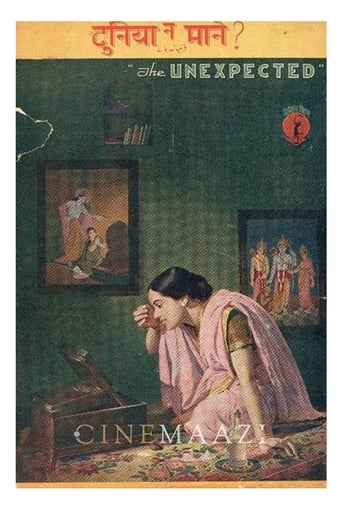
- Later V. Shantaram films including 'Duniya Na Mane' (1937)
- Indian social reform films of the 1930s and 1940s
- Temple-based narratives in Indian cinema
- Films dealing with religious themes in Indian cinema
Film restoration
Amrit Manthan has been partially preserved by the National Film Archive of India (NFAI) in Pune. While complete prints of both Hindi and Marathi versions exist, some deterioration has occurred over the decades. The film underwent restoration efforts in the 1990s, though some scenes remain damaged. The Archives of the Prabhat Film Company also hold original negatives and production materials. The film has been digitized as part of India's cinematic heritage preservation project. Some international archives, including the British Film Institute, hold copies of the film due to its historical significance. The restored version has been screened at various classic film festivals and retrospectives.
Where to watch
- National Film Archive of India viewing facilities in Pune
- Selected classic film festivals and retrospectives
- Academic film studies programs with access to Indian cinema archives
- Museum screenings at the National Museum of Indian Cinema in Mumbai
- Online streaming platforms specializing in classic Indian cinema (availability may vary by region)