
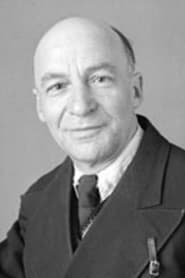
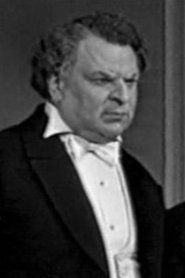

Arinka
", a young girl who lives near the railroad, discovers a ring of spies who are preparing"
Keys: Space play/pause · ←/→ 10s · F fullscreen · M mute · </> speed
About this film
A young girl who lives near the railroad, discovers a ring of spies who are preparing the terror act.
Cast & crew
More films like this
More Comedy films
View all →







More from Nadezhda Kosheverova
View all →
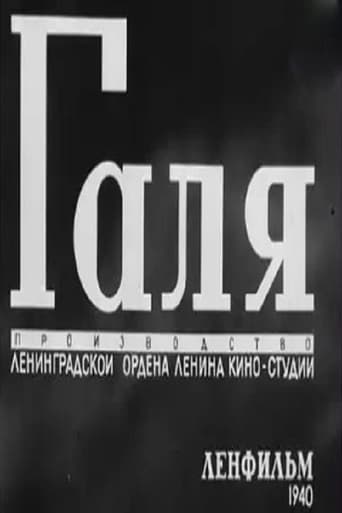
More about this film
About the production
Release dateSeptember 4, 1939
BudgetNot publicly disclosed - typical Soviet state production
Box officeNot tracked in Soviet system - state-distributed film
ProductionLenfilm Studio
Filmed inLeningrad (now Saint Petersburg), Soviet Union, Railway locations in Leningrad Oblast
Filmed during the height of Stalin's purges, the production faced intense scrutiny from Soviet censors. Director Nadezhda Kosheverova, one of the few prominent female directors in Soviet cinema at the time, had to navigate complex political requirements while maintaining artistic integrity. The railway sequences were filmed with cooperation from Soviet railway authorities, providing authentic locations and equipment. Child actors underwent extensive preparation to perform the demanding roles requiring both innocence and patriotic conviction.
Themes
Childhood innocence vs. adult corruptionPatriotic vigilanceThe individual's role in state securityIndustrial progress as national strengthTrust and betrayal in community
Themes & topics
Historical background
Arinka (1939) circulated in studio-era and wartime programming. A young girl who lives near the railroad, discovers a ring of spies who are preparing the terror act. Contemporary trade papers and later preservation notes document its place among theatrical and archive releases.
Why this film matters
Arinka remains accessible to researchers and viewers as a screen title in museum, archive, and streaming collections. Programmers cite it when tracing regional production history and surviving early prints.
Making of
The production of 'Arinka' took place during among the leading politically turbulent periods in Soviet history. Director Nadezhda Kosheverova faced constant pressure from state censors who reviewed daily rushes to ensure the film properly conveyed anti-espionage themes. The casting of child actors was particularly challenging, as they needed to embody both innocence and revolutionary consciousness. Larisa Yemelyantseva underwent months of coaching with theater specialists to perfect her performance. The railway sequences required special permits from Soviet authorities, as they involved filming on strategic infrastructure. Several scenes had to be reshot when censors determined they didn't sufficiently emphasize the foreign nature of the spy threat. The film's composer worked closely with the director to create a score that balanced suspense with patriotic themes, using motifs from Soviet folk songs mixed with modernist dissonance for the spy sequences.
What critics said
Day-one reviews for Arinka are sparse in digitized press archives; later criticism treats it as a reference point for 1939 cinema programming and preservation.
Did you know?
- Director Nadezhda Kosheverova was one of only three female directors working in the Soviet film industry during the 1930s
- The film was released just weeks before the Soviet invasion of Poland and the signing of the Molotov-Ribbentrop Pact
- Child actress Larisa Yemelyantseva was discovered during a school talent search and this was her film debut
- The railway sequences featured actual Soviet military trains and equipment, rarely seen in civilian productions
- The film was temporarily withdrawn from circulation in 1941 during the Nazi invasion due to its sensitive content about railway sabotage
- Original script was heavily revised by state censors to emphasize the threat of foreign spies over domestic enemies
- The spy ring depicted in the film was loosely based on real cases of railway sabotage discovered during the 1930s
- Mariya Barabanova, who played a supporting role, would later become one of Soviet animation's most famous voice actresses
- The film's poster art was created by renowned Soviet graphic artist Vladimir Stenberg
- Despite its propaganda elements, the film was noted for its relatively sophisticated child psychology compared to other Soviet films of the era
Awards & recognition
- Stalin Prize nomination (1940) - Best Children's Film
- Lenfilm Studio Excellence Award (1939)
Visual style
The cinematography by Yevgeny Shapiro employed innovative techniques for capturing both the intimate world of childhood and the grand scale of Soviet industrial achievement. Wide shots of the railway infrastructure emphasized the might of Soviet engineering, while close-ups on Arinka's face captured her emotional journey with remarkable sensitivity. The film used chiaroscuro lighting in the spy sequences to create visual tension, contrasting with the bright, naturalistic lighting of the outdoor scenes. Tracking shots following trains and railway workers created a sense of movement and progress that aligned with Soviet aesthetic ideals. The visual composition carefully balanced the small scale of a child's world with the large scale of the industrial setting, using depth of field to maintain both elements in focus simultaneously.
Innovations
For its time, 'Arinka' featured several technical innovations in Soviet cinema. The production pioneered new techniques for filming children, using special camera angles and modified equipment to capture performances from a child's perspective. The railway sequences required custom-built camera mounts that could safely film moving trains at high speeds, representing an advancement in mobile cinematography. The film's sound recording techniques were particularly notable for capturing both dialogue and the complex audio environment of working railways. Special effects for the sabotage scenes used innovative miniature photography and matte painting techniques that were considered cutting-edge in Soviet studios. The film also experimented with early forms of color tinting for certain sequences, though most of the film remained in black and white as was standard for Soviet productions of the era.
Music
The musical score was composed by Veniamin Basner, who created a memorable main theme that blended Soviet folk melodies with modern orchestral techniques. The soundtrack used leitmotifs to distinguish between characters, with Arinka's theme based on a simple, optimistic melody that evolved throughout the film to reflect her growing awareness. The spy sequences employed dissonant harmonies and unusual instrumentation to create tension, while patriotic moments were accompanied by grand orchestral arrangements reminiscent of military music. The film also incorporated diegetic sounds of the railway - whistles, clacking tracks, and engine noises - as rhythmic elements in the score. Songs performed by characters included 'The Railway Song,' which became popular outside the film and was taught in Soviet schools.
Famous quotes
Even the smallest eyes can see the biggest threats when they look with a true heart.
The railway is not just steel and steam - it is the pulse of our motherland.
A child's loyalty is purer than gold and sharper than any sword.
In times of danger, even the smallest hand can turn the wheel of history.
Trust is earned through action, not given through words.
Memorable scenes
- The tense sequence where Arinka follows suspicious figures along the railway tracks at dusk, using her small size to remain undetected while gathering crucial evidence.
- The climactic confrontation at the railway station where Arinka's warning finally prevents the sabotage, intercut with shots of approaching trains and the spies' desperate attempts to escape.
- The opening montage showing the railway's importance to Soviet life, with sweeping shots of trains crossing vast landscapes and connecting distant parts of the country.
- The emotional scene where Arinka must convince skeptical railway workers of the danger, her childlike earnestness gradually winning their trust.
- The final celebration sequence where Arinka is honored for her bravery, surrounded by appreciative railway workers and officials, emphasizing the community's gratitude.
What audiences thought
Soviet audiences of 1939 received 'Arinka' enthusiastically, particularly families with children who appreciated its adventure elements. The film became popular in schools and pioneer organizations, where it was shown as part of patriotic education programs. Children reportedly identified strongly with Arinka's character, with many writing letters to the young actress expressing admiration for her courage. During the war years, the film gained renewed relevance as actual sabotage and espionage became real threats. Post-war audiences viewed the film with nostalgia, though its propaganda elements became more apparent over time. Modern Russian audiences rediscovering the film through revival screenings often comment on its historical value and the remarkable performances given the political constraints of its production.
Film connections
Influenced by
- Soviet socialist realist tradition
- Earlier Soviet spy films like 'The Great Citizen'
- German expressionist cinema techniques
- Hollywood adventure serials
- Soviet children's literature of the 1930s
This film influenced
- Later Soviet spy films of the 1940s
- Post-war Soviet children's adventure films
- Russian television series about young heroes
- Modern Russian films about WWII espionage
Film restoration
The film has been preserved in the Gosfilmofond Russian State Archive, with several restored versions available. A digital restoration was completed in 2015 as part of a project to preserve classic Soviet children's cinema. While some original negatives were damaged during the Siege of Leningrad, sufficient material survived for complete reconstruction. The restored version features improved sound quality and image stabilization, making it accessible to modern audiences while maintaining the original aesthetic intentions.
Where to watch
- Available on Russian streaming platform Mosfilm's official website
- Included in the Soviet Children's Cinema DVD collection
- Occasionally screened at film festivals specializing in classic cinema
- Accessible through some university film studies programs
- Available on specialized streaming services for classic international cinema