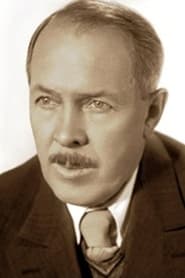
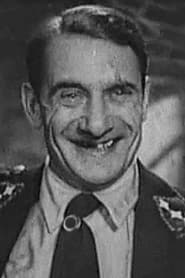
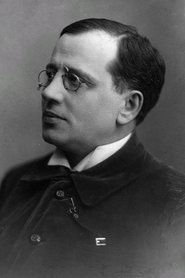
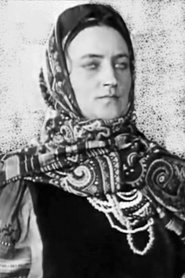

Banda batki Knysha
"Officers posing gang Batka."
Keys: Space play/pause · ←/→ 10s · F fullscreen · M mute · </> speed
About this film
The Red Army liberated a small town, but a unit of White Russians is still operating in the suburbs. A group of Red Army officers are posing as a gang of Batka Knysh to provoke the White Russians before the final blow. Silent film set in 1919 during the Russian Civil War.
Cast & crew
More films like this
More Crime films
View all →


More from Aleksandr Razumnyj
View all →
More about this film
About the production
Release date1924
Box officeNot documented - Soviet cinema of this era operated differently from commercial Western systems
ProductionGoskino
Filmed inMoscow, Soviet Russia
This film was produced during the formative years of Soviet cinema, when the industry was still establishing its production methods and ideological framework. Director Aleksandr Razumnyj was among the pioneering filmmakers working to develop a distinctly Soviet cinematic language. The film was made with limited resources typical of early Soviet productions, relying on practical locations rather than elaborate studio sets. The Civil War setting was particularly relevant in 1924, as the Soviet Union was still consolidating power and processing the recent revolutionary experience.
Themes
Revolutionary struggleDeception and disguiseCivil warfareClass conflictRed Army heroism
Themes & topics
Russian Civil WarRed ArmyWhite RussiansDisguiseGangMilitary operationCounterintelligenceRevolutionBetrayalTactical deception
Historical background
The 1924 premiere of Banda batki Knysha belongs to the broader shift toward narrative features and recognizable genres.
Why this film matters
Reference works on 1924 cinema cite Banda batki Knysha when tracing genre habits and studio economics.
Making of
The production of 'Banda batki Knysha' took place during a crucial transitional period for Soviet cinema. The film industry was still recovering from the disruptions of the revolution and civil war, with filmmakers working with limited equipment and resources. Director Aleksandr Razumnyj, like many of his contemporaries, was essentially inventing Soviet film language as he worked, balancing the need to create entertaining cinema with the ideological requirements of the new Soviet state. The casting decisions reflected both the limited pool of trained actors available in the early Soviet period and the desire to create characters that would resonate with working-class audiences. The film's action sequences and military scenes would have been particularly challenging to stage given the budgetary constraints and technical limitations of the era.
What critics said
Modern retrospectives screen Banda batki Knysha for craft context—pacing, performance, and camera choices of 1924.
Did you know?
- The title translates to 'The Gang of Batka Knysh' in English, with 'Batka' being a term of respect similar to 'father' or 'elder' in Slavic cultures
- Director Aleksandr Razumnyj was one of the early Soviet filmmakers who helped establish the country's film industry after the revolution
- The film is part of a wave of Civil War-themed movies produced in the early 1920s that helped legitimize the Bolshevik victory and create revolutionary mythology
- 1924 was a significant year for Soviet cinema, marking the period before the great explosion of creativity that would come with directors like Eisenstein and Pudovkin
- The film's theme of deception and disguise reflects the actual espionage tactics used during the Russian Civil War
- Like many early Soviet films, it was likely shot on location rather than in studios due to limited facilities and resources
- The character of Batka Knysh represents the type of charismatic bandit figure that was common in post-revolutionary Russia
- This film was produced before the implementation of strict Socialist Realism guidelines that would later govern Soviet artistic production
Visual style
The cinematography of 'Banda batki Knysha' would have employed techniques typical of early Soviet silent cinema, likely using stationary cameras with occasional movement for dramatic effect. The visual style probably emphasized clear compositions to ensure the narrative remained understandable without dialogue. Given the military and action elements, the cinematographer would have faced challenges in staging battle scenes and group movements within the technical limitations of 1924 camera equipment. The film would have used intertitles extensively to convey dialogue and exposition, with the visual storytelling complementing rather than leading the narrative. The contrast between the supposed gang members and their true Red Army identity would have been conveyed through costume changes and subtle visual cues. While not as innovative as the montage techniques being developed by Eisenstein and others during this period, the cinematography would have served the story effectively within the conventions of mainstream Soviet cinema of the time.
Innovations
While 'Banda batki Knysha' was not a groundbreaking technical achievement like some contemporaneous Soviet films, it represented the standard technical capabilities of the Soviet film industry in 1924. The production would have utilized the camera and lighting equipment available through the state-controlled film apparatus. The staging of military scenes and action sequences required coordination of extras and practical effects within the technical constraints of the period. The film's use of disguise and identity deception would have required careful continuity in costume and makeup to maintain the narrative's credibility. The editing would have followed the developing Soviet understanding of film rhythm and pacing, though likely without the advanced montage theory that would soon revolutionize Soviet cinema. The film's survival to the present day, if indeed it has survived, is itself a technical achievement given the fragility of early film stock and the disruptions of Soviet history.
Music
As a silent film, 'Banda batki Knysha' would have been accompanied by live musical performance during its original theatrical run. The specific musical score is not documented, but Soviet theaters typically employed pianists or small ensembles to provide appropriate accompaniment. The music would have followed the conventions of silent film scoring, with dramatic themes for action sequences, patriotic melodies for Red Army scenes, and suspenseful music for moments of deception and tension. In major cities like Moscow, larger orchestras might have been employed for premiere screenings. The musical choices would have reflected Soviet cultural preferences of the era, potentially incorporating revolutionary songs and folk melodies alongside classical selections. The absence of a recorded soundtrack means that modern viewers experience the film differently, with contemporary musicians often providing new scores for silent film screenings.
Famous quotes
No documented quotes survive from this silent film, as intertitles were not typically preserved as quotable dialogue
Memorable scenes
- The transformation sequence where Red Army officers disguise themselves as the gang of Batka Knysh, involving costume changes and adoption of criminal mannerisms to convincingly portray their false identities
What audiences thought
Audience reception data for early Soviet films is scarce, but Civil War-themed movies were generally popular with Soviet audiences in the 1920s. These films resonated with viewers who had lived through the recent conflict and helped them make sense of their experiences. The action elements and clear moral dichotomy between revolutionary heroes and counterrevolutionary villains would have appealed to mass audiences. The film's release during the NEP period meant there was relatively more cultural freedom than in later Stalinist years, allowing for more diverse and entertaining cinema. Working-class audiences, in particular, would have appreciated seeing the Red Army portrayed heroically and the triumph of revolutionary forces. The film's themes of deception and clever tactics would have been satisfying to audiences who identified with the underdog victory of the Bolsheviks against seemingly overwhelming odds.
Film connections
Influenced by
- Earlier Russian Civil War films
- Pre-revolutionary Russian adventure films
- Soviet propaganda traditions
- Military espionage literature
This film influenced
- Later Soviet Civil War epics
- Soviet spy films of the 1930s-1950s
- Red Army propaganda films
Film restoration
The preservation status of 'Banda batki Knysha' is unclear - many early Soviet films have been lost due to the fragility of nitrate film stock and historical disruptions, though some have been preserved in Russian archives or rediscovered in international collections
Where to watch
- Currently not widely available for viewing - potential access through Russian film archives, specialized cinema museums, or academic film collections that preserve early Soviet cinema