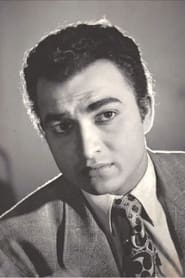

Basant
"Basant Uma and her brother Babul are two downtrodden servants who dream of becoming…"
Keys: Space play/pause · ←/→ 10s · F fullscreen · M mute · </> speed
About this film
Basant Uma and her brother Babul are two downtrodden servants who dream of becoming singing-and-dancing stars on the stage. They attract the attention of the impresario Janaki Prasad, which leads to Uma marrying his spoilt and envious younger brother, Nirmal. A self-absorbed Nirmal sets out to make his own fortune and soon after their wedding, abandons Uma and their infant daughter, which is named Manju.
Cast & crew
More films like this

More Drama films
View all →







More from Amiya Chakrabarty
View all →
More about this film
About the production
Release date1942
BudgetNot documented in available records
Box officeBox office figures from 1942 are not available in contemporary records, though the film was reportedly successful
ProductionBombay Talkies
Filmed inBombay (now Mumbai), India
Basant was produced during the peak of Bombay Talkies' influence on Indian cinema, a studio known for its technical innovations and socially relevant themes. The film was made during World War II, a period that significantly affected film production in India due to resource shortages and censorship. The studio invested heavily in the musical aspects of the film, recording live performances with full orchestral accompaniment, which was technically challenging for the era. The production faced difficulties obtaining film stock and other materials due to wartime restrictions, yet managed to create a visually impressive film that showcased the studio's commitment to quality despite these constraints.
Themes
Female empowerment and its limitationsThe conflict between artistic ambition and domestic responsibilityMale insecurity and possessivenessThe price of fame and successFamily bonds and reconciliation
Themes & topics
singersfameabandonmentabductionfamily reunionmusic industrygender rolessocial mobilityartistic successdomestic lifebrother-sister relationshipmarriage conflictchild custodycareer versus family
Historical background
Basant (1942) emerged during the studio era and wartime cinema. Basant Uma and her brother Babul are two downtrodden servants who dream of becoming singing-and-dancing stars on the stage. Archival records and catalog entries help place the work within film-history surveys of the period.
Why this film matters
Preserved under Wikidata ID Q4866216, Basant is valued as a screen drama within catalog and archive collections. Wikipedia's "Basant (film)" entry connect it to broader histories of cinema exhibition and restoration.
Making of
The making of Basant occurred during a tumultuous period in both Indian cinema and the nation's history. Director Amiya Chakrabarty, who had previously worked as an assistant under the Franz Osten at Bombay Talkies, brought his distinctive understanding of both Indian sensibilities and international cinematic techniques to the project. The casting of Mumtaz Shanti was particularly significant, as she was known for her ability to portray strong female characters while maintaining traditional values. The film's elaborate musical sequences required extensive rehearsals, with the cast often practicing for weeks before shooting. The recording process was particularly challenging, as sound technology in 1942 was still rudimentary, requiring the actors to perform live while being recorded directly to film. The studio's commitment to authenticity meant that many scenes were shot on location in Bombay's bustling streets and neighborhoods, giving the film a remarkable documentary-like quality that captured the urban Indian experience of the 1940s.
What critics said
Critical writing on Basant emphasizes its craft and historical interest. Basant marked the Hindi film debut of Mumtaz Shanti, who was already a celebrated star in Punjabi film industry.
Did you know?
- Basant was one of the last major films produced by Bombay Talkies before the studio's decline in the mid-1940s
- The film's music was composed by Gyan Dutt, who was one of the pioneering music directors of Indian cinema
- Mumtaz Shanti was one of the highest-paid actresses of her time, earning approximately Rs. 5,000 per month during this period
- The film featured the popular song 'Dukh ke din ab beetat nahi,' which became a cultural touchstone of the era
- Basant was released during the Quit India Movement, a critical period in India's independence struggle
- The film's themes of female stardom and domesticity reflected the complex social changes occurring in India during the 1940s
- Director Amiya Chakrabarty was a protégé of Bombay Talkies founder Himanshu Rai
- The film's success helped establish Mumtaz Shanti as one of the leading actresses of the early 1940s
- Basant was among the early Indian films to explore the psychological dimensions of male insecurity in the face of female success
- The film's title 'Basant' means 'Spring' in Hindi, symbolizing renewal and hope amid the characters' struggles
Visual style
The cinematography in Basant, handled by R.D. Mathur, represented some of the finest technical work of early 1940s Indian cinema. Mathur employed innovative lighting techniques to create distinct visual moods for different phases of the story, using soft, romantic lighting for Uma and Nirmal's courtship scenes and harsher, more dramatic lighting for their conflicts. The film made effective use of deep focus photography, allowing for complex compositions that could show multiple characters' reactions simultaneously. The musical sequences featured particularly sophisticated camera work, with Mathur using tracking shots and dynamic angles to enhance the emotional impact of the performances. The street scenes were shot with a documentary-like realism that captured the energy of 1940s Bombay, using natural light whenever possible to create an authentic urban atmosphere. The film's visual style balanced the glamour of the musical numbers with the gritty realism of the dramatic scenes, creating a visual language that supported the film's thematic exploration of the tension between artistic aspiration and domestic reality.
Innovations
Basant showcased several technical innovations that were advanced for Indian cinema in 1942. The film employed sophisticated sound recording techniques that allowed for clearer dialogue and music reproduction than was typical of the period. The editing by Bimal Roy (who would later become a renowned director) featured smooth transitions between scenes and effective use of montage to show the passage of time. The production design by A.K. Choudhury created convincing representations of both lavish concert halls and humble street environments, contributing to the film's visual storytelling. The makeup and costume departments achieved remarkable results in showing the transformation of Uma from a struggling street singer to a glamorous star, using subtle changes in wardrobe and appearance to indicate character development. The film's special effects, though limited by the technology of the time, included some clever camera tricks and double exposure techniques that enhanced the musical sequences. These technical achievements were particularly impressive given the wartime restrictions on film production resources and demonstrated Bombay Talkies' commitment to maintaining high production standards despite challenging circumstances.
Music
The music of Basant was composed by Gyan Dutt, with lyrics written by several prominent poets of the era including D.N. Madhok and Pandit Indra. The soundtrack featured a total of eight songs, each carefully integrated into the narrative to advance the plot or reveal character development. The music blended traditional Indian classical forms with contemporary popular styles, creating a sound that was both sophisticated and accessible. The film's most famous song, 'Dukh ke din ab beetat nahi,' became an anthem of resilience during the difficult war years. Other notable numbers included romantic duets between Uma and Nirmal, and solo pieces that showcased Uma's journey from street performer to celebrated artist. The orchestration was particularly lavish for its time, featuring both Indian classical instruments and Western orchestral elements. The recording process was technically challenging, requiring the singers to perform live during filming as lip-sync technology was not yet available. The soundtrack's success helped establish Gyan Dutt as one of the leading music directors of his generation and influenced the direction of film music in subsequent years.
Famous quotes
Fame is a double-edged sword, my child. It gives you everything but asks for your soul." - Uma's mentor to her early in her career
When a woman shines too bright, some men feel their own light dimming." - Nirmal's internal monologue reflecting his insecurity
The stage is my mother, my child, my everything... until you came into my life." - Uma to Nirmal during their courtship
Art without heart is just technique, and life without art is merely existence." - Uma reflecting on her journey
In the end, we must choose between the applause of strangers and the love of our own." - Uma's final decision
Memorable scenes
- The opening sequence where Uma and Babul perform on the streets of Bombay, showcasing their raw talent and poverty-stricken conditions
- The transformation scene where Uma, now a star, performs in an elaborate concert hall for the first time, representing her rise to fame
- The tense confrontation scene between Uma and Nirmal where his insecurity finally erupts, leading to his abandonment of the family
- The emotional abduction scene where Nirmal takes Manju from her mother, shot with dramatic lighting and frantic camera work
- The final reunion sequence where the family comes together after years of separation, featuring a complex interplay of forgiveness, regret, and reconciliation
What audiences thought
Basant was received enthusiastically by audiences across India, particularly in urban centers where its themes of artistic ambition and family conflict resonated strongly. The film ran for extended periods in major Bombay theaters, with reports of packed houses weeks after its premiere. Contemporary accounts suggest that the film's emotional climax, particularly the scenes involving Manju's abduction and eventual reunion, elicited strong responses from viewers, with many reportedly weeping openly in theaters. The songs from the film became immensely popular, with 'Dukh ke din ab beetat nahi' being hummed across the country and played on radio programs. Audience letters published in film magazines of the time revealed that many viewers, especially women, found Uma's journey deeply relatable, seeing in her struggles a reflection of their own negotiations between personal ambition and family responsibilities. The film's success at the box office was seen as evidence that Indian audiences were ready for more sophisticated, socially relevant content, paving the way for similar films in subsequent years.
Film connections
Influenced by
- Social realist traditions in Indian literature
- Hollywood backstage musicals of the 1930s
- Bengali literary traditions of family drama
- European cinema's psychological character studies
- Traditional Indian performing arts
This film influenced
- Later Indian films exploring female artists' struggles
- 1940s and 1950s Indian cinema dealing with social issues
- Films about the price of fame in Indian cinema
- Movies exploring gender dynamics in post-independence India
Film restoration
The preservation status of Basant is concerning, as is typical for many Indian films from the 1940s. Only partial prints of the film are known to exist, with some reels missing or severely deteriorated. The National Film Archive of India (NFAI) has been attempting to locate and preserve remaining copies, but the nitrate film stock used in 1942 has degraded significantly over time. Some portions of the film survive in private collections, but a complete, restored version is not currently available to the public. The soundtrack has been better preserved, with several songs available in audio archives, but even these suffer from quality issues due to the primitive recording technology of the era. Efforts are ongoing to digitize and restore what remains of this important film, but complete preservation may not be possible given the current state of the surviving materials.
Where to watch
- Unfortunately, Basant is not currently available on any major streaming platforms or for purchase on home video. The film's preservation status makes official distribution difficult. Occasionally, film festivals or special screenings at film archives may show available portions of the film. Some audio recordings of the songs can be found on specialized vintage Indian music websites and archives. Film scholars and researchers may be able to access what remains of the film through the National Film Archive of India or the British Film Institute's collections, but general public access is extremely limited.