
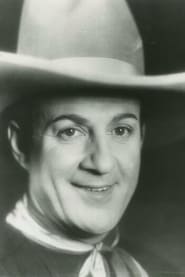

Blind Husbands
"An Austrian military officer and rogue attempts to seduce the wife of a…"
Keys: Space play/pause · ←/→ 10s · F fullscreen · M mute · </> speed
About this film
An Austrian military officer and rogue attempts to seduce the wife of a surgeon. The two men confront each other in a test of abilities that ends surprisingly. Blind Husbands (1919) American silent drama film written and directed by Erich von Stroheim.
Cast & crew
More Romance films
View all →



More from Erich von Stroheim
View all →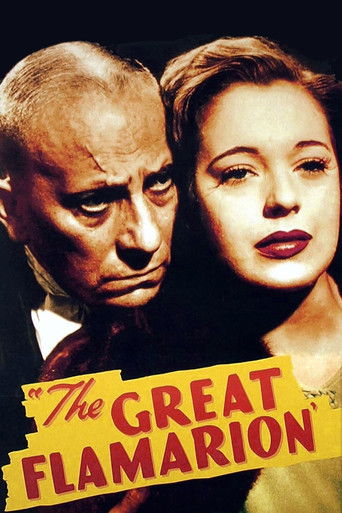
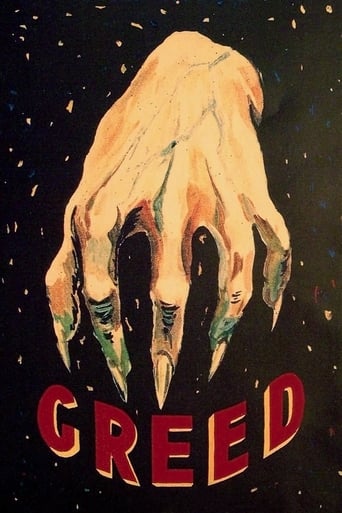
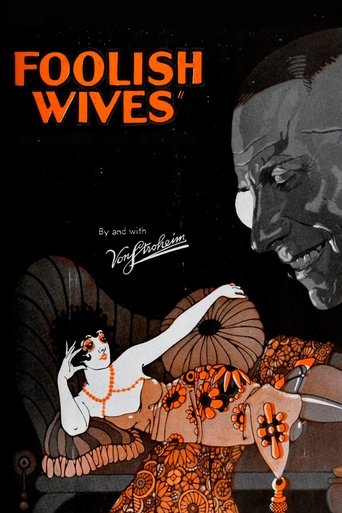
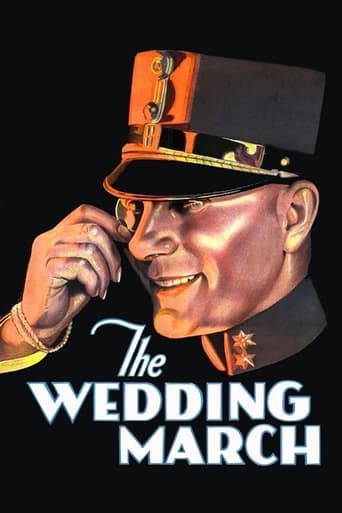
More about this film
About the production
Release dateAugust 17, 1919
Budget$100,000
Box officeApproximately $500,000 (successful for its time)
ProductionUniversal Film Manufacturing Company, Blind Husbands Productions
Filmed inTahoe, California, Sierra Nevada mountains, Universal Studios backlot
Erich von Stroheim insisted on filming on location in the Sierra Nevada mountains despite studio objections, requiring cast and crew to endure harsh conditions at high altitudes. He demanded absolute authenticity, using real mountain climbing equipment and hiring professional climbers as stunt doubles. The production was notorious for going over budget and schedule due to von Stroheim's perfectionism and his tendency to shoot excessive footage. Universal initially wanted to fire him but was impressed by the dailies. The film's original title was 'The Pinnacle' before being changed to 'Blind Husbands.'
Themes
Marital neglectTemptation and seductionMasculine rivalryNature vs. civilizationPsychological manipulation
Themes & topics
adulterymountain climbinglove trianglealpsmilitary officersurgeonvacationseductioncompetitionmarriage crisisAustriapsychological dramamelodramarivalrytemptation
Historical background
Released in 1919 during the silent era's formative years, Blind Husbands reached audiences when exhibitors were still defining programming conventions. The narrative hook—An Austrian military officer and rogue attempts to seduce the wife of a…—reflects what contemporary producers thought would draw viewers.
Why this film matters
Blind Husbands remains discussed by archivists tracing how screen stories of its period represented work, desire, conflict, and social order. Its central situation—An Austrian military officer and rogue attempts to seduce the wife of a…—still prompts questions about genre conventions and audience expectations.
Making of
The production of 'Blind Husbands' was marked by von Stroheim's perfectionism and conflicts with Universal Studios. He insisted on filming in actual mountain locations, forcing the cast and crew to work in extreme weather conditions. Von Stroheim would often shoot 50-100 takes of a single scene, driving Universal executives to distraction. He also demanded complete creative control, refusing studio interference in any aspect of production. The film's success was particularly surprising given that Universal had considered firing von Stroheim multiple times during production. His methods, while costly and time-consuming, resulted in a film of unprecedented visual sophistication and psychological depth for its time. The mountain climbing sequences were especially dangerous, with performers actually suspended hundreds of feet above ground without safety nets or modern safety equipment.
What critics said
Trade and newspaper notices for Blind Husbands generally emphasized casting, spectacle, and program fit rather than extended aesthetic argument. Retrospective screenings and archival notes continue to shape how viewers evaluate Blind Husbands today.
Did you know?
- This was Erich von Stroheim's directorial debut, though he had been acting and writing for several years.
- Von Stroheim played the villainous officer despite being offered the role of the husband.
- The film was so successful that it saved Universal from bankruptcy in 1919.
- Gibson Gowland, who played Dr. Armstrong, would later star in von Stroheim's 'Greed' (1924).
- The mountain climbing sequences were considered for their realism and danger.
- Von Stroheim reportedly spent $10,000 on authentic Austrian military uniforms for the production.
- The film was re-released in 1925 with a synchronized music score using the Phonofilm process.
- Contemporary audiences were shocked by the film's psychological complexity and moral ambiguity.
- Von Stroheim's attention to detail extended to having real snow shipped to the studio for retakes.
- The success of this film established von Stroheim as a major directorial talent in Hollywood.
Awards & recognition
- Photoplay Magazine Medal of Honor (1919)
Visual style
The cinematography, primarily by William H. Daniels, was for its time, featuring extensive location photography in the Sierra Nevada mountains. Daniels utilized natural light and dramatic landscape compositions to create visual metaphors for the emotional states of the characters. The mountain climbing sequences were particularly innovative, employing wide-angle shots to emphasize both the beauty and danger of the alpine setting. The film made effective use of deep focus and chiaroscuro lighting techniques, influenced by German Expressionism. Von Stroheim insisted on using real mountain locations rather than studio backdrops, resulting in unprecedented visual realism. The cinematography also employed innovative camera movements, including tracking shots following the climbers up the mountain faces, creating a sense of vertigo and danger that studio-bound films of the era could not achieve.
Innovations
The film pioneered several technical innovations in American cinema. Most notably, it was one of the first American films to extensively use location shooting in challenging mountain environments, requiring innovative solutions for transporting and operating camera equipment at high altitudes. The production developed special camera mounts and safety harnesses for the dangerous climbing sequences. The film also experimented with narrative techniques, including sophisticated use of cross-cutting between parallel actions and psychological visual metaphors. Von Stroheim employed innovative lighting techniques to create mood and character development, influenced by European cinema. The film's editing style was more complex than typical American productions of the era, using rhythmic cutting to build tension and emotional impact.
Music
As a silent film, 'Blind Husbands' was originally accompanied by live musical performances in theaters. The typical score included classical pieces by composers such as Wagner and Strauss, reflecting the Austrian setting and dramatic tone. Universal provided cue sheets for theater organists, suggesting specific musical pieces for different scenes. In 1925, when the film was re-released, it featured a synchronized musical score using the Phonofilm process, one of the early attempts at adding sound to film. The score emphasized the psychological tension and romantic elements of the story, with leitmotifs for each main character. The music for the mountain climbing sequences was particularly dramatic, using percussive elements to create tension and excitement.
What audiences thought
The film was a major commercial success, surprising Universal executives who had doubted its commercial potential. Audiences were drawn to its combination of spectacular mountain scenery, romantic tension, and sophisticated storytelling. Many contemporary viewers were shocked by the film's frank treatment of marital problems and sexual desire, with some critics noting that it pushed the boundaries of acceptable content for the time. The film's success led to increased demand for more sophisticated adult dramas in Hollywood. Audience reaction to von Stroheim's performance as the villain was particularly strong, establishing him as a major star. The film's popularity extended beyond America, with successful releases in Europe where von Stroheim's European sensibilities were particularly appreciated.
Film connections
Influenced by
- German Expressionist cinema
- European melodrama tradition
- Friedrich Wilhelm Murnau's visual style
- Victor Sjöström's nature films
- Maurice Tourneur's psychological dramas
This film influenced
- The Merry Widow
- The Wedding March
- Greed
- The Great Gabbo
- Sunrise
- The Last Command
- similarFilms
Where to watch
- Wikimedia Commons: https://commons.wikimedia.org/wiki/File:Blind%20Husbands%20(1919).webm