
Bowery at Midnight
"Soup kitchen, corpse lab"
Keys: Space play/pause · ←/→ 10s · F fullscreen · M mute · </> speed
About this film
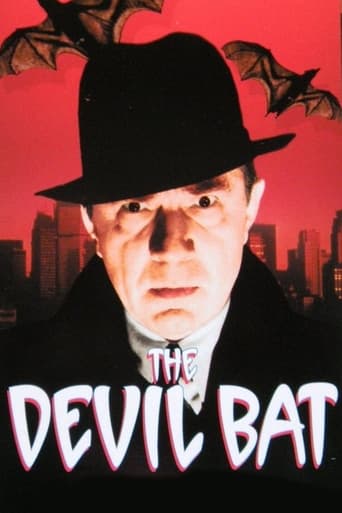
Bela Lugosi fronts a Bowery soup kitchen while upstairs corpses fuel bizarre criminology experiments. A seemingly charitable soup kitchen operator (who moonlights as a criminology professor) uses his Bowery mission as a front for his criminal gang. Police attempt to close in on the gang as they commit a series of robberies, murders and bizarre experiments on corpses.
Cast & crew
More films like this
More Crime films
View all →

More about this film
About the production
Release dateDecember 4, 1942
BudgetApproximately $50,000 (typical Monogram Pictures budget)
Box officeUnknown - Monogram rarely released financial figures, but the film was profitable enough to warrant Lugosi's continued employment
ProductionMonogram Pictures Corporation
Filmed inMonogram Studios, Los Angeles, California
Filmed in just 7 days on a tight schedule typical of Monogram's rapid production methods. The film was shot simultaneously with other Lugosi vehicles to maximize studio efficiency. The Bowery set was reused from several other Monogram productions. The film was part of a package deal where Lugosi made multiple films for Monogram in quick succession.
Themes
Dual identityScientific hubrisUrban povertyDeception vs. realityThe abuse of power
Themes & topics
mad scientistgang leadersoup kitchenreanimationzombiesdual identitypolice investigationmurderrobberybasement laboratoryBowerypovertycrime syndicatehorrorfilm noir
Historical background
1942 placed Bowery at Midnight within United States cinema as Monogram Pictures Corporation navigated wartime markets, immigration audiences, and the shift from intertitles to sound.
Why this film matters
Archivists revisit Bowery at Midnight (1942) for Wallace Fox style, genre norms at Monogram Pictures Corporation, and the exhibition context of 62 minutes programming.
Making of
The production was typical of Monogram Pictures' assembly-line approach to filmmaking. Wallace Fox, a prolific director known for his speed, completed principal photography in just one week. Lugosi, struggling with his morphine addiction during this period, was reportedly difficult on set but always professional when cameras rolled. The basement laboratory set was constructed from leftover props and materials from previous horror productions. The film's tight budget meant many scenes were shot in single takes, and the cast often had to provide their own wardrobe. The reanimated corpses were played by stunt men covered in flour and makeup, moving slowly due to the limited special effects budget. Despite these constraints, the film developed a cult following for its atmospheric qualities and Lugosi's committed performance.
What critics said
Retrospective writing on Bowery at Midnight stresses craft by Wallace Fox, print survival, and repertory value rather than opening-week gross alone.
Did you know?
- This was one of nine films Bela Lugosi made for Monogram Pictures between 1941-1944, marking his decline from major studio stardom to poverty row productions.
- The film's working title was 'The Monster and the Mummy' before being changed to 'Bowery at Midnight'.
- Director Wallace Fox was known for his efficiency, often completing films in under a week, which contributed to the rushed feel of many Monogram productions.
- The reanimation scenes were achieved using simple techniques like wires and reverse photography, typical of low-budget horror of the era.
- John Archer, who plays the detective, later became a television regular in the 1950s and 1960s.
- Wanda McKay was a former model and pin-up girl before turning to acting.
- The film was released just weeks after the attack on Pearl Harbor, but its production had been completed before the U.S. entered WWII.
- The Bowery mission set was so convincing that it was reused in at least three other Monogram films.
- Lugosi was paid $2,500 for this film, a fraction of his salary from his Universal horror days.
- The film was banned in some countries due to its combination of crime and horror elements.
Visual style
The cinematography by Mack Stengler utilized high-contrast lighting to create shadows and atmosphere despite budget limitations. The film employs German Expressionist techniques in the basement laboratory scenes, with dramatic shadows and unusual camera angles enhancing the horror elements. The Bowery mission scenes use more naturalistic lighting to contrast with the supernatural elements. Stengler made effective use of limited sets, creating visual interest through creative camera placement and movement. The film's visual style, while not innovative, effectively serves the story and creates the desired mood of menace and decay.
Innovations
While not technically innovative, the film demonstrates effective use of limited resources. The reanimation effects, though simple, were achieved through reverse photography and careful editing. The film's efficient 62-minute runtime represents skillful pacing and storytelling. The production made creative use of existing sets and props, demonstrating resourcefulness typical of poverty row filmmaking. The sound recording, while basic, effectively captures the atmospheric elements crucial to the horror scenes. The film represents technical competence within severe budget constraints rather than innovation.
Music
The musical score was composed by Edward J. Kay, Monogram's house composer who scored hundreds of films for the studio. The music combines typical thriller motifs with dramatic orchestration for action sequences. The score uses recurring leitmotifs for Lugosi's character and the reanimated corpses. Due to budget constraints, much of the music was likely tracked from other Monogram productions. The soundtrack includes source music played on a phonograph in the mission scenes, adding to the period atmosphere. While not groundbreaking, the score effectively enhances the film's tension and mood.
Famous quotes
You know, Professor, you're a very remarkable man. By day, you teach criminology. By night, you practice it.
The dead don't tell tales... but they can be made to obey.
In this mission, we feed the body and save the soul... sometimes.
Science can accomplish miracles, if one has the courage to pursue them.
The Bowery is a good place to hide things... and people.
Memorable scenes
- The basement laboratory reanimation sequence where Lugosi's character attempts to bring the dead back to life using electrical equipment and chemicals
- The opening scene establishing the dual nature of Lugosi's character as both respected professor and criminal mastermind
- The final confrontation where the reanimated corpses turn against their creator in the mission basement
- The scene where Lugosi demonstrates his criminology knowledge to police while secretly being the criminal they seek
What audiences thought
Initial audience reception was modest, as the film played primarily in smaller theaters and second-run houses typical of Monogram releases. However, horror fans and Lugosi devotees embraced the film, helping it turn a profit for the studio. The film developed a stronger following in later years through television broadcasts and home video releases. Modern audiences, particularly classic horror enthusiasts, have come to appreciate the film's atmospheric qualities and Lugosi's committed performance. The movie has found new life through cult film screenings and streaming platforms, where it's often praised for its efficient storytelling and period charm.
Film connections
Influenced by
- Frankenstein (1931)
- The Black Cat (1934)
- The Walking Dead (1936)
- gangster films of the 1930s
- German Expressionist cinema
This film influenced
- The Ape Man (1943)
- Voodoo Man (1944)
- The Brain That Wouldn't Die (1962)
- Later poverty row horror films
Film restoration
The film survives in complete form and has been preserved by various film archives. Multiple 35mm prints exist in private collections and institutional archives. The film has been restored for DVD and Blu-ray releases by companies like The Film Detective and Kino Lorber. While some original elements have deteriorated, the film is considered well-preserved for a poverty row production of its era. It entered the public domain, which has actually helped its preservation through multiple releases.
Where to watch
- Available on DVD from The Film Detective
- Streaming on Amazon Prime Video
- Available on Blu-ray from Kino Lorber
- Free on various public domain streaming sites
- Available on YouTube through official channels
- Included in several Bela Lugosi box sets
- Available for digital rental/purchase on iTunes and Google Play