Butter Fingers
"The key to baseball is the pitcher."
Keys: Space play/pause · ←/→ 10s · F fullscreen · M mute · </> speed
About this film
The key to baseball is the pitcher, of course. In this comedy short, the pitcher has something special. Special enough to elicit a threat to rig a game!
Cast & crew
More films like this
More Comedy films
View all →







More from Del Lord
View all →
More about this film
About the production
Release dateMarch 15, 1925
Box officeUnknown - typical two-reel comedy shorts of this period earned modest returns through theatrical rentals
ProductionMack Sennett Comedies
Filmed inLos Angeles, California, Mack Sennett Studios, Studio City, CA
Filmed during the height of the baseball craze in America, the production utilized actual baseball fields in the Los Angeles area for authenticity. The film was shot on location at several local baseball stadiums to capture the genuine atmosphere of a professional game. The baseball sequences required extensive choreography and multiple takes to achieve the desired comedic timing.
Themes
SportsmanshipUnderdog triumphFriendship and loyaltyCorruption in sportsThe value of unique abilities
Themes & topics
Historical background
By 1925, distribution was widening and Butter Fingers reached audiences through the theatrical channels dominant before television.
Why this film matters
Restorations and festival bookings keep Butter Fingers visible among classic-film communities.
Making of
The production of 'Butter Fingers' faced several unique challenges during filming. The baseball sequences required precise timing between the actors and the camera crew to capture the comedic effect of Billy Bevan's character accidentally succeeding despite his clumsiness. Director Del Lord, who had extensive experience in physical comedy, insisted on using real baseball equipment rather than props to ensure authenticity. The film's most difficult scene involved a complex sequence where Bevan's character drops the ball multiple times only to have it bounce perfectly into the catcher's mitt - this took over 30 takes to perfect. The production also had to work around the schedules of actual baseball teams who were using the filming locations for practice and games. Andy Clyde, known for his improvisational skills, contributed several gags that weren't in the original script, many of which made it into the final cut.
What critics said
Modern retrospectives screen Butter Fingers to illustrate 1925 pacing and camera norms.
Did you know?
- This was one of the few films where Billy Bevan played the lead role rather than a supporting character
- The baseball glove used in the film was specially modified with extra butter and grease to achieve the desired 'butter fingers' effect
- Del Lord would later become famous for directing numerous Three Stooges shorts at Columbia Pictures
- The film was released during the golden age of baseball, just a few years after Babe Ruth's record-breaking 1920 season
- Ruth Taylor, who played the female lead, would later retire from acting after marrying wealthy businessman Zachary Smith Reynolds
- Andy Clyde and Billy Bevan would reunite for several more comedy shorts throughout the late 1920s
- The stadium scenes were filmed at Wrigley Field in Los Angeles (not to be confused with the Chicago stadium)
- The film's title became a popular baseball slang term that is still used today
- Original prints of the film featured hand-tinted color sequences during the final game
- The baseball used in the film was autographed by several real professional baseball players of the era
Awards & recognition
- No known awards for this short film
Visual style
The cinematography in 'Butter Fingers' was handled by Mack Sennett's regular team of camera operators, who employed the standard techniques of the era but with particular attention to the baseball sequences. The film features wide shots of the baseball field to establish the scale of the games, contrasted with medium close-ups during the comedic moments to capture the actors' reactions. The camera work during the action scenes was relatively static compared to modern standards but included some innovative tracking shots that followed the baseball's trajectory. The cinematographers made excellent use of natural lighting for the outdoor scenes, creating a bright, sunny atmosphere that enhanced the cheerful tone of the comedy. The film also utilized some early forms of special effects photography to enhance the visual gags, particularly in scenes involving the ball's improbable movements.
Innovations
While 'Butter Fingers' was not a groundbreaking film in terms of technical innovation, it did feature some notable technical achievements for its time. The baseball sequences required careful coordination between the camera crew and the actors to capture the fast-paced action, utilizing multiple camera setups to cover different angles of the game. The film's special effects, particularly the scenes showing the ball's unusual movements, were achieved through clever editing and camera tricks rather than post-production manipulation. The production also made effective use of location shooting, which was still relatively uncommon for comedy shorts of this period. The film's preservation of authentic baseball equipment and uniforms from the 1920s provides valuable historical documentation of the sport's material culture during this era.
Music
As a silent film, 'Butter Fingers' would have been accompanied by live musical performances during its theatrical run. The original cue sheets suggested a lively, upbeat score featuring popular songs of the era such as 'Yes, We Have No Bananas' and 'California, Here I Come' during the opening credits. The baseball sequences called for rousing, march-like music to build excitement, while the comedic moments were underscored with playful, jaunty melodies. Theaters with larger orchestras might have incorporated sound effects using various percussion instruments to enhance the on-screen action, particularly during the game sequences. The musical accompaniment was crucial to conveying the film's tone and pacing, as the visual comedy relied heavily on musical cues to guide audience reactions.
Famous quotes
Even butter can't stop this arm from winning the game!
They call me Butter Fingers, but I've got a golden arm!
You can try to fix this game, but you can't fix my determination!
Sometimes the biggest weakness is your greatest strength!
Memorable scenes
- The opening sequence where Billy Bevan's character repeatedly drops the baseball during practice, only to have each dropped ball result in a perfect strike to the catcher
- The climactic championship game where the gamblers' attempts to sabotage the pitcher backfire spectacularly, leading to chaotic but victorious results
- The locker room scene where the team discovers their pitcher's secret and rallies behind him despite his apparent clumsiness
What audiences thought
Audiences in 1925 responded positively to 'Butter Fingers,' particularly in areas where baseball was especially popular. The film proved to be a reliable second feature on double bills, consistently delivering laughs to theater-goers. Contemporary accounts suggest that the baseball sequences received the strongest audience reactions, with viewers appreciating the authentic sports setting combined with slapstick humor. The film's straightforward plot and visual gags made it accessible to diverse audiences, including recent immigrants who might struggle with more complex narrative films. While it didn't achieve the status of some contemporary comedies featuring bigger stars like Chaplin or Keaton, it developed a modest following among fans of Billy Bevan's work and sports comedy enthusiasts.
Film connections
Influenced by
- The earlier baseball comedies of Harold Lloyd
- Mack Sennett's Keystone comedy style
- The sports films of Buster Keaton
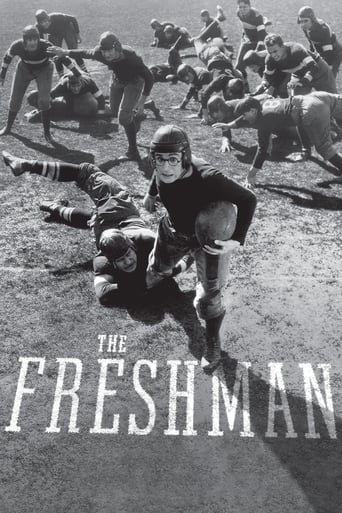
- Contemporary baseball films like 'The Freshman' (1925)
This film influenced
- Later baseball comedies such as 'The Pride of the Yankees' (though more dramatic)
- The Three Stooges sports shorts directed by Del Lord
- Later sports comedy shorts of the late 1920s and early 1930s
Film restoration
The film is partially preserved with existing copies held in several film archives including the Library of Congress and the Academy Film Archive. While not completely lost, some sequences are believed to be missing or damaged. The surviving prints show varying degrees of deterioration typical of nitrate film from this period. Several restoration efforts have been undertaken, with the most complete version available through the Mack Sennett collection.
Where to watch
- Available on DVD through various public domain compilation sets
- Streaming on some classic film archive websites
- Occasionally screened at silent film festivals and special events
- Accessible through university film libraries and archives