
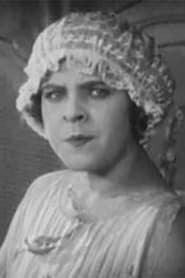
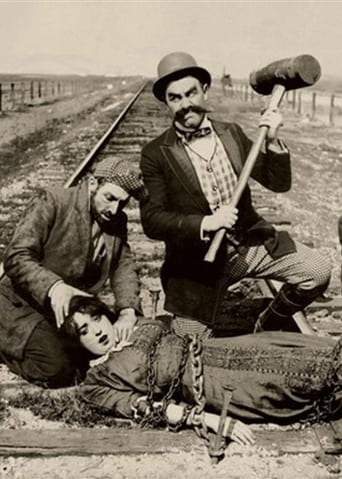
Court House Crooks
"Judge, wife, DA—jewelry tells all"
Keys: Space play/pause · ←/→ 10s · F fullscreen · M mute · </> speed
About this film
A judge's young wife secretly dates the district attorney until misplaced jewels and a mirror message expose the courthouse farce.
Cast & crew
More films like this
More Comedy films
View all →







More from Ford Sterling
View all →


More about this film
About the production
Release dateJuly 5, 1915
BudgetEstimated at $1,500 - $3,000 (standard for Keystone shorts of the era)
ProductionKeystone Film Company, Triangle Film Corporation
Filmed inKeystone Studios, Edendale, Los Angeles, California
The film was produced during a transitional period for Keystone as Mack Sennett was moving toward the Triangle Film Corporation partnership. Ford Sterling, who had briefly left Keystone to form his own company (Sterling Comedies), had returned to the fold, and this film served as a vehicle to re-establish his 'Chief' persona in a more domestic, farcical setting. The production utilized the standard 'assembly line' method of silent comedy where gags were often improvised on set around a loose scenario. The use of a courtroom set was a common trope for Keystone, allowing for a satirical look at authority figures which was a hallmark of the studio's output.
Themes
InfidelityJudicial CorruptionSocial SatireMisunderstandingsAuthority vs. Anarchy
Themes & topics
judgedistrict attorneyyoung wifesecret affairjewelrymirror writingcourtroomslapstickfarcemisplaced evidence
Historical background
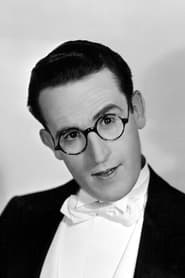
Viewers who saw Court House Crooks in 1915 experienced it within the conventions of silent era filmmaking. It features Harold Lloyd in an uncredited role.
Why this film matters
Film clubs and archives revisit Court House Crooks as part of broader silent era programming.
Making of
The production of 'Court House Crooks' was characterized by the high-energy, improvisational atmosphere of the Keystone lot. Ford Sterling was known for his intense physical performance style, often requiring multiple takes of strenuous falls and gestures. Behind the scenes, the chemistry between Sterling and Minta Durfee was well-established, as they had worked together on dozens of shorts. The 'mirror' sequence required careful lighting and camera positioning to ensure the text written on the glass was legible to the audience without creating a glare from the studio's overhead silk diffusers. Despite the chaotic appearance of the final product, the timing of the gags was meticulously rehearsed to ensure the slapstick landed perfectly with the rhythm of the editing.
What critics said
Surviving reviews and later retrospectives treat Court House Crooks as representative silent era fare—valued for craft even when not hailed as a masterpiece.
Did you know?
- Ford Sterling not only starred in the film but also directed it, showcasing his dual talent as a slapstick performer and a comedic visionary.
- Minta Durfee, who plays the wife, was a major Keystone star and the real-life wife of Roscoe 'Fatty' Arbuckle at the time of filming.
- The film is notable for its use of 'mirror writing' as a plot device, which was a relatively sophisticated narrative tool for 1915 slapstick.
- Charles Arling, playing the District Attorney, was often cast as the 'heavy' or the 'other man' in Keystone shorts due to his tall, imposing stature compared to the frantic Sterling.
- This film is frequently cited by film historians as a prime example of the 'Keystone style' before it was refined by the more narrative-driven features of the late 1910s.
- The courtroom setting allowed the actors to parody the legal system, a recurring theme in Mack Sennett's productions which often mocked social institutions.
- The film was released just as the Triangle Film Corporation was being formed, marking a shift in how these shorts were distributed to higher-class theaters.
- The physical comedy in the film includes early examples of the 'slow burn' and the 'double take' that would become staples of silent cinema.
Visual style
The cinematography is typical of the 1915 Keystone aesthetic, utilizing a static camera with a wide-angle lens to capture the full range of physical movement. Most scenes are shot in 'full plane,' meaning the actors' entire bodies are visible to emphasize the slapstick. There are notable uses of medium shots during the mirror-writing sequence to ensure the audience can follow the plot-critical clues. The lighting is flat and even, typical of the open-air 'stages' used at the Edendale studio which relied on natural California sunlight filtered through muslin sheets.
Innovations
The film's primary technical achievement lies in its editing and narrative pacing. The cross-cutting between the Judge in the courtroom and the wife with the District Attorney creates a sense of building tension and comedic irony. The use of a mirror as a narrative device was a clever way to integrate text into the visual field without relying solely on intertitles.
Music
As a silent film, there was no synchronized soundtrack. Original screenings would have been accompanied by a live pianist or organist playing upbeat, frantic ragtime or 'hurry' music during the chase sequences, and more melodramatic cues during the scenes of the wife's flirtation.
Famous quotes
Intertitle: 'The Judge - A man of law and a man of years.'
Intertitle: 'The District Attorney - More interested in the Judge's wife than the Judge's law.'
Memorable scenes
- The scene where the District Attorney frantically tries to erase the message on the mirror before the Judge enters the room.
- The climactic courtroom chaos where the jewelry is discovered in the most incriminating place possible.
- Ford Sterling's iconic 'frustrated' facial expressions when he suspects something is amiss in his household.
What audiences thought
1915 audiences responded enthusiastically to the film's irreverent treatment of a Judge and a District Attorney. The 'Keystone' brand was a guarantee of laughter, and the film was a popular draw in both urban centers and rural towns. The physical comedy and the relatable (if exaggerated) theme of a husband being outwitted by a younger wife resonated with the diverse demographic of early cinema-goers.
Film connections
Influenced by
- French Stage Farce
- Commedia dell'arte
- Mack Sennett's early police parodies
This film influenced
- The Keystone Cops series
- Later courtroom comedies of the 1920s
- The slapstick style of the Hal Roach Studios
Film restoration
The film is preserved and exists in several archives, including the Library of Congress and the Museum of Modern Art (MoMA). It has been digitized and is available in various silent film compilations.
Where to watch
- Public Domain archives (Internet Archive)
- Specialized silent film DVD collections (Keystone Curios)
- Streaming platforms dedicated to classic cinema like Kanopy or Fandor (periodically)