Der Fuehrer's Face
"A Walt Disney Donald Duck Cartoon Special. [Commonly associated release-line; exact original tagline varies by exhibitor and print]"
Plot
A satirical nightmare unfolds as Donald Duck dreams he has been transported to Nutziland, a brutal caricature of Nazi Germany where he is forced to live under constant militaristic indoctrination. Surrounded by a marching band of Axis caricatures and subjected to grotesque daily rituals, Donald endures impossible labor, oppressive propaganda, and a humiliatingly miserable food regimen that underscores the deprivation of life under dictatorship. He is driven to exhaustion working in a Nazi artillery shell factory while harassed by images of Hitler, Mussolini, and Tojo, all of which ridicule his lack of freedom and individuality. Overwhelmed by the pressure, Donald suffers a nervous breakdown and seems on the verge of collapse. He then awakens to discover that the horrors of Nutziland were only a dream, and he joyfully embraces the reality of being an American citizen, saluting a tiny model of the Statue of Liberty in relief and gratitude.
Director
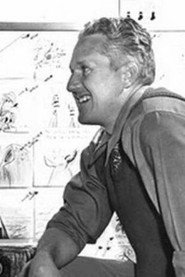
Jack KinneyAbout the Production
The film was produced as a wartime propaganda cartoon, designed to satirize Nazi Germany and the Axis powers through exaggerated caricature and musical comedy. It is one of the best-known Donald Duck shorts of the period and was created during a time when Disney was actively contributing to the American war effort through animation. The cartoon was adapted from Oliver Wallace's song 'Der Fuehrer's Face,' which had already become associated with the project before the short was made. Because the film directly lampoons Adolf Hitler, Benito Mussolini, and Hideki Tojo, it was highly topical in 1943 and later became one of the most famous examples of anti-Axis animation from Hollywood. The exact production budget and box office earnings for the short are not generally published in standard references for this era.
Historical Background
The film was made in 1943, when the United States was fully engaged in World War II and Hollywood was deeply involved in patriotic and anti-Axis media. American animation studios, including Disney, produced shorts that mocked enemy leaders, supported war bonds, and encouraged civilian morale, often using caricature and satire as tools of persuasion. 'Der Fuehrer's Face' fits directly into this wartime environment, reflecting the emotional need to ridicule fascist regimes while reinforcing the contrast between totalitarian deprivation and American freedoms. Its imagery also reveals the era’s propagandistic conventions, including broad national caricature and highly stylized depictions of enemy cultures. Today, the short is important as a historical document of wartime messaging and the role of popular animation in shaping public sentiment.
Why This Film Matters
The film remains one of the most famous examples of American wartime animation and a defining Donald Duck short. It demonstrates how a major studio could use a popular cartoon character to deliver sharp political satire while preserving comic energy and musical appeal. The cartoon also helped cement Donald’s persona as an everyman prone to frustration, humiliation, and explosive reaction, a characterization that became central to his long-term popularity. In film history, it is frequently discussed as a landmark in propaganda animation, alongside other studio-produced war cartoons of the 1940s. At the same time, modern viewers and scholars often examine it critically for its caricatured depictions of Axis figures and for the broader ethics of wartime propaganda.
Making Of
The short was developed at Walt Disney Productions during the height of World War II, when the studio was making a wide range of military-training films, propaganda pieces, and morale-boosting cartoons. Its core comic engine was the already familiar song 'Der Fuehrer's Face,' which had been written by Oliver Wallace and helped shape the rhythm and repeated satire of the cartoon. Jack Kinney directed the short, and the Donald Duck performance depended heavily on Clarence Nash’s vocal characterization, which allowed the character to move from indignation to panic to breakdown in a highly musical, exaggerated style. The production uses rapid visual gags, industrial imagery, and blunt caricature to compress its political message into a compact theatrical short. As with many Disney wartime films, it reflects both the urgency of the moment and the studio’s willingness to lend its characters to national propaganda efforts.
Visual Style
As an animated short, the film relies on strong visual design rather than live-action cinematography, with carefully staged compositions that emphasize confinement, regimented motion, and oppressive symmetry. The imagery of swastika-patterned environments, assembly-line labor, and militarized architecture creates a visual world that is both orderly and absurdly exaggerated. The animation frequently uses tight framing on Donald’s reactions to underline his escalating distress, then expands into broader shots for marching and industrial sequences. Color design and visual rhythm are coordinated with the musical numbers, allowing the cartoon to shift smoothly between comedy, menace, and slapstick panic.
Innovations
The short is notable for its seamless integration of song, character performance, and political satire into an economical theatrical format. Its timing is especially precise, using musical beats to coordinate marching, factory labor, and gag reveals. The cartoon also showcases Disney’s wartime animation craftsmanship in exaggerated facial acting, crowd movement, and the transformation of a nightmare into a punchline. While not a technological breakthrough in the sense of a new process, it is a strong example of how studio animation could deliver polished, high-impact propaganda with exceptional clarity and comic timing.
Music
The soundtrack is built around Oliver Wallace’s song 'Der Fuehrer's Face,' which functions as both a musical theme and a satirical refrain. The song’s repeated use gives the short its comic identity, with lyrics and musical timing reinforcing the visual mockery of Nazi life. Donald’s characteristic vocalizations by Clarence Nash are central to the score’s humor, especially as the cartoon moves from marching, work, and food-ration sequences into increasingly frantic comic breakdown. The music intentionally blends catchy novelty-song structure with patriotic satire, making the short memorable as both a cartoon and a musical spoof.
Famous Quotes
Der Fuehrer's face! Der Fuehrer's face! We see it every hour!
Stop! Mine eyes! Mine ears! Mine face! Oh, what a ghastly place!
Heil Donald! [as part of the parody salutes and rally gags in the cartoon]
Memorable Scenes
- The opening march through Nutziland, with Axis caricatures parading in rigid formation while singing the title song.
- Donald’s frantic breakfast sequence, in which he is forced to cope with disgusting wartime food substitutes and ritualized Nazi propaganda.
- The artillery factory sequence, where Donald is worked into exhaustion by a relentless assembly-line routine amid oppressive machinery and military imagery.
- Donald’s nervous breakdown, in which the pressure of the nightmare world culminates in frantic, over-the-top physical comedy.
- The final reveal that the entire experience was a dream, followed by Donald’s joyful salute to a model Statue of Liberty.
Did You Know?
- The cartoon won the Academy Award for Best Short Subject (Cartoon) in 1943.
- It is one of the most famous Donald Duck cartoons ever made and is strongly associated with wartime propaganda animation.
- The title song, 'Der Fuehrer's Face,' became a widely recognized novelty hit and is central to the film's comic structure.
- Donald’s wake-up-and-relief ending is a classic Disney wartime gag, with the nightmare revealed to be a dream after an escalating sequence of oppression and humiliation.
- The film includes caricatures of Hitler, Mussolini, and Tojo, making it an especially direct anti-Axis satire for its time.
- The depiction of Nazi Germany as 'Nutziland' is a deliberate pun that turns totalitarian severity into absurdity.
- The short’s food-ration sequence, in which Donald is forced to eat unappetizing substitute foods, is one of its most remembered comic set pieces.
- The film was among the Disney studio’s wartime shorts that combined entertainment with explicit patriotic messaging.
- The cartoon helped solidify Donald Duck as a character capable of carrying more aggressive, emotionally volatile, and socially pointed comedy than Mickey Mouse often did in theatrical shorts.
- Although celebratory in the U.S. during wartime, the cartoon later drew attention for its strident propaganda tone and its very direct ethnic caricature of Axis leaders and nations.
What Critics Said
Contemporary reception in 1943 was generally very strong in the United States, where the cartoon was praised for its energy, topical humor, and patriotic bite, culminating in an Academy Award. The short’s novelty song and Donald’s performance were especially well received, and the film quickly became one of the best-known Disney wartime cartoons. Modern criticism tends to view it as both an accomplished piece of comic animation and a product of its moment, noting its effectiveness as satire while also recognizing its propagandistic purpose and caricature-based humor. It is now frequently discussed in animation history as a significant wartime artifact rather than simply as a light entertainment short.
What Audiences Thought
American audiences of the wartime period generally responded enthusiastically, in part because the cartoon played to contemporary anti-Axis sentiment and because Donald Duck was already a highly popular character. The song and repeated catchphrases made the short memorable and easy for audiences to quote and hum, which helped broaden its appeal beyond standard theatrical cartoon programming. In later decades, audience reception became more mixed as viewers approached it as historical propaganda rather than current topical comedy. Even so, it remains widely watched by classic-cartoon enthusiasts and is often remembered for its boldness, musical hook, and highly expressive Donald performance.
Awards & Recognition
- Academy Award for Best Short Subject (Cartoon) — Winner (1943)
Film Connections
Influenced By
- Wartime American propaganda cartoons
- The novelty song 'Der Fuehrer's Face' by Oliver Wallace
- Axis leaders caricatured in contemporary political cartoons
This Film Influenced
- Later wartime and anti-fascist animated shorts
- Subsequent political satire cartoons featuring exaggerated dictator caricatures
You Might Also Like
More Animation Films
View allFilm Restoration
The film is preserved and widely available in surviving Disney library elements; it is not a lost film. It has been included in historical cartoon collections and has circulated in restored or remastered home-video and archival presentations over the years.