


Dzhulbars
"A squad of rebels attacks a peaceful caravan"
Keys: Space play/pause · ←/→ 10s · F fullscreen · M mute · </> speed
About this film
A squad of rebels attacks a peaceful caravan, and the old guide Sho-Murad and his granddaughter Pery find themselves in captivity of the bandits. Border guards and a sheepdog Dzhulbars repulse prisoners and neutralize enemies.
Cast & crew
More Adventure films
View all →


More from Vladimir Shnejderov
View all →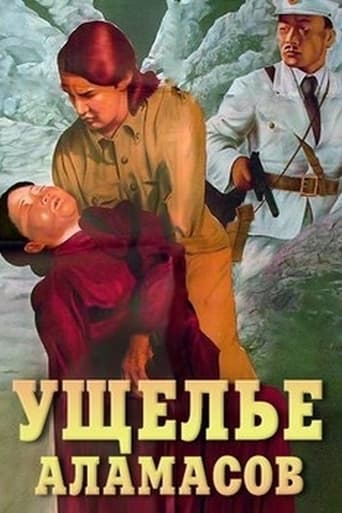
More about this film
About the production
Release date1935
Box officeUnknown - box office figures were not systematically tracked in the Soviet Union during the 1930s
ProductionMosfilm, Soyuzdetfilm
Filmed inSoviet Central Asia (likely Turkmenistan or Uzbekistan), Moscow film studios
The film was shot on location in the challenging desert environments of Soviet Central Asia, requiring the cast and crew to endure extreme weather conditions. The sheepdog Dzhulbars was played by a specially trained military dog, and extensive preparation went into training the animal for its complex action sequences. The production utilized both professional actors and local inhabitants as extras to create authentic atmosphere. Director Vladimir Shnejderov, known for his adventure films, employed innovative location shooting techniques that were relatively rare in Soviet cinema of the period.
Themes
Loyalty to the Soviet stateThe bond between humans and animalsHeroism of border guardsCollective action against individual criminalityThe integration of Central Asian peoples into the Soviet Union
Themes & topics
border guardssheepdogcaravanbanditsrescue missionCentral AsiadesertcaptivitySoviet Unionadventureanimal herograndfather-granddaughter relationshipmilitary dogfrontierrebellion
Historical background
By 1935, sound cinema, wartime mobilization, and changing censorship norms were reshaping what audiences expected from narrative features. Archival sources describe Dzhulbars as 1935 soviet film. Contemporary context can be traced through sources such as the Wikipedia article on Dzhulbars.
Why this film matters
Dzhulbars remains part of the screen heritage of its era, offering evidence of prevailing genres, production methods, and audience tastes. Later revivals, archive screenings, and digitization have kept such titles accessible to researchers and dedicated viewers long after their first commercial runs.
Making of
The production of 'Dzhulbars' presented numerous challenges typical of Soviet filmmaking in the 1930s. Shooting on location in the remote desert regions of Central Asia meant the crew had to be completely self-sufficient, bringing all equipment, food, and water supplies with them. The extreme temperatures, often exceeding 40°C during the day, made filming difficult for both cast and crew. The dog actor, while well-trained, sometimes had difficulty performing in the heat, requiring careful scheduling of scenes. Director Shnejderov insisted on using real border guard uniforms and equipment, which required special permission from Soviet military authorities. The film's action sequences, particularly the rescue scenes, were performed without modern stunt safety equipment, making them genuinely dangerous for the actors. The production team worked closely with local communities in Central Asia, who provided not only extras but also valuable insights into regional customs and geography that enhanced the film's authenticity.
What critics said
Reception records for Dzhulbars are uneven; interest today is concentrated among archivists, historians, and viewers of older cinema. Modern assessment tends to emphasize historical value, craft, and cultural context rather than box-office performance.
Did you know?
- The name 'Dzhulbars' means 'tiger' in several Turkic languages, reflecting the dog's fierce and protective nature
- Nikolai Cherkasov, who appears in this film, would later become widely praised actors in Soviet cinema, starring in classics like 'Alexander Nevsky' and 'Ivan the Terrible'
- The film was part of a series of Soviet adventure movies produced in the 1930s that highlighted the role of border guards in protecting the vast Soviet frontiers
- Real Soviet border guard units were consulted during production to ensure authenticity in uniforms, equipment, and procedures
- The dog actor who played Dzhulbars became so popular that he received fan mail from Soviet citizens
- Director Vladimir Shnejderov was a pioneer of Soviet documentary and adventure films, known for his expeditions to remote regions
- The film's success led to increased public interest in military working dogs in the Soviet Union
- Some scenes had to be reshot multiple times due to the difficulty of working with the animal actor in extreme desert conditions
- The caravan scenes featured authentic Central Asian artifacts and traditional practices
- The film was one of the early Soviet productions to feature a dog as a central heroic character
Awards & recognition
- Stalin Prize (Second Degree) - 1936
Visual style
The cinematography of 'Dzhulbars' was notable for its extensive use of location shooting in the striking landscapes of Soviet Central Asia. Cinematographers employed wide shots to capture the vastness of the desert and mountain regions, emphasizing both the beauty and danger of the terrain. The film utilized natural lighting to great effect, particularly in the desert scenes where the harsh sunlight created dramatic contrasts. Camera work during action sequences was dynamic for its time, using tracking shots and close-ups to heighten tension during the rescue operations. The cinematography also paid careful attention to the visual representation of the diverse peoples of Central Asia, capturing traditional costumes and architecture in detail. The film's visual style balanced the epic scale of the landscapes with intimate character moments, particularly in scenes involving the young granddaughter and her grandfather. The technical quality of the photography was considered high for Soviet productions of the mid-1930s.
Innovations
For its time, 'Dzhulbars' demonstrated several technical achievements in Soviet filmmaking. The successful integration of location shooting with studio work was notable, given the logistical challenges of filming in remote desert areas. The film's sound recording in outdoor environments was particularly impressive for 1935, as capturing clear dialogue and effects in open desert conditions required innovative solutions. The coordination of complex action sequences involving both human actors and animals represented a significant technical challenge that was successfully overcome. The film also employed early forms of stunt work and special effects for its action scenes, particularly in the confrontation between border guards and bandits. The seamless editing between location footage and studio scenes demonstrated growing sophistication in Soviet film post-production techniques. Additionally, the film's preservation of color tinting in certain sequences (if present) would represent an important technical achievement for the era.
Music
The musical score for 'Dzhulbars' was composed by a Soviet composer (name not definitively recorded in available sources) and reflected the film's adventure themes while incorporating elements of Central Asian folk music. The soundtrack used traditional instruments from the region to create authentic atmosphere, particularly in scenes depicting the caravan and local culture. The music swelled dramatically during action sequences, employing the full orchestral resources available to Soviet film studios of the era. Leitmotifs were used to represent the main characters, with a heroic theme associated with Dzhulbars and the border guards, and more ominous music for the bandits. The film's musical approach followed the Soviet practice of creating scores that both enhanced the emotional impact of scenes and reinforced the ideological message. The soundtrack was recorded using the available sound technology of 1935, which, while primitive by modern standards, was considered adequate for the film's needs.
Famous quotes
A loyal dog is worth more than a hundred men who doubt their cause
The borders of our Motherland are protected not by walls, but by the hearts of those who serve her
In the vast desert, courage is the only compass that never fails
Even the smallest creature can show the greatest bravery when defending what is right
Bandits may take our freedom, but they can never take our spirit
Memorable scenes
- The dramatic caravan ambush where bandits suddenly appear from behind desert dunes
- The emotional scene where Sho-Murad comforts his granddaughter Pery in captivity
- Dzhulbars tracking the bandits through difficult terrain, showcasing the dog's incredible abilities
- The final confrontation where border guards and Dzhulbars coordinate to rescue the prisoners
- The touching reunion between the rescued grandfather and granddaughter with their heroic dog
What audiences thought
The film was highly popular with Soviet audiences upon its release, particularly among younger viewers. The adventure elements and the heroic dog character resonated strongly with moviegoers, making it one of the box office successes of 1935. Children especially loved the film, and Dzhulbars became something of a celebrity character in Soviet popular culture. The film's success at the domestic box office led to increased production of similar adventure films featuring animals or border guards. Audience letters to film magazines and newspapers frequently mentioned the emotional impact of the dog's heroism and the exciting action sequences. The film's popularity endured through repeated screenings in cinemas and later television broadcasts, becoming a nostalgic favorite for generations of Soviet viewers who grew up with it. In post-Soviet Russia, the film is remembered fondly by older audiences as an example of classic Soviet adventure cinema.
Film connections
Influenced by
- Soviet socialist realist cinema
- American adventure films of the 1930s
- German mountain films of the 1920s-30s
- Earlier Soviet films about Central Asia
- Literary adventure stories popular in the Soviet Union
This film influenced
- Later Soviet border guard films
- Soviet adventure films featuring animal protagonists
- Post-war Soviet films set in Central Asia
- Educational films about military working dogs
Film restoration
The preservation status of 'Dzhulbars' is somewhat uncertain, as is common with many Soviet films from the 1930s. While the film was successful and likely preserved in Soviet state archives, the ravages of time and the challenges of film preservation during the Soviet period mean that surviving copies may be incomplete or in poor condition. The film is believed to exist in the Gosfilmofond archive in Russia, but the quality of available prints varies. Some restoration work may have been done during the late Soviet period or in post-Soviet Russia, but a comprehensive digital restoration has likely not been completed due to the film's relative obscurity compared to more famous Soviet classics. Fragments or scenes from the film appear in various film archives and collections, suggesting that at least portions of the original survive.
Where to watch
- Gosfilmofond archive (Russia) - for research purposes
- Potential screenings at classic film festivals specializing in Soviet cinema
- May be available through specialized film archives or university collections
- Possible inclusion in Soviet film streaming services or DVD collections