
East Side, West Side
"Allan Dwan excellent use New"
Keys: Space play/pause · ←/→ 10s · F fullscreen · M mute · </> speed
About this film
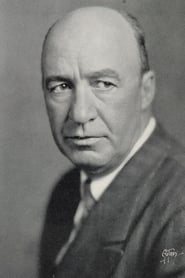
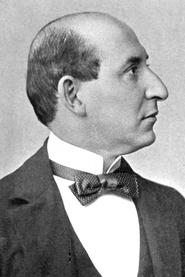
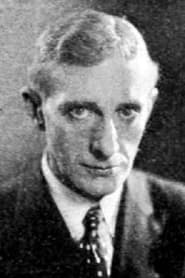
Director Allan Dwan’s excellent use of New York locations enlivens a rags-to-riches tale that fully exploits star George O’Brien’s championship boxing prowess. The supporting cast includes J.
Cast & crew
More films like this
More Drama films
View all →







More from Allan Dwan
View all →


More about this film
About the production
Release dateOctober 9, 1927
BudgetApproximately $400,000 (estimated based on Fox's major production standards of the era)
ProductionFox Film Corporation
Filmed inLower East Side, Manhattan, New York City, New York, USA, Brooklyn Bridge, New York City, New York, USA, Bowery, Manhattan, New York City, New York, USA, South Street Seaport, Manhattan, New York City, New York, USA, Fox Tenth Avenue Studio (55th Street and 10th Avenue), New York City, New York, USA
The film was one of the last major features shot at Fox's New York studios before the company consolidated most of its production in Hollywood. Director Allan Dwan, known for his efficiency and love for New York, utilized the city as a 'backlot,' capturing authentic urban energy that was rare for the time. The production was notable for incorporating real-life events into its narrative, most famously the 1927 ticker-tape parade for Charles Lindbergh's transatlantic flight, which was filmed in June 1927 while the movie was in production. Dwan also staged elaborate disaster sequences, including a subway tunnel collapse and a ship sinking, which were highly ambitious for a silent drama.
Themes
Social MobilityThe American DreamClass ConflictImmigration and IdentityFather-Son Relationships
Themes & topics
prizefighterboxingorphanNew York CityLower East SideJewish familysecret fathershipwrecksubway accidentrags to riches
Historical background
East Side, West Side (1927) emerged during late silent cinema and the transition toward sound, when exhibition habits and national film industries were still taking shape.
Why this film matters
East Side, West Side remains accessible through digital archives, giving modern viewers a direct link to 1927 screen culture.
Making of
Allan Dwan was a pioneer of location shooting and preferred the freedom of the East Coast over the increasingly rigid studio system in Hollywood. For 'East Side, West Side,' he insisted on filming in the actual slums of the Lower East Side to capture the 'dirty but real' essence of the city. Dwan was known for his ability to handle large-scale logistics; for the subway cave-in scene, he coordinated with city officials to create a sense of realism that stunned contemporary audiences. The production also utilized the Fox Tenth Avenue studio's massive facilities for the interior sets that contrasted the immigrant tenements with the opulence of Park Avenue penthouses. Dwan's directing style was characterized by 'streamlined montage,' a technique he used to keep the 90-minute epic moving at a brisk, modern pace.
What critics said
Trade and revival screenings have kept East Side, West Side (1927) on the map for collectors and scholars rather than mass first-run promotion.
Did you know?
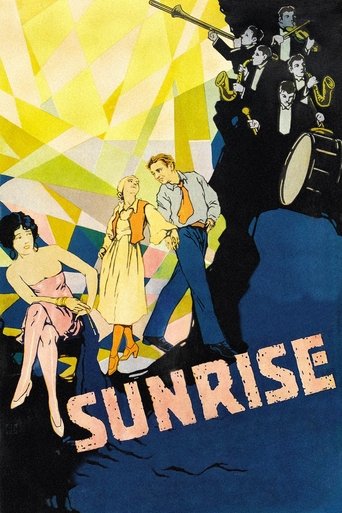
- The film features George O'Brien in the same year he starred in F.W. Murnau's 'Sunrise: A Song of Two Humans,' which is often cited as one of the greatest films ever made.
- Director Allan Dwan incorporated actual newsreel footage of Charles Lindbergh’s 1927 ticker-tape parade into the film's narrative.
- The sinking ship sequence in the film was loosely inspired by the real-life tragedy of the RMS Titanic.
- George O'Brien, a former Navy boxing champion, performed his own boxing scenes, showcasing the physical prowess that made him a major silent film star.
- The film was remade just four years later in 1931 under the title 'Skyline,' starring Thomas Meighan.
- Allan Dwan estimated he directed over 1,800 films in his career, and he considered 'East Side, West Side' a 'valedictory ode' to New York City.
- The opening shot of the film is a pan across the Brooklyn Bridge, a technique that became a standard trope for New York-set films for decades to come.
- The film's title is taken from the famous 1894 song 'The Sidewalks of New York,' which features the refrain 'East Side, West Side, all around the town.'
Visual style
Cinematographers George Webber and Theodore J. Pahle utilized innovative location shooting techniques to capture the scale of New York. The film opens with a sophisticated pan across the Brooklyn Bridge from the Manhattan Bridge, establishing a sense of urban grandeur. Dwan and his team used available light for many outdoor scenes to maintain a sense of realism, while the disaster sequences utilized clever practical effects and miniatures to simulate the sinking ship and the subway collapse.
Innovations
The film is noted for its seamless integration of newsreel footage with fictional narrative, a technique that was relatively advanced for 1927. The staging of the subway cave-in and the sinking ship spectacle demonstrated Fox's high production values and Dwan's mastery of large-scale action sequences. The use of 'streamlined montage' helped condense a sprawling, novelistic plot into a tight 90-minute runtime without losing narrative clarity.
Music
As a silent film, it originally had no synchronized soundtrack. Modern restorations, such as the one screened by MoMA, have featured musical accompaniment by Joanna Seaton (voice) and Donald Sosin (piano). In its original 1927 run, it would have been accompanied by a live theater organist or orchestra, likely incorporating popular tunes of the day like 'The Sidewalks of New York.'
Famous quotes
When you're in New York, you're in the whole world. There's nothing you can't find in New York. (Director Allan Dwan on the film's setting)
I always had a great respect for it. It's a dirty place, it's this and that, but it's the place. (Allan Dwan describing the New York locations used in the film)
Memorable scenes
- The opening pan across the Brooklyn Bridge, which establishes the film's epic scale and urban setting.
- The tragic sinking of the river barge, where John Breen loses his parents, filmed with impressive practical effects.
- The boxing match where John Breen showcases his physical prowess and begins his ascent to fame.
- The climactic subway cave-in sequence, a high-tension disaster scene that was a technical marvel for the silent era.
- The final scene of John surveying the city from a penthouse terrace, mirroring the opening shot but from a position of success.
What audiences thought
The film was a crowd-pleaser upon its release, successfully blending elements of romance, sports (boxing), and spectacle (disasters). Audiences of the 1920s were particularly drawn to the 'rags-to-riches' narrative and the charismatic presence of George O'Brien. The inclusion of the Lindbergh parade footage was a major draw, providing a 'ripped from the headlines' feel that resonated with the public's fascination with contemporary heroes.
Film connections
Influenced by
- The novel 'East Side, West Side' by Felix Riesenberg (1927)
- The song 'The Sidewalks of New York' (1894)
- Real-life events like the sinking of the Titanic and the Lindbergh flight
This film influenced
- Skyline (1931) - A direct remake
- The Bowery (1933) - Also directed by Allan Dwan, sharing similar themes and locations
- Manhattan Melodrama (1934)
Film restoration
The film is preserved. A print is held at the Museum of Modern Art (MoMA) in New York, having been gifted by Twentieth Century-Fox. It was preserved with funding from the National Endowment for the Arts and The Film Foundation.
Where to watch
- Museum of Modern Art (Special Screenings)
- Internet Archive (Public Domain digital copies)
- YouTube (Various silent film channels)
- Silent film festivals (e.g., San Francisco Silent Film Festival)