

Follow Thru
"Moore the club champion loses"
Keys: Space play/pause · ←/→ 10s · F fullscreen · M mute · </> speed
About this film
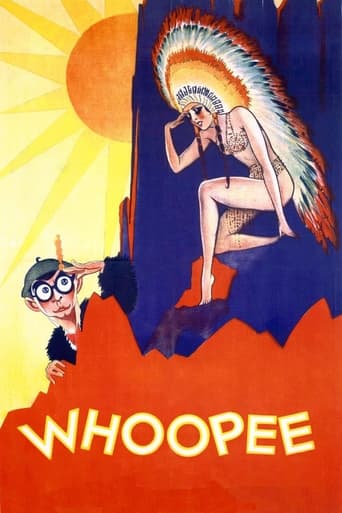
Lora Moore, the club champion, loses a golf match to a woman from another golf club. Then Jerry Downs, a handsome golf pro, and his goofy friend, Jack Martin, show up. Lora takes him on as her golf teacher to work on her putt. She falls for him, but so do several other women. Meanwhile Angie Howard, Lora's friend, chases after Jack. A lot of silliness ensues.
Cast & crew
More films like this
More Comedy films
View all →







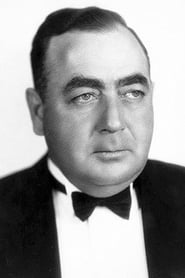
More from Lloyd Corrigan
View all →
More about this film
About the production
Release dateSeptember 27, 1930
BudgetApproximately $750,000
Box officeEstimated $1.2 million (Domestic)
ProductionParamount Publix Corporation
Filmed inParamount Studios, Hollywood, California, Lakeside Golf Club, Toluca Lake, Los Angeles (Exterior golf scenes)
Follow Thru — major undertaking for Paramount, serving as their second all-talking, all-color feature film. It was filmed entirely in Technicolor Process 3 (two-color), which used a red and green dye-transfer method. The production was an adaptation of the 1929 Broadway smash hit by Laurence Schwab and Frank Mandel. Because early Technicolor cameras were massive and required intense lighting, the sets often reached sweltering temperatures, making the golf-themed costumes particularly uncomfortable for the cast. Despite these technical hurdles, the film was rushed into production to capitalize on the 'musical craze' of the early sound era.
Themes
Themes & topics
Historical background
Made in 1930, Follow Thru reflects production norms of the studio-system peak and early sound decades—shorter runtimes, regional audiences, and limited preservation infrastructure.
Why this film matters
Historians reference Follow Thru (1930) when discussing 1930 film by Lloyd Corrigan.
Making of
The production of Follow Thru — logistical challenge due to the limitations of early sound recording and color cinematography. The Technicolor Process 3 camera was so noisy that it had to be housed in a soundproof 'blimp' or booth, which severely restricted camera movement. To compensate for the lack of mobility, the directors used multiple camera setups to capture different angles of the musical numbers simultaneously. The lighting required for the two-color process was so bright that actors often suffered from 'Klieg eye' (eye strain or burns). Additionally, the film's golf sequences were meticulously choreographed to ensure the bright green of the 'grass' (often enhanced with dyes for the camera) popped against the red-toned costumes of the players.
What critics said
Trade and revival screenings have kept Follow Thru (1930) on the map for collectors and scholars rather than mass first-run promotion.
Did you know?
- The film features the famous song 'Button Up Your Overcoat,' which was a massive hit on Broadway and became a signature tune for the era.
- Jack Haley and Zelma O'Neal were both members of the original 1929 Broadway cast and were brought to Hollywood specifically to reprise their roles.
- It is one of the few early Technicolor musicals to survive in its entirety with its original color intact; many others from this period only survive in black-and-white or are lost entirely.
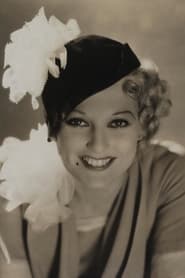
- The film includes a rare early screen appearance by Thelma Todd, who plays the rival golfer Mrs. Van Alstyne.
- Nancy Carroll was Paramount's top female star at the time, and the film's marketing heavily emphasized how Technicolor captured her famous red hair and blue eyes.
- The 'locker room' scene featuring Jack Haley and Eugene Pallette in drag was considered quite risqué for 1930 and is a prime example of pre-Code humor.
- Director Lloyd Corrigan was also a prolific screenwriter and actor, later known for his character roles in the 1940s and 50s.
- The film was restored by the UCLA Film and Television Archive in the 1990s after being feared lost for decades.
Awards & recognition
- Photoplay Magazine Medal of Honor (Nomination/Commendation, 1930)
Visual style
The cinematography by Henry W. Gerrard and Charles P. Boyle is notable for its use of Technicolor Process 3. This process did not use blue light, resulting in a unique color palette where skies often appeared greenish or grey, and reds leaned toward orange. The filmmakers used this to their advantage by designing sets and costumes in high-contrast shades that the two-color system could handle effectively. The exterior shots at the Lakeside Golf Club are among the earliest examples of color location shooting in a sound feature.
Innovations
Follow Thru — pioneer in the integration of color and sound. It successfully demonstrated that a full-length musical comedy could be shot entirely on location and in the studio using the cumbersome Technicolor equipment without sacrificing audio quality. The film's restoration by UCLA is also considered a technical achievement in film preservation, as they had to re-register the red and green records from the original nitrate negatives to create a stable modern print.
Music
The soundtrack features songs primarily by the team of DeSylva, Brown, and Henderson. Key tracks include 'Button Up Your Overcoat,' 'I Want to Be Bad,' and 'Then I'll Have Time for You.' Interestingly, Rodgers and Hart were commissioned to write additional songs for the film, but only one of theirs, 'I'm Hard to Please,' made the final cut. The music was recorded using the Western Electric Sound System, which was the industry standard for sound-on-film at the time.
Famous quotes
Lora Moore: 'I don't want a lesson in love, Jerry. I want a lesson in golf!'
Angie Howard: 'I want to be bad! I'm tired of being good!' (Sung during her signature number)
Jack Martin: 'In this club, the only thing they drive harder than the golf balls is the members!'
Memorable scenes
- The 'I Want to Be Bad' musical number performed by Zelma O'Neal, which features energetic choreography and scandalous lyrics for the time.
- The ladies' locker room sequence where Jack Haley and Eugene Pallette hide in drag to escape a predicament, leading to high-pitched comedic interactions.
- The final golf tournament climax, where the vibrant Technicolor greens and the tension of the final putt bring the romantic and athletic plots together.
What audiences thought
The film was a significant box office success upon its initial release, drawing large crowds eager to see their favorite stars in 'natural color.' Audiences particularly responded to the comedic chemistry between Jack Haley and Zelma O'Neal. However, like many musicals of 1930, its popularity faded quickly as the market became oversaturated with similar stage-to-screen adaptations, leading to a temporary 'musical burnout' among the general public.
Film connections
Influenced by
- The 1929 Broadway musical 'Follow Thru'
- The Love Parade (1929)
- Early Ziegfeld Follies aesthetics
This film influenced
- Love in the Rough (1930)
- The Caddy (1953)
- Happy Gilmore (1996) - thematic spiritual successor in golf comedy
Film restoration
Preserved and Restored. The film was restored by the UCLA Film and Television Archive from the original 35mm Technicolor nitrate camera negatives. A high-definition digital restoration was also completed recently by Blackhawk Films and the Film Preservation Society.
Where to watch
- Available on specialized classic film streaming services like Kanopy (via some libraries)
- Occasionally broadcast on Turner Classic Movies (TCM)
- UCLA Film & Television Archive screenings
- Public domain copies available on YouTube and Internet Archive (though often in lower quality)