For Happiness
"A widowed mother clings to the daughter she has left."
Keys: Space play/pause · ←/→ 10s · F fullscreen · M mute · </> speed
About this film
Since Zoya Verenskaya's husband passed away ten years ago, she has been devoted to her daughter Lee. At present, Lee is in poor health, and she is in danger of losing her eyesight. Zoya's suitor Dmitry wants to get married, but Zoya is determined to wait until Lee is better. Then, on a vacation in the Crimea, they learn Lee's true feelings for Dmitry, and suddenly all of their lives are thrown into turmoil.
Cast & crew
More films like this
More Drama films
View all →







More from Yevgeni Bauer
View all →
More about this film
About the production
Release dateOctober 1917
ProductionKhanzhonkov Film Company
Filmed inMoscow studios, Crimea (location filming)
This was one of Yevgeni Bauer's final completed films before his death in June 1917. The film was produced during the chaotic period of the Russian Revolution, which severely impacted film production. Bauer was known for his sophisticated visual style and psychological depth, and this film showcases his mastery of complex emotional narratives. The production faced significant challenges due to the political upheaval and resource shortages occurring in Russia during 1917.
Themes
Maternal sacrificeComplex family dynamicsRomantic jealousyMoral duty versus personal happinessIllness and vulnerability
Themes & topics
Historical background
By 1917, For Happiness was shaped by the silent era technology, distribution, and audience expectations.
Why this film matters
For Happiness (1917) helps trace genre evolution, performer careers, and exhibition practices of its period.
Making of
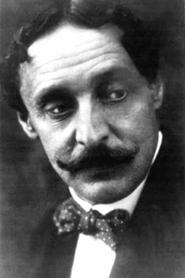
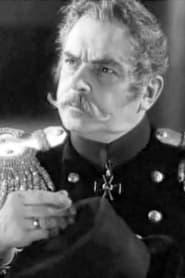
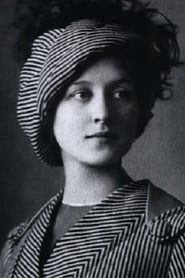
Yevgeni Bauer approached this film with his signature psychological sophistication, using subtle visual cues and framing to convey the complex emotional states of his characters. The production utilized both studio sets in Moscow and location filming in Crimea, which was unusual for Russian cinema of the period. Bauer worked closely with his cinematographer to create the film's distinctive visual atmosphere, employing innovative camera movements and lighting techniques that were ahead of their time. The casting of Nikolai Radin, Lidiya Koreneva, and Tasya Borman represented some of the finest actors in Russian cinema, all of whom had worked extensively with Bauer before. The film was completed just as the Russian Revolution was reaching its climax, creating enormous challenges for the production team and affecting the film's eventual release and distribution.
What critics said
Modern notes on For Happiness emphasize preservation, stylistic choices, and its place within director or studio filmographies.
Did you know?
- Director Yevgeni Bauer died of pneumonia in June 1917, just months before this film's release, making it one of his final works
- The film was released during the October Revolution, which dramatically affected its distribution and reception
- Yevgeni Bauer was considered among the leading sophisticated directors of the Russian Empire, known for his psychological dramas and innovative camera techniques
- The Khanzhonkov Film Company was one of Russia's most prominent early film studios, producing many of Bauer's works
- Many of Bauer's films, including this one, were preserved through the efforts of the Gosfilmofond archive in Moscow
- The film showcases Bauer's characteristic use of complex mise-en-scène and psychological depth uncommon in cinema of this era
- The Crimean location filming was relatively rare for Russian films of this period, which were typically studio-bound
- Bauer was known for his rapid production schedule, often completing 3-4 films per year, making his filmography remarkably extensive for his short career
Visual style
The cinematography in For Happiness showcases Yevgeni Bauer's characteristic visual sophistication, employing innovative camera techniques and lighting that were advanced for their time. The film features carefully composed shots that use depth and framing to enhance the psychological drama, with Bauer often positioning characters to visually represent their emotional states and relationships. The Crimean location sequences demonstrate a more naturalistic visual style compared to the controlled studio scenes, creating a contrast between the characters' confined emotional world and the freedom of the natural landscape. The film's visual language includes subtle camera movements and lighting effects that convey mood and psychological tension, techniques that would not become common in cinema for many years.
Innovations
For Happiness demonstrates several technical innovations that were ahead of their time in 1917 cinema. Bauer's use of sophisticated camera movement, including tracking shots and carefully choreographed camera positions, created a fluid visual style that enhanced the psychological drama. The film's lighting techniques, particularly in interior scenes, show advanced understanding of how light and shadow could be used to convey emotional states. The combination of studio and location filming was technically challenging for the period and required considerable logistical planning. Bauer's mise-en-scène demonstrates a sophisticated understanding of visual storytelling, using composition and framing to reveal character relationships and psychological states without relying on intertitles.
Music
As a silent film, For Happiness would have been accompanied by live musical performance during its original theatrical run. The typical accompaniment would have been provided by a theater organist or small ensemble playing appropriate mood music to enhance the emotional content of each scene. While no specific score information survives from the film's original release, contemporary screenings are often accompanied by newly composed scores or period-appropriate classical music. The film's emotional complexity would have required skilled musical accompaniment to properly convey the psychological nuances of the story.
Famous quotes
(As a silent film, quotes are conveyed through intertitles and visual narrative rather than spoken dialogue)
Memorable scenes
- The emotional revelation scene in Crimea where Lee's true feelings for Dmitry are discovered, creating a powerful moment of psychological tension and family drama that showcases Bauer's mastery of silent emotional storytelling
What audiences thought
The film was well-received by Russian audiences in 1917, who appreciated Bauer's reputation for quality filmmaking and the strong performances of the popular cast. However, its release during the chaotic period of the October Revolution limited its commercial success and distribution. In subsequent decades, the film was largely inaccessible to audiences both within and outside Russia due to political and preservation issues. Since its restoration and inclusion in international film retrospectives, modern audiences have responded positively to the film's emotional depth and technical artistry, with many expressing surprise at the sophistication of pre-revolutionary Russian cinema.
Film connections
Influenced by
- European psychological dramas of the 1910s
- Russian literary traditions of psychological realism
- Contemporary Scandinavian cinema
This film influenced
- Later Soviet psychological dramas
- International films exploring complex family dynamics
Film restoration
The film has been preserved through the efforts of the Gosfilmofond Russian State Archive of Film and Photo Documents in Moscow. While many films from this era are completely lost, For Happiness survives in a viewable condition, though some deterioration is evident. The film has been restored and included in various retrospectives of early Russian cinema and Yevgeni Bauer's work, allowing modern audiences to appreciate this significant example of pre-revolutionary Russian film art.
Where to watch
- Available through specialized film archives and museums
- Included in some collections of early Russian cinema
- Occasionally screened at international film festivals and cinematheques
- Available through some specialized streaming services dedicated to classic cinema