
Great Guy
"Rotten meat, paid inspectors"
Keys: Space play/pause · ←/→ 10s · F fullscreen · M mute · </> speed
About this film
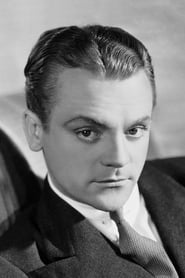
Meat inspector Jim Cameron exposes corrupt butchers bribing officials in Lloyd Bacon's 1936 Warner social problem film starring James Cagney.
Cast & crew
More Crime films
View all →

More from John G. Blystone
View all →
More about this film
About the production
Release dateDecember 25, 1936
Budget$150,000 (estimated)
Box officeNot publicly disclosed; however, it was considered a modest success for an independent studio.
ProductionGrand National Pictures, Zion Meyers Productions
Filmed inGrand National Studios, Hollywood, Los Angeles, California, USA
This was the first of two films James Cagney made for the fledgling independent studio Grand National Pictures after a high-profile legal battle to break his contract with Warner Bros. over billing disputes. The production was significantly leaner than Cagney's previous Warner Bros. outings, lacking the high-gloss finish and orchestral scores typical of major studio releases. To ensure accuracy in the film's depiction of bureaucratic procedures, the production hired Charles M. Fuller, the Los Angeles County Sealer of Weights and Measures, as a technical adviser. The script was adapted from 'The Johnnie Cave Stories' by James Edward Grant, which had been serialized in The Saturday Evening Post.
Themes
Anti-corruptionIntegrity vs. GreedThe Common Man vs. The SystemBureaucratic ReformPersonal Sacrifice for the Public Good
Themes & topics
weights and measurescorruptioninspectorex-boxershort-weightingracketeeringpolitical graftorphanage scandal
Historical background
Great Guy rode New Deal reform spirit and Cagney's return to tough urban roles.
Why this film matters
While not as as Cagney's gangster epics, 'Great Guy' is culturally significant as a document of the 'Independent Era' of Hollywood's biggest stars. It proved that a star of Cagney's magnitude could carry a film produced outside the 'Big Five' studios, though the eventual financial failure of Grand National ultimately sent him back to Warner Bros. It also remains one of the few films to focus on the Bureau of Weights and Measures, an obscure but vital government agency, turning bureaucratic inspection into a vehicle for action and social justice.
Making of
The production of 'Great Guy' was a gamble for both James Cagney and Grand National Pictures. Cagney had walked out on Warner Bros., claiming they had violated his contract by giving him second billing in certain markets. While waiting for the legal dust to settle, he signed with Edward L. Alperson's Grand National for $100,000 per film plus a percentage of the profits—a massive sum for an independent studio. Director John G. Blystone, primarily known for his work with Laurel and Hardy and other comedies, was tasked with maintaining the fast-paced 'Cagney style' on a fraction of a major studio's budget. The production relied heavily on Cagney's natural charisma to compensate for the sparse sets and lack of musical score.
What critics said
Reviewers saw effective Cagney; less remembered than his gangster classics.
Did you know?
- During the climactic party scene, James Cagney threw a punch at Joe Sawyer; Sawyer ducked so quickly that his head struck extra Jack Perry, breaking Perry's nose.
- The film is notable for reuniting James Cagney and Mae Clarke, who famously shared the 'grapefruit scene' in The Public Enemy (1931).
- Cagney's character, Johnny Cave, was specifically written to be a 'clean' version of his tough-guy persona to satisfy the Hays Office and the Production Code.
- The film's title was reportedly chosen as a meta-commentary on Cagney's public image during his legal battle with Warner Bros., framing him as the 'Great Guy' fighting the system.
- Because Grand National was a 'Poverty Row' studio, they could not afford the typical orchestral scores of the era, resulting in a film with very little incidental music.
- The story highlights a real-world issue of the 1930s: the 'short-weighting' of food and fuel, which was a common form of petty and organized crime during the Depression.
- James Edward Grant, who wrote the original stories, later became the preferred screenwriter for John Wayne.
- The film entered the public domain years later, leading to its wide availability on low-budget home video collections.
Visual style
The cinematography by Jack MacKenzie is functional and typical of mid-30s independent features, utilizing high-contrast lighting that occasionally borders on the 'proto-noir' style. Due to budget constraints, the film relies on tight framing and medium shots to hide the lack of expansive sets. There is a notable use of shadows in the scenes involving the villains' secret meetings to create a sense of menace.
Innovations
The film is technically notable for its realistic depiction of the tools and methods used by the Bureau of Weights and Measures in the 1930s, including the use of lead weights in poultry and rigged gasoline pumps. It was one of the early films to utilize a technical adviser from a specific government regulatory body to ensure procedural accuracy.
Music
The film is famously sparse in its use of music, a result of the limited budget at Grand National. Most of the film features only diegetic sound, with a brief, uncredited title theme. This lack of a traditional 'wall-to-wall' score gives the film a gritty, almost documentary-like feel that was unusual for Hollywood productions of the time.
Famous quotes
Johnny Cave: 'Forty percent of the American income is spent on food, and if the people are cheated out of only five percent in one year, that adds up to more than the war debt!'
Johnny Cave: 'I'll turn the heat on for anybody who threatens my men, but try to slip money on my desk... it's a one-way street, Cavanaugh.'
Janet Henry: 'Johnny, you're too aggressive. Is that Irish?' Johnny Cave: 'What's the matter with the Irish?'
Johnny Cave: 'Don't be sorry for me, it's the young ones... he's a bread snatcher, stealing food from orphans' mouths!'
Memorable scenes
- The Inspection Montage: Johnny and his partner Haley visit various markets and gas stations, uncovering creative ways merchants cheat customers, such as putting lead weights in chickens.
- The Party Brawl: The film's climax where Johnny disrupts a high-society event to expose the corrupt philanthropist, resulting in a chaotic and physically intense fight scene.
- The Drunk Driving Frame-up: A tense sequence where the villains kidnap Johnny and attempt to frame him for a car accident by forcing alcohol down his throat, a scene that predates similar tropes in later noir films.
What audiences thought
Audiences of the 1930s welcomed Cagney back to the screen after a year-long absence, and the film performed well in independent theaters. Viewers particularly enjoyed the physical comedy and the climactic brawl, which satisfied the public's desire to see Cagney 'crack heads' for a good cause. Today, it is mostly appreciated by classic film buffs and Cagney completists who enjoy the novelty of his role as a government inspector.
Film connections
Influenced by
- G-Men (1935)
- The Public Enemy (1931)
- The Johnnie Cave Stories (Saturday Evening Post)
This film influenced
- On the Waterfront (1954)
- The Untouchables (1987)
Film restoration
The film is in the public domain and is widely available. While no major studio restoration has been performed, several high-quality transfers exist from surviving 35mm prints, and it is preserved in the Library of Congress.
Where to watch
- Amazon Prime Video
- YouTube (Public Domain)
- TCM (Turner Classic Movies)
- The Film Detective
- Various 'Classic Movie' DVD collections