

Helen of Troy
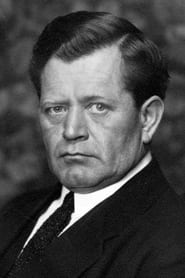
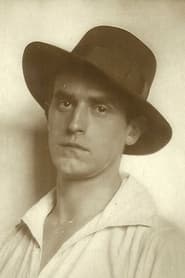
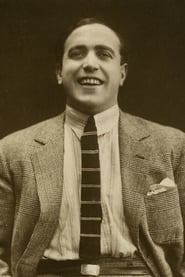
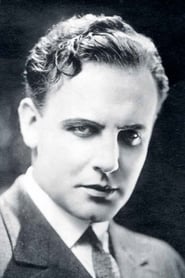
"Vladimir Gajdarov and Albert Steinrück"
Keys: Space play/pause · ←/→ 10s · F fullscreen · M mute · </> speed
About this film
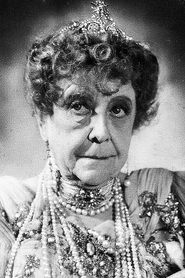
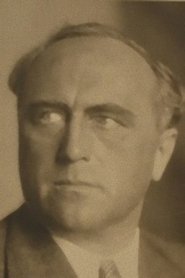
German silent drama film directed by Manfred Noa and starring Edy Darclea, Vladimir Gajdarov and Albert Steinrück. The film was based on the poem the Iliad by Homer. It was released in two separate parts: The Rape of Helen and The Fall of Troy. It was produced by Bavaria Film at the Emelka Studios in Munich. The film was made on an epic scale with thousands of extras, and large sets which rivalled those of the larger Berlin-based UFA.
Cast & crew
More films like this
More History films
View all →


More from Manfred Noa
View all →
More about this film
About the production
Release date1924
Box officeUnknown - though it was considered a commercial disappointment despite its scale
ProductionBavaria Film, Emelka Studios
Filmed inMunich, Germany, Emelka Studios
The film was produced on an unprecedented scale for German cinema, featuring massive sets including a full-scale reconstruction of ancient Troy and employing thousands of extras. The production spanned several months and required extensive costume and prop design to recreate ancient Greece. Despite being produced in Munich rather than Berlin's more prominent UFA studios, the film's visual effects and set designs were considered to rival or exceed those of contemporary UFA productions.
Themes
War and its consequencesBeauty and desireHonor and dutyBetrayal and loyaltyHuman pride and hubris
Themes & topics
Historical background
Helen of Troy (1924) emerged during late silent cinema and the transition toward sound, when exhibition habits and national film industries were still taking shape.
Why this film matters
Helen of Troy remains accessible through digital archives, giving modern viewers a direct link to 1924 screen culture.
Making of
The production of 'Helen of Troy' was an ambitious undertaking that represented Munich's attempt to compete with Berlin's film industry. Director Manfred Noa, working with cinematographer Carl Hoffmann, created elaborate sets that included detailed reconstructions of ancient Greek architecture. The battle sequences required complex choreography and coordination of thousands of extras, many of whom were local Munich residents. The production faced numerous challenges including weather delays for outdoor scenes and the logistical difficulties of managing such a large cast and crew. The film's costumes were meticulously researched and created to reflect ancient Greek styles, though some artistic liberties were taken for dramatic effect. The two-part release strategy was an innovative approach but ultimately proved confusing to audiences and hurt the film's commercial performance.
What critics said
Retrospective notes on Helen of Troy emphasize its value as a transitional sound-era artifact rather than blockbuster reception.
Did you know?
- This was among the costliest German films of the 1920s, with production costs estimated at several million marks
- The film featured over 3,000 extras for the battle sequences, a massive undertaking for the time
- Director Manfred Noa was relatively unknown before this production, which was both his breakthrough and ultimately his downfall when the film failed commercially
- The two-part structure was unusual for the time, with 'The Rape of Helen' and 'The Fall of Troy' released separately
- Despite its German origin, the film attempted to appeal to international audiences with its classical subject matter
- The film's failure contributed to the decline of Bavaria Film's ambitions to compete with Berlin's UFA studio
- Edy Darclea, who played Helen, was a Romanian actress making one of her few major film appearances
- The film's massive sets were reportedly so impressive that they were preserved and reused for other productions
- Contemporary critics praised the visual spectacle but criticized the pacing and dramatic execution
- The film was one of the earliest attempts to bring the Trojan War epic to the screen with such grand scale
Visual style
The cinematography by Carl Hoffmann employed innovative techniques for the time, including complex tracking shots during battle sequences and dramatic lighting effects to enhance the mythic atmosphere. The film utilized the full potential of the German Expressionist style in its set design and visual composition, creating stark contrasts and dramatic shadows that emphasized the epic nature of the story. Hoffmann's work on the large-scale battle scenes required innovative camera placement and movement techniques to capture the scope of the action while maintaining visual clarity. The film also made effective use of location shooting combined with studio sets to create a convincing ancient world.
Innovations
The film was notable for its innovative use of miniatures and matte paintings to create the illusion of ancient cities and massive battle scenes. The production employed forced perspective techniques and elaborate set construction to achieve its epic scale. The battle sequences featured complex choreography and the use of hundreds of extras in coordinated movements, requiring advanced planning and direction techniques. The film also experimented with color tinting for dramatic effect, particularly in scenes of fire and destruction during the fall of Troy.
Music
As a silent film, 'Helen of Troy' would have been accompanied by live musical performances during its original theatrical run. The score would have been typically performed by a theater orchestra or organist, using compiled classical pieces or specially composed music to enhance the dramatic moments. While the original score has not survived, contemporary screenings often use appropriate classical music or newly composed scores that reflect the epic nature of the film and the classical setting of ancient Greece.
Famous quotes
As a silent film, dialogue was conveyed through intertitles. Key moments included Helen's declaration of love for Paris and the various prophetic warnings about the war's consequences.
Memorable scenes
- The massive battle sequences featuring thousands of extras clashing on the plains before Troy
- The construction and deployment of the Trojan Horse
- Helen's first appearance at the court of Menelaus, showcasing her beauty
- The burning of Troy with its spectacular visual effects and dramatic destruction of the elaborate sets
What audiences thought
The film was reportedly a commercial disappointment despite its impressive scale and marketing. Audiences were divided, with some appreciating the visual spectacle while others found the lengthy running time and two-part structure cumbersome. The film's failure to connect with audiences was attributed to various factors including its pacing, the relative obscurity of its cast compared to more established stars, and perhaps audience fatigue with epic productions. The poor reception contributed to financial difficulties for Bavaria Film and marked a setback for director Manfred Noa's career.
Film connections
Influenced by
- The Iliad by Homer
- German Expressionist cinema
- Italian historical epics
- Contemporary American epics
This film influenced
- The Private Life of Helen of Troy (1927)
- Helen of Troy (1956)
- Troy (2004)
- Various subsequent sword and sandal epics
Film restoration
The film is considered partially lost or incomplete. While some footage survives, particularly from the first part 'The Rape of Helen', the complete film in its original two-part form is not known to exist in its entirety. Surviving fragments are held in various film archives, including the Bundesarchiv-Filmarchiv in Berlin. Restoration efforts have been limited due to the incomplete nature of the surviving material.
Where to watch
- Due to its incomplete preservation status, the film is not commercially available. Surviving fragments may occasionally be screened at specialized film archives or silent film festivals. Some fragments may be accessible through academic film archives or specialized cinema institutions.