

His Lord's Will
"A contested will and hidden kin upend the household."
Keys: Space play/pause · ←/→ 10s · F fullscreen · M mute · </> speed
About this film
After acting in the diptych of Thomas Graal, Sjöström shows that he also dominates the “light genre” as director. A series of family entanglements develop around the changing will of Roger Bernhuses de Sars (Karl Mantzius), who wants his heritage to go to his illegitimate daughter Blenda (Greta Almroth). Belonging to the golden age of Swedish film, this comedy offers one of the earliest explorations of the relationship between masters and servants on the screen, later developed by French masters like Renoir and Guitry.
Cast & crew
More Comedy films
View all →






More from Victor Sjöström
View all →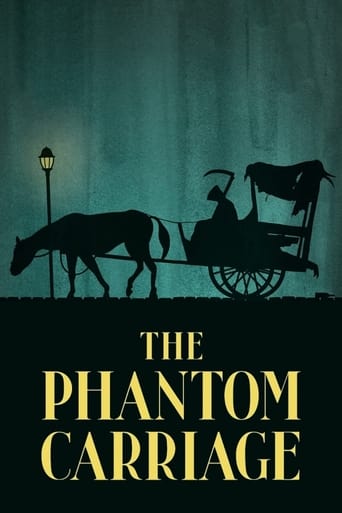


More about this film
About the production
Release dateDecember 26, 1919
Box officeBox office records from 1919 Swedish cinema are not preserved
ProductionSvenska Biografteatern
Filmed inStockholm, Sweden, Studio locations in Sweden
This film was part of Victor Sjöström's prolific 1919 output, during which he directed multiple films showcasing his versatility across genres. The production utilized the sophisticated studio facilities that Svenska Biografteatern had developed, allowing for elaborate sets that depicted both aristocratic mansions and servants' quarters. The film's exploration of class dynamics required detailed production design to visually represent the social stratification central to the story.
Themes
Class conflict and social hierarchyIllegitimacy and inheritance rightsLove versus material wealthThe corrupting influence of greedSocial mobility and its limitations
Themes & topics
inheritanceillegitimate daughterfamily conflictsocial classcomedywillservantsaristocracylovegreedmistaken identitysocial satire
Historical background
By 1919, competing studios crowded weekly bills, and His Lord's Will had to win attention alongside newsreels and shorts.
Why this film matters
Archivists revisit His Lord's Will (1919) for performance styles and craft choices that later releases refined or replaced.
Making of
Victor Sjöström approached this comedy with the same artistic seriousness he brought to his dramatic works, using the genre to explore social themes rather than merely for laughs. The casting of Karl Mantzius as the patriarch was significant, as he was a renowned stage actor known for his commanding presence. Greta Almroth's performance as Blenda required her to navigate complex social transitions, from illegitimate daughter to potential heiress. The film's production benefited from Svenska Biografteatern's sophisticated studio system, which by 1919 had developed advanced techniques for lighting and set design. Sjöström worked closely with cinematographer Julius Jaenzon to create visual distinctions between the world of the masters and servants, using lighting and composition to reinforce the social commentary. The director's background in both theater and film allowed him to extract nuanced performances that balanced comedy with social observation.
What critics said
Trade papers near 1919 listed His Lord's Will among weekly program offerings rather than as a headline critical event.
Did you know?
- This film represents a rare comedic work by Victor Sjöström, who was primarily known for his dramatic masterpieces like 'The Outlaw' and 'The Phantom Chariot'
- The film's exploration of master-servant relationships predates and possibly influenced later French masters like Jean Renoir's 'The Rules of the Game' (1939)
- Greta Almroth, who plays the illegitimate daughter Blenda, was one of Sweden's most popular silent film actresses of the 1910s and early 1920s
- The film was released during what is considered the golden age of Swedish cinema (1917-1924), when Swedish films gained international recognition for their artistic quality
- Victor Sjöström not only directed but also occasionally acted in films during this period, though he does not appear in this particular work
- The film's sophisticated approach to comedy has been compared to the works of Erich von Stroheim and Ernst Lubitsch, who were also exploring social satire in their films
- The original Swedish title 'Hans nåds testamente' literally translates to 'His Grace's Testament', reflecting the aristocratic setting
- This film was one of several Sjöström works from 1919 that showcased his range as a director, moving between genres with remarkable facility
- The film's preservation status makes it particularly valuable for understanding Sjöström's complete artistic vision beyond his more famous dramatic works
Visual style
The cinematography by Julius Jaenzon employed sophisticated lighting techniques to distinguish between the worlds of masters and servants, using softer, more diffused lighting for aristocratic spaces and harsher illumination for servants' quarters. The film utilized the advanced studio facilities of Svenska Biografteatern to create visually rich compositions that reinforced the social commentary. Jaenzon, who was Sjöström's regular collaborator, employed camera angles and movements that subtly emphasized power dynamics between characters. The visual style balanced the requirements of comedy with the serious social themes, using framing and composition to highlight both humorous situations and social commentary. The film's cinematography demonstrated the technical sophistication that had made Swedish cinema internationally respected during this period.
Innovations
The film demonstrated the technical sophistication of Swedish cinema during its golden age, particularly in its use of lighting and set design to reinforce social commentary. The production employed advanced studio techniques that allowed for elaborate sets depicting both aristocratic and servant environments. The film's editing showed considerable sophistication in its timing of comic moments and dramatic revelations. The technical quality of the cinematography and production design helped establish the international reputation of Swedish filmmaking during this period. The film's preservation demonstrates the relatively high quality of Swedish film stock and processing techniques of the era.
Music
As a silent film, His Lord's Will would have been accompanied by live musical performance during its original theatrical run. The typical Swedish cinema of 1919 would have employed either a piano accompanist or small orchestra to provide musical underscoring. The score would have followed contemporary practices of using popular classical pieces and specially composed music to enhance emotional moments and comic timing. Unfortunately, no specific information about the original musical accompaniment for this particular film has survived. Modern screenings of restored versions typically feature newly composed scores that attempt to capture the film's blend of comedy and social commentary.
Famous quotes
No specific dialogue quotes have survived from this silent film, as intertitles from Swedish films of this era are not well documented in English translation
Memorable scenes
- The scene where the will is read and family members' reactions reveal their true characters; The comic confrontation between servants and masters when the inheritance plans are revealed; The romantic subplot development between Blenda and her suitor, highlighting class barriers; The final resolution where social hierarchies are questioned and reevaluated
What audiences thought
Contemporary Swedish audiences responded positively to the film's humor and social commentary, finding resonance in its portrayal of familiar class dynamics. The film's domestic success contributed to the continued popularity of its stars, particularly Greta Almroth, who was already a beloved figure in Swedish cinema. The comedy's sophisticated approach to social issues appealed to educated urban audiences who were increasingly questioning traditional social hierarchies in the post-war period. International audiences, particularly in countries where Swedish films were distributed, found the film's distinctive Nordic perspective on class and family refreshing compared to more conventional Hollywood comedies of the era. Modern audiences who have had the opportunity to see restored versions of the film often express surprise at its contemporary relevance and sophisticated approach to social themes.
Film connections
Influenced by
- Swedish literary traditions of social commentary
- European theatrical comedy traditions
- The social satire of August Strindberg's works
- Contemporary Swedish stage comedy
- Early American film comedy techniques
This film influenced
- Jean Renoir's 'The Rules of the Game' (1939)
- Sacha Guitry's social comedies of the 1930s
- Later Swedish films exploring class dynamics
- European social satires of the 1920s and 1930s
Film restoration
The film is preserved in the Swedish Film Institute's archives, though like many films from this era, it may exist in incomplete or deteriorated condition. Restoration efforts have been undertaken to preserve this important example of Sjöström's work and Swedish cinema's golden age. The film's survival is particularly valuable given its status as one of Sjöström's rare comedies and its early exploration of social themes that would become more common in later European cinema.
Where to watch
- Swedish Film Institute archives and special screenings
- Museum of Modern Art (MoMA) film collection (potentially)
- European film archives that specialize in silent cinema
- Specialized silent film festivals and retrospectives
- Academic institutions with film studies programs