


His New Job
"Charlie's big break on a chaotic movie set"
Keys: Space play/pause · ←/→ 10s · F fullscreen · M mute · </> speed
About this film
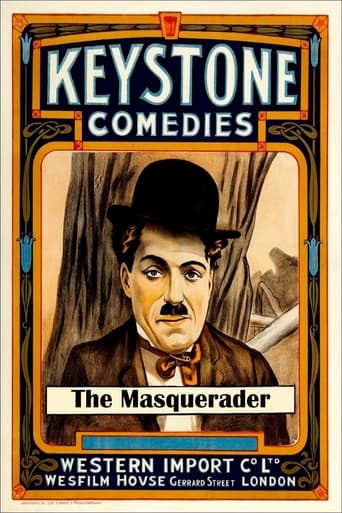
When one of the actors on a movie set doesn't show up, Charlie gets his chance to be on camera and replaces the actor. While waiting, he plays in a dice game and gets on many people's nerves. When he finally gets to act, he ruins his scene, accidentally destroys the set, and tears the skirt of the star of the movie.
Cast & crew
More films like this

More Comedy films
View all →







More from Charlie Chaplin
View all →



More about this film
About the production
Release dateFebruary 1, 1915
ProductionEssanay Film Manufacturing Company
Filmed inEssanay Studios, Chicago, Illinois
This was Charlie Chaplin's first film after signing with Essanay Studios for a substantial salary increase of $1,250 per week plus a $10,000 bonus. The production marked a significant upgrade in quality from his Keystone days, with better sets, more elaborate costumes, and longer running time. The film was shot in Chicago during winter, which caused some production challenges. Ben Turpin, who had crossed eyes and was already a well-known comedian at Essanay, appears in a supporting role.
Themes
The chaos of movie productionThe underdog's struggle for recognitionThe comedy of incompetenceThe illusion versus reality of filmmakingThe pursuit of opportunity
Themes & topics
movie studioextraactordice gameset destructioncomedy of errorsbehind the scenesfilm productionchaosopportunitymistaken identityslapstick
Historical background
Made during the studio era of 1915, His New Job reached audiences through theatrical programs, fairground booths, or specialized distribution channels typical of its generation. When one of the actors on a movie set doesn't show up, Charlie gets his chance to be on camera and replaces the actor.. Historians now read such works for what they reveal about production methods, national taste, and the expanding vocabulary of screen narrative.
Why this film matters
Archivists and programmers still screen His New Job when tracing how popular entertainment evolved. Its subject—when one of the actors on a movie set doesn't show up, charlie gets his chance to be on camera and—gives later viewers tangible evidence of what drew crowds in the silent period. Home video, restorations, and festival sidebars keep the title circulating among students of film history.
Making of
The making of 'His New Job' represented a pivotal moment in Chaplin's career as he transitioned from the chaotic Keystone environment to the more structured Essanay Studios. Chaplin had significant creative control, which was unusual for the time, and he used this freedom to develop his character more deeply. The film's behind-the-scenes setting was inspired by Chaplin's own experiences in the movie industry. During production, Chaplin reportedly clashed with Essanay management over creative differences, foreshadowing his eventual departure from the studio. The winter conditions in Chicago made filming challenging, but the indoor studio scenes allowed for more elaborate sets than Chaplin had previously worked with. Ben Turpin's involvement was particularly significant as he was one of the few established comedians willing to work with the rising star without top billing.
What critics said
Original trade coverage treated His New Job as routine program filler rather than a landmark production—common for shorts. Later criticism emphasizes preservation, stylistic comparison with contemporaries, and whatever cast or crew names later gained prominence. Contemporary writing is mostly historical: assessing completeness, influence, and place in a director's or studio's catalog.
Did you know?
- This was the first film Charlie Chaplin made for Essanay Studios after leaving Keystone Studios, marking a significant career advancement.
- The film was originally titled 'The New Job' but was changed to 'His New Job' to emphasize Chaplin's personal connection to the story.
- This was one of the first films to show behind-the-scenes aspects of movie-making, giving audiences a glimpse into how films were created in the early 1900s.
- Ben Turpin, who appears in the film, was already a major star at Essanay and would later become famous for his crossed eyes and rubber-faced comedy.
- The movie set depicted in the film was an actual Essanay studio set, making it somewhat meta as it was filmed in a real movie studio.
- Chaplin's salary for this film was part of a groundbreaking contract that paid him $1,250 per week plus bonuses, an enormous sum at the time.
- The film was shot in Chicago, one of the few Chaplin films not made in California, as Essanay had two studios at the time.
- This marked Chaplin's transition from one-reel comedies to longer two-reel films, allowing for more complex storytelling.
- The film was so successful that it helped establish Essanay as a major comedy studio competing with Keystone.
- Chaplin's character's name in the film is never revealed, maintaining his iconic 'Tramp' persona even in a different role.
Visual style
The cinematography in 'His New Job' represented a significant advancement from Chaplin's earlier Keystone films. The film was shot by Harry W. Gerstad and Roland Totheroh, Essanay's regular cinematographers who worked extensively with Chaplin. The camera work is more sophisticated than in previous Chaplin shorts, with more varied camera angles and better composition. The film makes effective use of deep focus to show the chaos on the movie set, allowing multiple gags to occur simultaneously. The lighting is more controlled and dramatic than in earlier films, creating a more professional look. The cinematography effectively captures the meta-narrative by showing both the movie-within-the-movie and the actual film production. The camera movements are more deliberate and purposeful, reflecting Chaplin's growing understanding of film as an art form rather than just recorded stage performance.
Innovations
The film demonstrated several technical innovations for its time, including more elaborate set construction than typical comedy shorts. The movie-within-a-movie concept required sophisticated staging and blocking to clearly distinguish between the film being made and the actual film. The film's longer running time (30 minutes) represented a move away from the standard one-reel format, allowing for more complex storytelling and character development. The production used multiple camera setups to capture the action from different angles, which was becoming more common but still required significant planning. The film's preservation of behind-the-scenes movie-making techniques provides valuable documentation of early film production methods. The destruction of the set in the film's climax required careful planning and coordination to achieve the comedic effect while maintaining safety.
Music
As a silent film, 'His New Job' would have been accompanied by live musical performance during its original theatrical run. The typical score would have been provided by a theater organist or small orchestra, using popular songs of the era and classical pieces appropriate to the on-screen action. The music would have emphasized the comedic moments with lively, upbeat tunes and used more dramatic music during the chaotic scenes. Modern restorations of the film have been scored by various composers, including some who attempt to recreate the authentic 1915 musical style using period-appropriate instruments and arrangements. The lack of synchronized sound allowed theaters to customize the musical accompaniment based on their available musicians and local musical preferences.
Famous quotes
(Intertitle) 'Wanted - A Substitute Actor'
(Intertitle) 'Charlie gets his chance'
(Intertitle) 'The dice game begins'
(Intertitle) 'His big moment arrives'
(Intertitle) 'Disaster on the set!'
Memorable scenes
- The opening sequence where Charlie arrives at the movie studio and observes the controlled chaos of film production
- The dice game scene where Charlie disrupts the other crew members while waiting for his scene
- The climactic sequence where Charlie finally gets to act but accidentally destroys the entire set, including tearing the leading lady's dress and knocking down walls, creating complete pandemonium on the movie set
What audiences thought
The film was enormously popular with audiences upon its release, capitalizing on Chaplin's growing fame as the Tramp character. Movie theaters reported packed houses for the film, with many venues adding extra showings to meet demand. Audiences particularly enjoyed the behind-the-scenes glimpse of movie-making, which was a novelty at the time. The film's success helped establish Chaplin as a bankable star who could draw audiences based on his name alone. Contemporary accounts describe audiences laughing throughout the film and giving it enthusiastic applause. The film's popularity extended internationally, with Chaplin's films being in high demand in Europe even during wartime. The positive reception helped solidify Chaplin's status as especially popular entertainers of the era.
Film connections
Influenced by
- Keystone comedy style
- Mack Sennett's production methods
- Stage comedy traditions
- French comedy films
- Music hall entertainment
This film influenced
- The Idle Class (1921)
- Show People (1928)
- Sullivan's Travels (1941)
- Singin' in the Rain (1952)
- The Stunt Man (1980)
- Ed Wood (1994)
- Bowfinger (1999)
Film restoration
The film is preserved in various film archives including the Library of Congress, the Museum of Modern Art, and the British Film Institute. Multiple 35mm prints and 16mm reduction prints exist. The film has been restored and is available on DVD and Blu-ray collections of Chaplin's Essanay period. Some versions include original tinting and intertitles. The preservation status is good, with the film being widely accessible to scholars and the public through various home media releases and online platforms.
Where to watch
- The Criterion Collection DVD/Blu-ray releases
- Kino Lorber's Chaplin at Essanay collections
- The Charlie Chaplin Official Archive
- YouTube (official uploads)
- Amazon Prime Video
- Apple TV
- Google Play Movies
- Various streaming services specializing in classic cinema