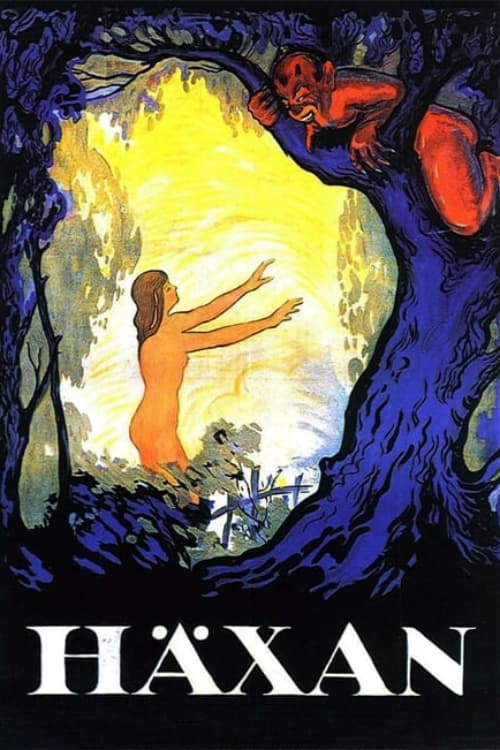
Häxan
"Grave robbing, torture, possessed nuns, and a satanic Sabbath"
Directed by Benjamin Christensen
Keys: Space play/pause · ←/→ 10s · F fullscreen · M mute · </> speed
Plot
Benjamin Christensen's groundbreaking film 'Häxan' presents a seven-part documentary-style examination of witchcraft throughout history, beginning with a scholarly discussion of demonology and medieval beliefs about Satan. The film then transitions into dramatic reenactments depicting the persecution of alleged witches, including graphic scenes of torture, confessions extracted under duress, and elaborate depictions of witches' sabbaths. Christensen draws parallels between the 'hysteria' attributed to witches in the Middle Ages and contemporary psychiatric conditions, suggesting that many accused witches were suffering from mental illness rather than practicing actual witchcraft. The film culminates in a sequence where Christensen himself appears as a modern devil, suggesting that superstition and persecution continue in different forms in the modern era. Throughout, the film balances serious documentary intent with shocking imagery and moments of dark humor, creating a unique hybrid of education and entertainment.
About the Production
Release Date September 18, 1922 (Sweden)
Budget Approximately 1.5-2 million Swedish kronor (an enormous sum for the time, making it one of the most expensive Scandinavian films of the silent era)
Box Office The film was initially a commercial disappointment in Scandinavia but performed better in international markets, particularly in Germany and France
Production Svensk Filmindustri, Danish Film Company
Filmed In Filmstaden Studios, Solna, Sweden, Various locations around Copenhagen, Denmark
The production took nearly two years to complete (1920-1922), with Christensen obsessing over historical accuracy in costumes and props. The film required elaborate sets, including a full-scale reconstruction of a medieval witch trial courtroom and detailed torture chambers. Special effects were groundbreaking for the time, including superimposition, stop-motion animation, and elaborate makeup effects. Christensen reportedly spent months researching historical texts and visiting museums to ensure authenticity in the depiction of witchcraft paraphernalia and torture devices.
Themes & Topics
witchcrafttorturesatanic ritualmedieval historydocumentaryhorrorpossessionwitch trialdemonologyhysteriareligious persecutionsupernaturalhistorical reenactmentpsychologyfolklore
Historical Background
'Häxan' emerged in the aftermath of World War I, a period of profound social and intellectual upheaval in Europe. The 1920s saw growing interest in psychoanalysis and new scientific approaches to understanding human behavior, with figures like Freud and Jung gaining prominence. Christensen's film reflects this shift from religious to scientific explanations for phenomena previously attributed to supernatural forces. The film also coincided with the golden age of Scandinavian cinema, when directors like Victor Sjöström and Mauritz Stiller were gaining international recognition. Denmark and Sweden, though neutral during WWI, had experienced the war's economic and social disruptions, leading to questioning of traditional authority and institutions. The film's critical stance toward religious persecution and institutional power resonated with post-war skepticism about established institutions. Additionally, the early 1920s saw renewed interest in occultism and spiritualism across Europe, making the subject of witchcraft particularly timely despite its historical setting.
Why This Film Matters
'Häxan' stands as a landmark in cinema history for its innovative blend of documentary and narrative techniques, essentially creating a new hybrid form that would later be termed 'docudrama'. The film's fearless approach to controversial subjects, including religious hypocrisy, sexual repression, and institutional violence, pushed the boundaries of what was acceptable in cinema. Its visual style influenced generations of horror filmmakers, with its imagery of witches, demons, and satanic rituals becoming part of the visual lexicon of horror cinema. The film's feminist undertones in depicting the persecution of women as witches anticipated later feminist readings of history. Its use of special effects and makeup artistry set new standards for visual effects in silent cinema. The film also represents an early example of cinema engaging with academic scholarship, attempting to present historical research in an accessible visual format. 'Häxan' has been cited as an influence on filmmakers ranging from Ingmar Bergman to Tim Burton, and its DNA can be seen in everything from historical documentaries to supernatural horror films.
Making Of
The making of 'Häxan' was an epic undertaking that nearly bankrupted its creator. Christensen, already an established director in Denmark, moved to Sweden to take advantage of the superior facilities at Svensk Filmindustri's Filmstaden studios. He spent months in research, consulting historical texts, visiting museums, and even studying medieval torture methods. The production design was extraordinarily detailed, with craftsmen building full-scale reproductions of medieval torture chambers, courtrooms, and witches' dens. Christensen demanded absolute authenticity from his cast, forcing them to wear heavy, historically accurate costumes even in the studio's summer heat. The special effects team pioneered new techniques, including complex superimposition for the flying sequences and innovative makeup effects that took hours to apply. Many scenes were shot multiple times for the Swedish and Danish versions, with Christensen sometimes playing different roles in each version. The production was so expensive that Christensen had to mortgage his personal property and take out loans to complete filming. Despite the financial strain, he refused to compromise his vision, insisting on the most elaborate sets and effects possible.
What Critics Said
Initial critical reception was deeply divided, with many critics condemning the film as obscene or blasphemous while others praised its artistic merit and intellectual ambition. Swedish critics were particularly harsh, with some calling it 'a disgrace to Swedish cinema' and 'a vulgar spectacle'. Danish critics were more appreciative, recognizing Christensen's artistic vision and technical achievement. International critics, especially in Germany and France, were more positive, with many praising the film's bold visual style and intellectual depth. Over time, critical opinion has shifted dramatically in the film's favor. Modern critics now recognize 'Häxan' as a masterpiece of silent cinema, with the film consistently appearing on lists of greatest films ever made. Critics today appreciate its pioneering visual effects, its sophisticated blend of genres, and its surprisingly progressive social commentary. The film is now studied in film schools for its innovative techniques and its place in the development of both documentary and horror cinema.
Did You Know?
- Director Benjamin Christensen not only directed but also played multiple roles, including the Devil, Jesus, and himself as the narrator
- The film was banned in several countries including the United States for many years due to its graphic content and nudity
- In 1968, a truncated version with a jazz score by Daniel Humair was released, titled 'Witchcraft Through the Ages' and narrated by William S. Burroughs
- The film's title 'Häxan' is Swedish for 'The Witch' (singular, with definite article)
- Christensen spent so much money on production that he went bankrupt and had to sell his house to complete the film
- Many of the torture devices shown in the film were historically accurate reproductions based on museum pieces
- The actress who played the young witch accused of consorting with Satan, Maren Pedersen, was actually a 70-year-old woman made up to look young
- The film was shot in both Swedish and Danish versions simultaneously, with different actors for some roles
- Christensen used real animal intestines and other organic materials to create realistic special effects for the witches' potions and concoctions
- The film's depiction of the witches' sabbath influenced countless later horror films, including Ken Russell's 'The Devils' and Roman Polanski's 'Rosemary's Baby'
Awards & Recognition
- Named one of the 12 most important films of all time by the Danish Film Institute in 1972
- Voted Best Danish Film of the Century by Danish film critics in 1995
- Honored at the 1997 Venice Film Festival with a special screening of the restored version
More film details Visual style, music, quotes, restoration, and more
Visual Style
The cinematography of 'Häxan' was groundbreaking for its time, utilizing innovative techniques that would influence visual storytelling for decades. Cinematographer Johan Ankerstjerne employed dramatic lighting techniques that created stark contrasts between light and shadow, prefiguring the German Expressionist style. The film used extensive use of chiaroscuro effects, particularly in the witch trial and torture sequences, to create an atmosphere of dread and oppression. Ankerstjerne and Christensen pioneered the use of color tinting to enhance mood, with blue tones for night scenes, sepia for historical sequences, and red for scenes of violence and passion. The film's special effects sequences, including the famous flying witches, utilized complex multiple exposures and matte paintings that were remarkably sophisticated for 1922. The camera work was unusually dynamic for the period, with moving shots and unusual angles that added to the film's unsettling atmosphere. The close-ups of actors' faces during torture scenes were particularly effective in conveying psychological horror. The cinematography also included documentary-style shots of historical artifacts and texts, creating a visual contrast between the scholarly and dramatic elements.
Innovations
'Häxan' was remarkably innovative in its technical achievements, pushing the boundaries of what was possible in early 1920s filmmaking. The film pioneered complex special effects including sophisticated superimposition techniques used for the flying sequences and demonic appearances. The makeup effects, particularly for the Devil and various demonic creatures, were extraordinarily elaborate for the time, requiring hours of application and featuring prosthetics that were revolutionary in their design. The film's production design included full-scale reproductions of medieval torture devices and architectural elements that were historically accurate and functional. Christensen and his team developed new techniques for creating supernatural effects, including the use of dry ice for smoke and mist, and innovative camera tricks for transformation sequences. The film's editing was also ahead of its time, seamlessly blending documentary footage with dramatic reenactments. The various versions of the film demonstrate early approaches to international film distribution, with different cuts prepared for different markets. The preservation and restoration work done on the film in the late 20th century also represents technical achievement in film conservation.
Music
As a silent film, 'Häxan' was originally accompanied by live musical performances that varied by theater and region. The original Swedish score was composed by Jules Sylvain and emphasized dramatic, orchestral arrangements that heightened the film's horror elements. Different theaters used different musical approaches, with some employing full orchestras while others used organ accompaniment. In 1968, the re-edited version 'Witchcraft Through the Ages' featured an avant-garde jazz score by Daniel Humair, which created a completely different viewing experience. In 2001, the Danish Film Institute commissioned a new score from film composer Frithjof Toksvig for the restored version of the film. More recently, various contemporary musicians and composers have created new scores for special screenings, including experimental electronic artists who emphasize the film's surreal and disturbing qualities. The variety of musical accompaniments over the years demonstrates the film's flexibility and continuing relevance to different artistic movements and sensibilities.
Famous Quotes
Text from opening title card: 'For centuries, the world has been ruled by two powers: the spiritual and the temporal. But there is a third power, more mysterious and terrible than both... the power of witchcraft.'
Narrator's commentary: 'What we call witchcraft today, they called madness tomorrow. What we call madness today, they may call science tomorrow.'
Devil's dialogue to witches: 'Welcome, my children! Tonight we shall celebrate with wine and revelry, for tomorrow the world will fear us once more!'
Inquisitor's speech: 'The Devil takes many forms, but his work is always the same: to corrupt the innocent and lead the faithful astray.'
Closing narration: 'The witch is dead, but superstition lives on. We have changed our methods, but not our madness.'
Memorable Scenes
- The extended witches' sabbath sequence, featuring elaborate costumes, demonic creatures, and surreal imagery that influenced horror cinema for decades
- The torture chamber scenes, which were so graphic and realistic that they caused audience members to faint during early screenings
- The opening documentary sequence with Christensen himself presenting historical artifacts and texts about witchcraft
- The transformation scene where a young woman morphs into various demonic forms using pioneering special effects
- The final sequence where Christensen appears as a modern Devil, suggesting that superstition and persecution continue in contemporary society
- The trial scene where accused witches are subjected to humiliating and degrading 'tests' to prove their guilt
- The flying sequence showing witches soaring to their sabbath, achieved through innovative camera techniques and special effects
What Audiences Thought
Contemporary audience reaction was as divided as critical response. In Scandinavia, many viewers were shocked by the film's graphic content, including nudity, torture scenes, and depictions of satanic rituals. Some audience members reportedly fainted during screening of the more intense sequences. Church groups organized protests against the film in several cities. However, the film also attracted curious audiences drawn to its scandalous reputation. In international markets, particularly in more cosmopolitan cities like Berlin and Paris, audiences were more receptive, viewing the film as sophisticated European art cinema. Over the decades, 'Häxan' has developed a cult following among horror enthusiasts and film scholars. Modern audiences at revival screenings and film festivals generally respond enthusiastically to the film's audacious visual style and dark humor. The film has found new life through home video and streaming platforms, introducing it to younger audiences who appreciate its historical significance and still-shocking imagery.
Film Connections
Influenced By
- The Malleus Maleficarum (1487) - historical witch-hunting manual
- Works of Danish historian Kristian Erslev
- German Expressionist cinema
- Scandinavian folklore traditions
- Early documentary films of the 1910s
- Academic studies of medieval witch trials
- Theatrical traditions of Grand Guignol
- Gothic literature of the 19th century
This Film Influenced
- The Devils (1971) - Ken Russell
- Rosemary's Baby (1968) - Roman Polanski
- The Witch (2015) - Robert Eggers
- Suspiria (1977) - Dario Argento
- The Seventh Seal (1957) - Ingmar Bergman
- Hour of the Wolf (1968) - Ingmar Bergman
- The Wicker Man (1973) - Robin Hardy
- Black Sunday (1960) - Mario Bava
Film Restoration
The film has been preserved and restored multiple times. The original negative was thought lost for decades but was discovered in the 1960s in the Danish Film Archive. The most comprehensive restoration was completed in 2001 by the Danish Film Institute in collaboration with the Swedish Film Institute, using elements from various versions to create the most complete version possible. The restored version premiered at the Cannes Film Festival in 2001. The film is now preserved in the archives of both the Danish Film Institute and the Swedish Film Archive. Various versions exist in different archives worldwide, including the shortened American version 'Witchcraft Through the Ages'. The film has been released on Blu-ray and DVD by Criterion Collection and other specialty labels, ensuring its availability for future generations.
Where to Watch
- The Criterion Collection (Blu-ray/DVD with extensive special features)
- The Criterion Channel (streaming service)
- Kanopy (free streaming through participating libraries and universities)
- MUBI (occasionally featured in their curated selections)
- YouTube (some public domain versions available, though quality varies)
- Amazon Prime Video (for purchase or rental)
- Various film streaming platforms specializing in classic cinema