I Do
"Marriage meets mayhem"
Keys: Space play/pause · ←/→ 10s · F fullscreen · M mute · </> speed
About this film
Harold Lloyd's newlywed faces domestic disasters and mischievous children in this 1921 two-reel family comedy.
Cast & crew
More films like this
More Comedy films
View all →







More from Hal Roach
View all →

More about this film
About the production
Release dateSeptember 11, 1921
BudgetApproximately $25,000 - $40,000 (Estimated for Roach two-reelers of the era)
Box officeHighly successful for its format; part of Lloyd's peak short-film period
ProductionRolin Film Company, Hal Roach Studios
Filmed inHal Roach Studios, Culver City, California, Los Angeles, California
The film was originally conceived and shot as a three-reel comedy. However, after a disappointing preview screening where the audience found the opening slow, Harold Lloyd and Hal Roach made the bold decision to scrap the entire first reel. This reduced the film to a two-reeler, focusing more tightly on the domestic chaos and the 'babysitting' sequence. This editing choice is often cited by film historians as a key example of Lloyd's perfectionism and his 'preview system' of refining comedy based on real audience reactions.
Themes
The trials of early marriageThe chaos of parenthoodDomestic anxietyThe 'Everyman' struggling with modern lifeMisunderstanding and mistaken identity
Themes & topics
newlywedsbabysittinggoatdomestic comedyslapstickmistaken identity1920sglasses character
Historical background
I Do belongs to Lloyd's Roach marital farces before feature dominance.
Why this film matters
The film is significant for its contribution to the 'Domestic Comedy' subgenre. Unlike the surreal or purely physical slapstick of the 1910s, 'I Do' grounded its humor in recognizable, everyday situations—marriage, kids, and household chores. This made Harold Lloyd's 'Glasses Character' more relatable to the general public than the more eccentric personas of Chaplin or Keaton. It helped establish the 'Everyman' archetype in American cinema, a figure who succeeds through persistence and pluck rather than luck or superhuman ability.
Making of
The production of 'I Do' was a turning point for Harold Lloyd's creative process. Following the lukewarm reception of the initial three-reel cut, Lloyd realized that the 'setup' in the first reel was unnecessary and detracted from the pacing. By removing it, he discovered that the audience didn't need a long introduction to care about the characters if the gags were strong and the situation relatable. This 'surgical' approach to editing became a hallmark of his career. Additionally, the chemistry between Lloyd and Mildred Davis was palpable on set; their off-screen romance was blossoming during this period, which added a layer of genuine warmth to their portrayal of newlyweds.
What critics said
Standard Lloyd; fans enjoy domestic stunt gags.
Did you know?
- The film was originally three reels long but was cut to two after a poor preview.
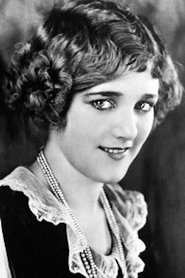
- Mildred Davis, the leading lady, would eventually become Harold Lloyd's real-life wife in 1923.
- The film features a sequence with a goat, a common trope in early Hal Roach comedies.
- Harold Lloyd performed his stunts despite having lost his thumb and index finger in a prop bomb accident only two years prior (1919).
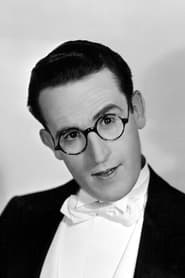
- The 'Glasses Character' seen here was Lloyd's signature 'Everyman' persona that made him a global superstar.
- The film was released just before Lloyd transitioned into full-length features like 'Grandma's Boy'.
- The child actors in the film were precursors to the 'Our Gang' (Little Rascals) style of child-led comedy Roach would later perfect.
- The film's title is a play on the traditional marriage vow.
- It was distributed by Pathé Exchange, the primary distributor for Roach at the time.
Visual style
The film utilizes the standard 'flat' lighting common in early 1920s comedies to ensure all gags are clearly visible. However, it features some creative 'point-of-view' shots and clever framing during the 'burglar' sequence to build tension and enhance the comedic payoff. The use of depth in the house sets allows for multiple layers of action, with children causing trouble in the background while Harold remains oblivious in the foreground.
Innovations
The primary technical achievement of 'I Do' lies in its narrative editing. The decision to remove an entire third of the film to improve the 'laugh-per-minute' ratio was a sophisticated editorial move for 1921. It also demonstrated an early use of 'previewing' as a tool for film construction, a technique that would later become standard in Hollywood.
Music
As a silent film, there was no original recorded soundtrack. Modern restorations often feature piano or organ scores. Notable accompaniments have been composed by Ben Model, who uses traditional silent film motifs to accentuate the slapstick timing and the frantic energy of the film's climax.
Famous quotes
Intertitle: 'The first year of married life is the hardest - after that you get used to it.'
Intertitle: 'A quiet evening at home - with someone else's children.'
Memorable scenes
- The 'Bedtime Battle': Harold's increasingly desperate and failed attempts to get two energetic children to stay in bed.
- The Goat in the House: A classic slapstick sequence where a goat enters the home and causes total destruction while Harold tries to maintain order.
- The Burglar Scare: A tense but hilarious sequence where Harold arms himself against a suspected intruder, leading to a series of physical gags with household objects.
What audiences thought
Audiences in 1921 responded enthusiastically to the film, particularly after the first reel was cut. It was one of the top-grossing short comedies of the year. The 'babysitting' sequence was a particular favorite, as it resonated with parents who saw their own daily struggles reflected and exaggerated on screen. Lloyd's popularity was at an all-time high, and 'I Do' solidified his status as a box-office draw who could guarantee laughs.
Film connections
Influenced by
- The domestic comedies of Mr. and Mrs. Sidney Drew
- Early Charlie Chaplin shorts (for slapstick timing)
- Hal Roach's own 'Our Gang' concepts
This film influenced
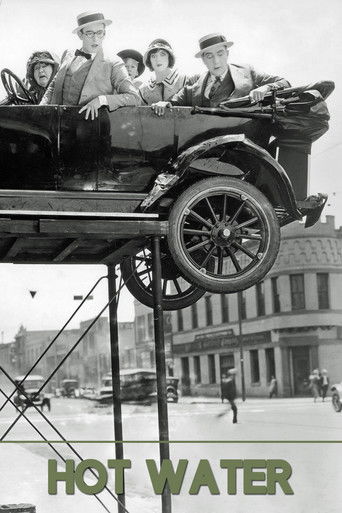
- Hot Water (1924)
- The Little Rascals (Our Gang) series
- Modern domestic sitcoms
Film restoration
The film is well-preserved. While many of Lloyd's early negatives were lost in a 1943 fire, 'I Do' survived in his personal archive. It has been restored and is available in high-quality versions today.
Where to watch
- The Harold Lloyd Comedy Collection (DVD/Blu-ray)
- The Criterion Channel
- YouTube (Public Domain/Archive channels)
- Turner Classic Movies (TCM)