In Life's Cycle
“A Touching Story of a Mother's Influence and a Promise Kept”
About In Life's Cycle
At their mother's deathbed, a young brother and sister are made to swear a solemn vow that they will never forget her memory or the lessons she instilled in them. As the years pass into adulthood, the son remains steadfastly devoted to his promise, making regular pilgrimages to his mother's grave to seek spiritual guidance and maintain his moral compass. In stark contrast, the daughter becomes swept up in the superficiality of high society and the distractions of modern life, eventually neglecting her vow and the memory of her parent. The narrative reaches a poignant climax when the sister, facing a personal crisis, is confronted by her brother's unwavering faith, leading to a spiritual awakening and a realization of the 'cycle' of life and duty. The film serves as a moralistic parable typical of the era, emphasizing that the influence of a mother transcends the grave and shapes the destiny of her offspring.
Cast & crew
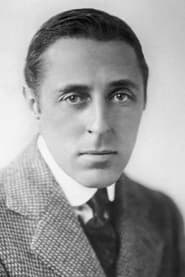
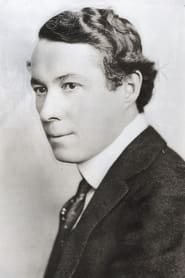
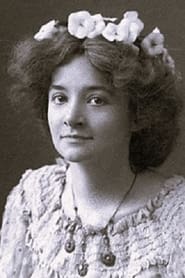
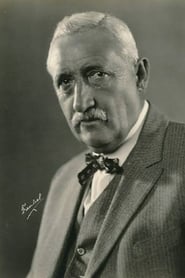
More films like this
More from D.W. Griffith
View all →
More about In Life's Cycle
Production
- Release date
- September 19, 1910
- Country
- United States
- Budget
- Approximately $500 - $1,000 (Estimated based on Biograph standard weekly budgets of 1910)
- Production
- Biograph Company
- Filmed in
- Biograph Studio, 11 East 14th Street, New York City, New York, Cuddebackville, New York (Exterior scenes)
The film was produced during D.W. Griffith's incredibly prolific period at Biograph, where he was directing nearly two films per week. This specific production utilized the 'Biograph Stock Company,' a tight-knit group of actors who worked interchangeably as leads and extras. The outdoor sequences were filmed in the rural landscapes of New York to provide a naturalistic contrast to the heavy, Victorian-style interior sets built in the Manhattan studio. Like most Biograph shorts of the time, it was filmed on a single reel of 35mm celluloid.
Themes & topics
Historical background
In 1910, the American film industry was in a state of rapid transition from 'attractions' (simple spectacles) to 'narrative' (complex storytelling). The National Board of Censorship had been established just a year prior, and filmmakers like Griffith were under pressure to prove that movies could be a 'moral' and 'educational' medium rather than just cheap entertainment for the working class. This film's focus on maternal devotion and the sanctity of a promise was a direct response to these cultural pressures. Furthermore, the year 1910 marked the height of the 'Trust' era, where the Motion Picture Patents Company (MPPC) attempted to control all aspects of production and distribution.
Why this film matters
The film is significant for its early exploration of character arc and psychological contrast between siblings. While many films of the era were simple comedies or chases, 'In Life's Cycle' attempted to deal with the passage of time and the internal moral decay of a character. It helped solidify the 'Biograph style' as the gold standard for dramatic filmmaking in the pre-feature era. It also reflects the Victorian values of the time, specifically the 'Cult of Domesticity' and the idealized role of the mother as the moral anchor of the American family.
Making of
During the production of 'In Life's Cycle,' Griffith was experimenting heavily with the 'restrained' acting style. He famously pushed his actors to move away from the broad, theatrical gestures of the stage and toward more subtle facial expressions that the camera could capture in closer shots. The filming in Cuddebackville was part of a regular summer excursion the Biograph company took to escape the heat of New York City and find authentic rural backgrounds. Tensions were often high on set due to Griffith's demanding pace, yet the ensemble remained loyal because of the artistic prestige associated with Biograph films. The technical crew had to deal with the limitations of hand-cranked cameras, requiring Bitzer to maintain a consistent rhythm to ensure the exposure remained even throughout the outdoor shots.
What critics said
Contemporary reviews in trade publications like 'The Moving Picture World' praised the film for its emotional depth and the quality of the acting. Critics noted that Griffith had a unique ability to make the audience feel the 'pathos' of the situation without resorting to excessive title cards. Modern film historians view it as a competent, if conventional, example of Griffith's early work, showcasing his developing mastery of cross-cutting to show the divergent lives of the two protagonists.
What audiences thought
Audiences in 1910 responded strongly to the sentimental themes of the film. It was a 'tear-jerker' that resonated with the immigrant and working-class populations who frequented nickelodeons, as the theme of family loyalty was universal. The film was successful enough to be kept in circulation for several years through the Biograph distribution network.
Visual style
Billy Bitzer utilized natural lighting for the exterior graveyard scenes to create a somber, reflective atmosphere. The interior scenes utilized the standard high-angle, flat lighting of the era, but Griffith and Bitzer began experimenting with 'character placement' within the frame to indicate emotional distance between the siblings. The use of the 'medium long shot' allowed for more visible facial expressions than the extreme long shots used by Griffith's contemporaries.
Innovations
The film demonstrates an early use of 'parallel editing' to contrast the brother's virtuous life with the sister's worldly distractions. While not as complex as Griffith's later work, the rhythmic cutting between the two locations helped establish a sense of simultaneous action and moral comparison that was revolutionary for 1910.
Music
As a silent film, there was no recorded soundtrack. Original screenings would have been accompanied by a live pianist or organist, likely playing popular sentimental ballads of the era or classical pieces such as Chopin's 'Funeral March' during the graveyard sequences to heighten the emotional impact.
Film restoration
Preserved. Prints exist in the Library of Congress film archive and the Museum of Modern Art (MoMA) film collection.
Did you know?
- The film features Henry B. Walthall, who would later become one of Griffith's most famous collaborators, most notably starring as 'The Little Colonel' in The Birth of a Nation (1915).
- Stephanie Longfellow, who plays the daughter, was a descendant of the famous poet Henry Wadsworth Longfellow.
- This film is a prime example of the 'Biograph morality play,' a genre Griffith perfected to appeal to middle-class audiences and censors.
- The cinematography was handled by G.W. 'Billy' Bitzer, the man credited with developing many of the foundational techniques of modern film lighting and framing.
- The film was released on a 'split-reel' or as a standalone headliner depending on the local theater's programming for that week.
- George Nichols, who plays the father/authority figure, was a veteran actor who appeared in over 400 films between 1908 and 1927.
- The script was likely uncredited, as was common for Biograph, but often these stories were developed through improvisational rehearsals led by Griffith.
- The title 'In Life's Cycle' refers to the generational transition of values from parent to child.
Memorable scenes
- The opening deathbed scene where the mother exacts the promise from her children, staged with high dramatic tension.
- The recurring motif of the brother kneeling at the grave, which serves as the emotional heartbeat of the film.
- The final confrontation where the sister realizes the emptiness of her social life compared to her brother's peace of mind.
Influenced by
- Victorian Melodrama
- The poetry of Henry Wadsworth Longfellow
- 19th-century moralist literature
This film influenced
- The Mothering Heart (1913)
- Way Down East (1920)
- Various silent-era 'fallen woman' parables
Where else to watch
- Library of Congress (Public Domain Archive)
- Specialized silent film DVD collections (e.g., Griffith Masterworks)
- Streaming platforms dedicated to public domain classic cinema
Famous quotes
'Promise me, my children, that you will never forget your mother.' (Intertitle)
'The son remembered, but the daughter, lured by the world, forgot.' (Intertitle)