


Ladies Love Brutes
"Brutes ladies love"
Keys: Space play/pause · ←/→ 10s · F fullscreen · M mute · </> speed
About this film
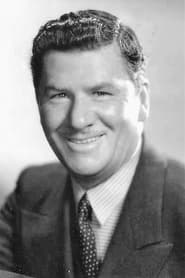
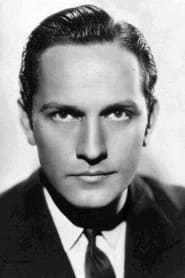
George Bancroft's contractor Joe Forziati climbs New York society while courting Mary Astor. The movie stars George Bancroft, Mary Astor and Fredric March who are all excellent in their roles. The story begins as Joe Forziati (Bancroft), an Italian immigrant who has battled his way to success as a New York building contractor, decides to embark on a social career.
Cast & crew
More films like this
More Drama films
View all →







More from Rowland V. Lee
View all →
More about this film
About the production
Release dateMay 15, 1930
ProductionParamount Publix Corporation, Paramount Famous Lasky Corp.
Filmed inParamount Studios, Hollywood, California, New York City, New York (Exterior establishing shots)
The film was adapted from the stage play 'Pardon My Glove' by Zoë Akins. It was produced during the chaotic transition period from silent films to 'talkies,' which influenced the theatrical nature of the dialogue and set pieces. Director Rowland V. Lee worked closely with writers Waldemar Young and Herman J. Mankiewicz (who would later write 'Citizen Kane') to sharpen the script's wit. The production utilized elaborate Art Deco sets designed by Paramount's art department to contrast Joe's rugged construction sites with Mimi's opulent social world.
Themes
Themes & topics
Construction ContractorSocialiteItalian ImmigrantKidnappingGangsterHigh SocietyEstranged HusbandNew York CityPre-CodeClass Struggle
Historical background
1930 placed Ladies Love Brutes within United States cinema as Paramount Publix Corporation navigated wartime markets, immigration audiences, and the shift from intertitles to sound.
Why this film matters
Archivists revisit Ladies Love Brutes (1930) for Rowland V. Lee style, genre norms at Paramount Publix Corporation, and the exhibition context of 80 programming.
Making of
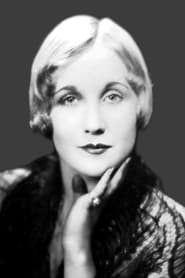
The making of 'Ladies Love Brutes' was overshadowed by a major tragedy in the life of its leading lady, Mary Astor. On January 2, 1930, her husband, director Kenneth Hawks, was killed in a mid-air plane collision while filming 'Such Men Are Dangerous'. Astor was devastated and suffered a nervous breakdown, but she eventually returned to the Paramount lot to complete 'Ladies Love Brutes' as a way to cope with her grief. Her co-star and friend Fredric March was reportedly very supportive during the shoot, helping her through difficult scenes. The film also benefited from the sharp, cynical humor of Herman J. Mankiewicz, who was known for injecting 'tough guy' dialogue with a layer of sophisticated irony.
What critics said
Retrospective writing on Ladies Love Brutes stresses craft by Rowland V. Lee, print survival, and repertory value rather than opening-week gross alone.
Did you know?
- The film is based on the play 'Pardon My Glove' by Zoë Akins, who was a Pulitzer Prize-winning playwright.
- Co-writer Herman J. Mankiewicz, who worked on the screenplay, is the same man who later co-wrote the masterpiece 'Citizen Kane'.
- This was one of Mary Astor's earliest 'talkies' and helped prove her voice was well-suited for the new sound medium.
- George Bancroft was at the height of his fame when this was filmed, often referred to as the 'First King of the Gangster Film'.
- Fredric March and Mary Astor were close personal friends in real life, which helped their chemistry on screen despite playing an estranged couple.
- The film's title was a play on the popular 1930s sentiment regarding the appeal of 'rough' men to high-society women.
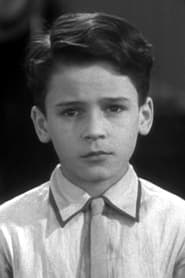
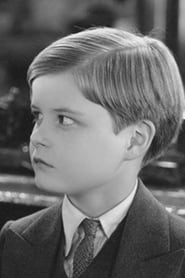
- The child actor Freddie Burke Frederick, who plays Jackie, was a popular juvenile star of the early sound era.
- The film features an early appearance by character actor Paul Fix, who would later become famous as Marshal Micah Torrance on 'The Rifleman'.
- The production was briefly delayed due to the personal tragedy of Mary Astor, whose husband Kenneth Hawks had recently died in a plane crash.
- The film is considered a 'Pre-Code' movie, allowing for more suggestive themes and dialogue than would be permitted after 1934.
Visual style
The cinematography by Harry Fischbeck is notable for its use of high-contrast lighting to distinguish between the different social spheres. The construction sites are filmed with a gritty, realistic texture, while the socialite parties and Mimi's apartment are bathed in soft, glamorous light typical of the 'Paramount look' of the early 30s. The film also features some impressive early use of moving camera shots during the more action-oriented sequences in the final act.
Innovations
The film is a strong example of early sound synchronization, avoiding the 'static' feel of many 1929 talkies by incorporating more fluid movement and outdoor sequences. The art direction by Hans Dreier is a highlight, showcasing the 'Art Deco' style that would define the look of Paramount films throughout the decade.
Music
As an early talkie, the film relies heavily on dialogue, but it features a synchronized score by Paramount's music department. The music is used sparingly to heighten the tension during the kidnapping sequence and to provide a romantic backdrop for the scenes between Joe and Mimi. There are no featured songs, as the film is a straight drama-comedy rather than a musical.
Famous quotes
Joe Forziati: 'I've built the biggest buildings in this town, but I can't seem to build a way into your heart.'
Mimi Howell: 'Manners aren't just about which fork you use, Joe. They're about how you treat people when you don't have to be nice.'
Dwight Howell: 'You're a brute, Forziati. A successful one, but a brute nonetheless.'
Joe Forziati: 'Maybe the ladies love brutes because we're the only ones left who know how to fight for what we want.'
Memorable scenes
- The 'Social Debut' Scene: Joe Forziati attempts to navigate a high-society dinner party, leading to comedic mishaps as his rough edges clash with the refined guests.
- The Kidnapping Rescue: A tense climax where Joe must abandon his gentlemanly aspirations and use his old 'brute' strength and knowledge of the city's underworld to save Mimi's son, Jackie.
- The Construction Site Confrontation: Joe shows Mimi the massive skyscrapers he has built, a scene that serves as a metaphor for his own rise from nothing.
What audiences thought
Audiences in 1930 responded well to the film, particularly the chemistry between the three leads. George Bancroft was a significant box-office draw, and his portrayal of a man trying to 'better himself' resonated with the working-class public. The film's mix of high-society glamour and underworld grit provided the kind of escapism that was becoming increasingly popular as the economic realities of the 1930s set in.
Film connections
Influenced by
- The play 'Pardon My Glove' by Zoë Akins
- The 'Gangster' cycle of the late 1920s (e.g., 'Underworld')
- The 'Society Melodrama' genre
This film influenced
- The Whole Town's Talking (1935)
- The Lady Eve (1941) - for its themes of class deception
- Later 'tough guy' romantic comedies of the 1930s
Film restoration
The film is preserved and exists in the archives of the Library of Congress and the UCLA Film & Television Archive. While not widely available on modern digital platforms, it has been screened at various film festivals specializing in Pre-Code cinema.
Where to watch
- Turner Classic Movies (Occasional television broadcasts)
- UCLA Film & Television Archive (Research screenings)
- Library of Congress (Archival copies)