Long Pants
"Harry Shelby has been kept in knee pants for years by his overprotective…"
Keys: Space play/pause · ←/→ 10s · F fullscreen · M mute · </> speed
About this film
Harry Shelby has been kept in knee pants for years by his overprotective parents, but the day finally comes when Harry is given his first pair of long pants. Almost immediately, he is expected to marry his childhood sweetheart Priscilla... but instead, Harry's first heady whiff o
Cast & crew
More films like this
More Comedy films
View all →







More from Frank Capra
View all →


More about this film
About the production
Release dateMarch 19, 1927
ProductionHarry Langdon Corporation, First National Pictures
Filmed inHollywood, California, Los Angeles, California
This film was part of Harry Langdon's contract with First National Pictures and was one of the last collaborations between Langdon and director Frank Capra before their famous professional split. The production was marked by growing tensions between Langdon and Capra, with Langdon's wife and manager interfering with the creative process. The film's theme of delayed adulthood was somewhat autobiographical for Langdon, who was known for his childlike persona both on and off screen.
Themes
Coming of ageSexual awakeningInnocence vs. experienceSmall town vs. city valuesParental control vs. independence
Themes & topics
overprotective parentschildhood sweetheartcoming of agemistaken identityjailcomedy of errorsinfatuationsmall towncity womanlong pants symbolism
Historical background
Released in 1927 during the late silent period, Long Pants reached audiences when exhibitors were still defining programming conventions. The narrative hook—Harry Shelby has been kept in knee pants for years by his overprotective…—reflects what contemporary producers thought would draw viewers.
Why this film matters
Long Pants remains discussed by archivists tracing how screen stories of its period represented work, desire, conflict, and social order. Its central situation—Harry Shelby has been kept in knee pants for years by his overprotective…—still prompts questions about genre conventions and audience expectations.
Making of
The making of 'Long Pants' was fraught with tension between star Harry Langdon and director Frank Capra. Langdon, at the height of his fame, had become difficult to work with and often overruled Capra's directorial decisions. Langdon's wife and manager, Mabel, frequently interfered with the production, causing Capra to feel creatively stifled. The film represents the culmination of their working relationship, with Capra feeling that Langdon had abandoned the comic formula that had made him famous. After this film, Capra would leave Langdon's employment and go on to direct 'It' for Clara Bow, launching his own directorial career. The production itself was typical for a silent comedy of the era, with minimal dialogue cards and heavy reliance on physical comedy and visual storytelling.
What critics said
Trade and newspaper notices for Long Pants generally emphasized casting, spectacle, and program fit rather than extended aesthetic argument. Retrospective screenings and archival notes continue to shape how viewers evaluate Long Pants today.
Did you know?
- This was the final film collaboration between Harry Langdon and Frank Capra before their famous falling out, which effectively ended Capra's work with Langdon.
- Harry Langdon was one of the highest-paid comedians in Hollywood during this period, earning approximately $7,500 per week.
- The film's theme of a man-child transitioning to adulthood was somewhat prophetic, as Langdon's career would soon decline after he parted ways with Capra.
- Frank Capra later claimed that working with Langdon taught him valuable lessons about comedy timing and character development that he used throughout his later career.
- The 'long pants' in the title were a significant cultural symbol in the 1920s, representing the transition from boyhood to manhood.
- Gladys Brockwell, who played Priscilla, was a veteran actress who had been in films since 1911 and tragically died in a car accident just two years after this film's release.
- The film was released just as the silent film era was beginning to wane, with 'The Jazz Singer' premiering later the same year.
- Harry Langdon's character was often compared to Charlie Chaplin's 'Tramp' persona, though Langdon's character was more naive and childlike.
- The film's jail sequences were filmed on the same sets used in other First National productions of the era.
- Despite being a comedy, the film deals with surprisingly mature themes of sexuality and coming-of-age for its time period.
Visual style
The cinematography by Elmer Dyer and Ted Tetzlaff employed typical silent comedy techniques of the era, including wide shots to capture physical comedy and medium close-ups for emotional moments. The visual style emphasized contrast between the small-town innocence of Harry's world and the sophisticated urban environment represented by Bebe. The filmmakers used lighting to create mood, particularly in the jail sequences where dramatic shadows enhanced the comedy of Harry's predicament. The camera work was generally straightforward, focusing on clarity of action rather than artistic experimentation, which was typical for comedies of this period.
Innovations
While 'Long Pants' did not feature technical innovations, it demonstrated solid craftsmanship typical of First National Pictures productions. The film used standard 35mm film with the aspect ratio of 1.33:1 common in the silent era. The jail sequences featured some creative use of shadows and lighting that enhanced the comedy while maintaining visual interest. The film's pacing and editing were well-executed for a comedy, with smooth transitions between scenes and effective timing for comic moments. The production values were high for a comedy of the period, reflecting Harry Langdon's star status at First National.
Music
As a silent film, 'Long Pants' would have been accompanied by live musical performance in theaters. The original score likely consisted of popular songs of the era and classical pieces chosen to match the mood of each scene. Theatrical organists or small orchestras would have provided improvisational accompaniment, using cue sheets provided by the studio. Modern restorations have featured newly composed scores by silent film music specialists, often incorporating period-appropriate jazz and popular music from the 1920s to enhance the viewing experience.
Famous quotes
I'm a man now! I've got long pants!
Mother, Father. I'm going to marry Priscilla. unless I meet someone else first.
These long pants make me feel. different!
A man in long pants can do anything he wants!
Priscilla will wait for me. She always does.
Memorable scenes
- The opening scene where Harry receives his first pair of long pants and awkwardly models them for his parents.
- Harry's first encounter with Bebe, where he becomes instantly infatuated with the sophisticated city woman.
- The jail sequence where Harry attempts to help Bebe escape, leading to comic complications.
- The final reconciliation scene where Harry realizes his true love for Priscilla and embraces adulthood.
- The montage of Harry trying to act sophisticated in his new long pants, complete with awkward walking and posturing.
What audiences thought
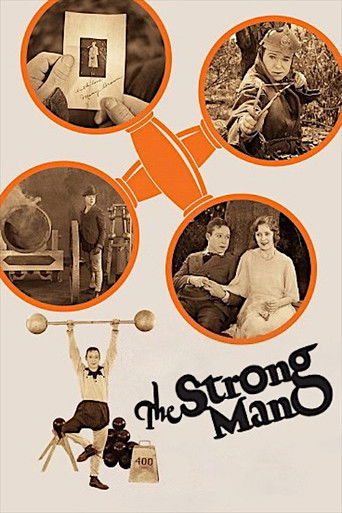
Audience reception to 'Long Pants' was disappointing compared to Langdon's earlier successes. The film performed modestly at the box office but failed to generate the enthusiasm of his previous hits like 'The Strong Man' (1926) and 'Tramp, Tramp, Tramp' (1926). Many of Langdon's fans felt that the film strayed too far from the formula that had made him a star. The growing popularity of other comedians and the impending arrival of sound films also contributed to the film's lukewarm reception. Despite this, the film has developed a cult following among silent film enthusiasts who appreciate Langdon's unique comic style and the film's place in comedy history.
Film connections
Influenced by
- Charlie Chaplin's 'The Kid' (1921)
- Harold Lloyd's comedies of the 1920s
- Buster Keaton's character-driven films
- American small-town comedy traditions
This film influenced
- Jerry Lewis's 'The Bellboy' (1960)
- Andy Kaufman's man-child persona
- Adam Sandler's early comedies
- The 'man-child' comedy genre of the 1990s-2000s
Film restoration
The film is preserved in the Library of Congress collection and has been restored by various film archives. Several versions exist, including a 16mm reduction print that circulated for many years. The film has been released on DVD by several specialty labels, including Kino Lorber, featuring new musical scores and restored picture quality. While not considered lost, some deterioration is visible in existing prints, typical of films from this era. The preservation status is considered good, with multiple copies archived in major film repositories worldwide.
Where to watch
- DVD/Blu-ray releases from Kino Lorber and other specialty labels
- Streaming services specializing in classic films such as The Criterion Channel
- Film archive screenings at museums and cinematheques
- Public domain versions available on YouTube and Internet Archive
- Turner Classic Movies occasional broadcasts