
Lord Byron of Broadway
"Songs borrowed from other people's lives"
Keys: Space play/pause · ←/→ 10s · F fullscreen · M mute · </> speed
About this film
A talented songwriter gets his inspiration for songs from others and not from within himself. He is oblivious that he may harm other people when he uses their stories or their love for himself.
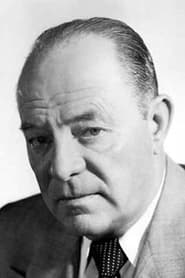
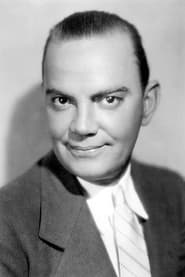
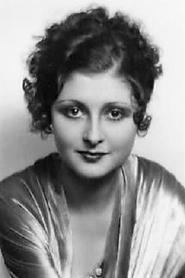
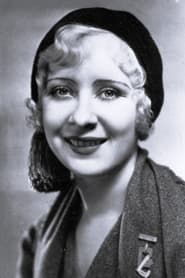
Cast & crew
More films like this
More Drama films
View all →







More from Harry Beaumont
View all →
More about this film
About the production
Release dateFebruary 28, 1930
BudgetApproximately $500,000 (Estimated high-budget for the period)
Box officeSignificant financial loss for MGM; exact figures not publicly disclosed but noted as a 'notorious flop'
ProductionMetro-Goldwyn-Mayer (MGM)
Filmed inMGM Studios, Culver City, California, USA
The film underwent a troubled production cycle. Originally intended to star MGM heavyweights William Haines and Bessie Love, the studio pivoted to stage stars Charles Kaley and Ethelind Terry because the original leads were deemed to have 'mediocre' singing voices for the new 'talkie' format. After an initial cut directed by William Nigh was deemed too cynical and dark by production supervisor Harry Rapf, Harry Beaumont was brought in to reshoot large portions of the film to lighten the tone. This resulted in a disjointed final product that blended Nigh's gritty realism with Beaumont's more standard musical fluff.
Themes
The ethics of artistic inspirationNarcissism and the 'Heel' protagonistThe price of Broadway fameBetrayal and redemptionThe superficiality of show business
Themes & topics
Historical background
Archival paperwork links Lord Byron of Broadway to a 1930 release handled by Metro-Goldwyn-Mayer (MGM).
Why this film matters
The plot's emphasis on a talented songwriter gets his inspiration for songs from others and not from within himse mirrors popular narrative habits of the 1930 period.
Making of
The production was marked by the 'Great Depression' anxiety of 1929. Production supervisor Harry Rapf was reportedly shaken by personal financial losses during the stock market crash, which influenced his decision to demand extensive reshoots of the film's original, more cynical cut. The transition from silent to sound film is evident in the 'head-on' staging of musical numbers, which lacked the fluid camera movement that would later be popularized by Busby Berkeley. Despite the technical limitations of early sound recording, the film attempted ambitious tracking shots in nightclub scenes to prove that the 'talkie' camera didn't have to be stationary.
What critics said
Film historians reference Lord Byron of Broadway in surveys of 1930 output from its studio tier.
Did you know?
- The film features early two-color Technicolor sequences, which were a major selling point during the transition to sound.
- The song 'Should I?', written for this film by Nacio Herb Brown and Arthur Freed, became a massive hit and was later famously reused in the 'Beautiful Girl' montage in the 1952 classic 'Singin' in the Rain'.
- Cliff Edwards, who plays Joe, later became world-famous as the voice of Jiminy Cricket in Disney's 'Pinocchio' (1940).
- Uncredited appearances in the film include a young Ann Dvorak as a chorus girl and Jack Benny as a voice on the radio.
- The Technicolor production numbers were so expensive that MGM later recycled the footage in several short films, including 'Roast Beef and Movies' (1934) and 'Nertsery Rhymes' (1933).
- The film is also known by the alternative title 'What Price Melody?'.
- Lead actress Ethelind Terry was a major Broadway star of the time, best known for her role in 'Rio Rita', but this film effectively ended her cinematic aspirations.
- The film was based on a best-selling novel by Nell Martin, which had been praised for its authentic look at stage life.
Visual style
The film was shot by Henry Sharp and features a mix of standard black-and-white cinematography and two-strip Technicolor. Notable visual techniques include early attempts at overhead 'kaleidoscope' shots during dance numbers and a rare-for-the-time tracking shot through a crowded nightclub, which defied the era's technical constraints regarding heavy, sound-proofed camera 'blimps'.
Innovations
The film is notable for its integration of two-color Technicolor within a narrative feature. It also experimented with 'overhead' camera angles for dance sequences, a technique that would later become the signature of Busby Berkeley. The sound recording was handled using the Western Electric Movietone system.
Music
The score was composed by Nacio Herb Brown with lyrics by Arthur Freed. Key songs include 'Should I?', 'A Bundle of Old Love Letters', 'The Woman in the Shoe', 'Blue Daughter of Heaven' (featuring a ballet composed by Dimitri Tiomkin), and 'You're the Bride and I'm the Groom'. The soundtrack was a commercial success even if the film was not, with brisk sales of sheet music and phonograph records.
Famous quotes
Roy Erskine: 'Inspiration is where you find it. If a girl's heart has to break for a hit song, that's just show business.'
Joe Lundeen: 'I've carried one of those love letters in my pocket for six months... I learned that real decent love is the biggest thing in life.'
Nancy Clover: 'I knew when I fell for you, I was just going to be another song.'
Memorable scenes
- The 'Woman in the Shoe' Technicolor sequence: A surreal, large-scale production number featuring chorus girls emerging from a giant high-heeled shoe.
- The 'Blue Daughter of Heaven' ballet: A visually striking sequence choreographed to a Dimitri Tiomkin score, utilizing early color film to create a dreamlike atmosphere.
- The final confrontation: Where Roy realizes his love interest Ardis has been married to his best friend Joe all along, leading to a rare moment of genuine emotional vulnerability.
What audiences thought
Audiences in 1930 largely shunned the film, finding the protagonist Roy Erskine too unlikeable to root for. The film's failure contributed to the temporary death of the movie musical genre in the early 1930s, which wouldn't be fully revived until 1933's '42nd Street'.
Film connections
Influenced by
- The Broadway Melody (1929)
- The Jazz Singer (1927)
- Vaudeville stage traditions
This film influenced
- Singin' in the Rain (1952) - specifically through the reuse of its music
- The Band Wagon (1953) - for its cynical look at the 'creative' process
Film restoration
The film is preserved and has been released on DVD as part of the Warner Archive Collection. While the black-and-white portions are well-maintained, the Technicolor sequences vary in quality due to the instability of early color film stock.
Where to watch
- Warner Archive Collection (DVD)
- Turner Classic Movies (TCM) occasional broadcasts
- Rare film specialized streaming services