Ludzie bez jutra
"Actress and officer, Warsaw affair"
Keys: Space play/pause · ←/→ 10s · F fullscreen · M mute · </> speed
About this film
Polish actress and Russian officer conduct a doomed affair modeled on Maria Wisnowska and Aleksandr Barteniew. Wiktor Biegański's 1921 Warsaw melodrama.
Cast & crew
More films like this
More Drama films
View all →







More from Aleksander Hertz
View all →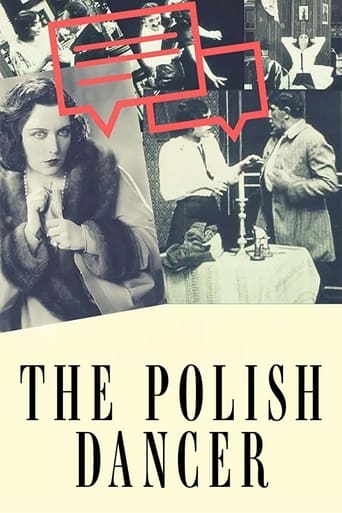
More about this film
About the production
Release dateOctober 1921
Box officeUnknown - box office records from 1921 Poland are not well documented
ProductionSfinks Film Studio
Filmed inWarsaw, Poland
This was one of the first Polish films to tackle a contemporary scandalous story based on real events. The production faced significant challenges due to the controversial nature of the subject matter and the recent tragic events it depicted. Director Aleksander Hertz, a pioneer of Polish cinema, used innovative techniques for the time including close-ups to emphasize emotional moments. The film was shot during a difficult period in Poland's history, shortly after the country regained independence following World War I.
Themes
Forbidden loveSocial hypocrisyNational identityFemale agencyTragedy and fate
Themes & topics
actressRussian officeraffairsuicidescandalforbidden lovetragedysocial classnational conflicttheaterbetrayaldespair
Historical background
Archival records place Ludzie bez jutra in 1921, a year when the silent feature period shaped what theaters booked.
Why this film matters
Retrospectives include Ludzie bez jutra when mapping craft and subject matter from the silent feature period.
Making of
The making of Ludzie bez jutra was marked by controversy and sensitivity due to its basis in real tragedy. Director Aleksander Hertz had to navigate the delicate balance between dramatic storytelling and respect for the memory of Maria Wisnowska. The casting of Halina Bruczówna was considered perfect as she embodied the tragic beauty and emotional depth required for the role. The production team consulted with people who had known Wisnowska to ensure authenticity in the portrayal. The film's more intimate scenes were shot with special care to avoid censorship while still conveying the emotional intensity of the affair. The production coincided with the tenth anniversary of Wisnowska's death, adding emotional weight to the project. The Russian officer character was carefully written to avoid political sensitivities in the newly independent Poland, which had recently emerged from over a century of partitions.
What critics said
Critics revisiting Ludzie bez jutra emphasize performative and technical choices visible in surviving prints.
Did you know?
- The film is based on the real-life tragic affair between Polish actress Maria Wisnowska and Russian officer Aleksandr Barteniew, which ended with Wisnowska's suicide in 1890
- Maria Wisnowska was widely known Polish actresses of the 19th century, and her death became a major scandal in Polish society
- Director Aleksander Hertz was one of the pioneers of Polish cinema and founded one of Poland's first film studios
- The film was considered scandalous at the time for its frank depiction of an extramarital affair and suicide
- Halina Bruczówna, who played Maria, was one of the biggest stars of Polish silent cinema
- The real Aleksandr Barteniew was a member of Russian nobility and a decorated officer in the Imperial Russian Army
- The film's title 'Ludzie bez jutra' became a popular phrase in Polish culture to describe doomed romances
- This was one of the earliest examples of Polish cinema drawing from contemporary real-life events for dramatic material
- The film was made during a period of cultural renaissance in newly independent Poland
- The original story was adapted from a popular stage play that had been banned in some cities due to its controversial content
Visual style
The cinematography of Ludzie bez jutra was considered advanced for its time, featuring innovative use of close-ups to convey emotional intensity, particularly in scenes featuring Maria. The film employed dramatic lighting techniques to enhance the tragic atmosphere, with careful use of shadows to create a sense of foreboding. The camera work was more dynamic than typical of the period, with some tracking shots used to follow the characters through their emotional journey. The visual style incorporated elements of German Expressionism, which was influential in European cinema at the time. The film's visual composition emphasized the contrast between the glamorous world of the theater and the dark reality of the characters' personal lives.
Innovations
For its time, Ludzie bez jutra featured several technical innovations in Polish cinema. The film made effective use of intertitles to convey dialogue and narrative progression, with carefully written text that enhanced the dramatic impact. The production employed sophisticated editing techniques, including cross-cutting between parallel actions to build tension. The film's makeup and costume design were particularly notable for their realism and attention to period detail. The lighting techniques used in interior scenes were advanced for the time, creating mood and atmosphere through careful manipulation of light and shadow. The film's special effects, while minimal, were effectively used to enhance key dramatic moments.
Music
As a silent film, Ludzie bez jutra would have been accompanied by live musical performance during its theatrical run. The typical score would have been provided by a theater orchestra or pianist, using a combination of classical pieces and original compositions. The music would have been carefully synchronized with the on-screen action, with romantic themes for the love scenes and dramatic, minor-key passages for the tragic moments. The original musical cues and compositions for the film have not survived, which is common for films of this era. Modern screenings would typically use appropriate period music or newly composed scores.
Famous quotes
Kocham cię bardziej niż własne życie" (I love you more than my own life)
Nie ma dla nas jutra" (There is no tomorrow for us)
Reputacja jest niczym, gdy serce boli" (Reputation is nothing when the heart aches)
W teatrze gram, w życiu cierpię" (On stage I act, in life I suffer)
Memorable scenes
- The final scene where Maria, having lost everything, makes her tragic decision, shot with dramatic shadows and close-ups emphasizing her despair
- The passionate confrontation scene between Maria and Aleksandr in the theater wings, highlighting the contrast between their public personas and private reality
- The opening scene establishing Maria as a celebrated actress, showing her on stage and receiving applause, setting up the contrast with her private suffering
What audiences thought
The film generated significant public interest due to its connection to the famous Wisnowska-Barteniew scandal. Audiences were reportedly moved by the tragic story and praised the performances. The film's controversial nature actually increased its appeal, with many viewers drawn to its daring subject matter. The emotional intensity of the story resonated with audiences who were familiar with the real events. The film's success at the box office (though exact figures are unknown) encouraged Polish producers to invest in more ambitious dramatic projects. Some conservative elements of society criticized the film for what they saw as glorification of immoral behavior, but this controversy only increased public curiosity.
Film connections
Influenced by
- German Expressionist cinema
- Contemporary Polish literature
- Stage melodrama tradition
- Realist novels of the late 19th century
This film influenced
- Subsequent Polish melodramas of the 1920s
- Later Polish films based on real scandals
- Polish films dealing with Polish-Russian relations
Film restoration
Unfortunately, Ludzie bez jutra is considered a lost film. Like many Polish films from the silent era, no complete copies are known to exist. Some production stills and promotional materials have survived, and there are written accounts of the film's content, but the actual footage has not been preserved. This loss is particularly tragic given the film's historical importance and the significance of its subject matter. The film's disappearance represents a significant gap in the history of Polish cinema, as it was among the pivotal early Polish dramatic films.
Where to watch
- As a lost film, Ludzie bez jutra is not available for viewing. Film historians and enthusiasts can access information about the film through archival materials, production stills, and written accounts in Polish cinema history books and academic papers. The Polish Film Archive (Filmoteka Narodowa) may have documentation and photographs related to the production.