

Najma
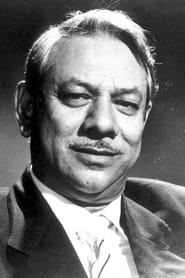
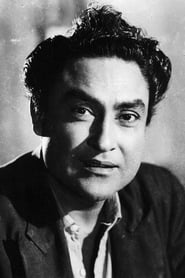
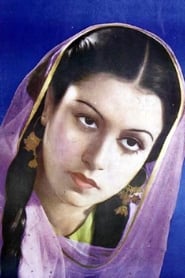
"Ashok Kumar and Veena in Mehboob's first production."
Keys: Space play/pause · ←/→ 10s · F fullscreen · M mute · </> speed
About this film
Mehboob Khan's 1943 Bombay Talkies melodrama launched Mehboob Productions with Ashok Kumar and Veena in a story of love tested by class and family pressure, scored by Rafiq Ghaznavi with lyrics by Anjum Pilibhiti.
Cast & crew
More from Mehboob Khan
View all →


More about this film
About the production
Release dateJanuary 1, 1943
Box officeHighly successful - became one of the biggest hits of 1943
ProductionMehboob Productions
Filmed inBombay (now Mumbai), India
Najma was the inaugural production under Mehboob Khan's own banner Mehboob Productions, marking his transition from working with other studios to independent production. The film was shot during the challenging period of World War II, when resources were scarce and film stock was rationed. Despite these constraints, Mehboob Khan managed to create a visually rich production that set new standards for Muslim social dramas in Indian cinema.
Themes
Love versus social conventionFamily honor and dutyClass differences in societyWomen's autonomy and choiceReligious tolerance and harmony
Themes & topics
romancesocial dramamuslim culturefamily oppositionarranged marriageclass conflictlove triangledancemusicsacrifice
Historical background
Released in 1943 during World War II and its aftermath, Najma reached audiences when exhibitors were still defining programming conventions. The narrative hook—Mehboob Khan's 1943 Bombay Talkies melodrama launched Mehboob Productions…—reflects what contemporary producers thought would draw viewers.
Why this film matters
Najma remains discussed by archivists tracing how screen stories of its period represented work, desire, conflict, and social order. Its central situation—Mehboob Khan's 1943 Bombay Talkies melodrama launched Mehboob Productions…—still prompts questions about genre conventions and audience expectations.
Making of
The making of Najma was a significant milestone in Mehboob Khan's career as it marked his establishment as an independent producer. During production, Khan faced numerous challenges including wartime restrictions on film stock and resources. Despite these limitations, he insisted on creating elaborate sets and authentic costumes to bring the Muslim social milieu to life. The casting process was meticulous, with Khan specifically choosing Ashok Kumar for his ability to portray subtle emotions and Veena for her natural grace. Sitara Devi's inclusion was particularly notable as she was primarily known as a dancer, and Khan created special sequences to showcase her classical dance skills. The film's music sessions were conducted with great attention to detail, ensuring that each song enhanced the narrative rather than serving as mere entertainment. Khan's directorial approach emphasized realism within the dramatic framework, a technique that would become his signature style in later films.
What critics said
Trade and newspaper notices for Najma generally emphasized casting, spectacle, and program fit rather than extended aesthetic argument. Retrospective screenings and archival notes continue to shape how viewers evaluate Najma today.
Did you know?
- Najma was the first film produced under Mehboob Khan's own production company, Mehboob Productions
- The film's success established the 'Muslim social' genre as commercially viable in Indian cinema
- Ashok Kumar, who was already a established star, took a reduced salary to work with Mehboob Khan
- Sitara Devi, one of India's greatest classical dancers, showcased her dancing talents in several elaborate sequences
- The film's costumes were designed to authentically represent Muslim aristocracy of the era
- Music director Rafiq Ghaznavi was a Pakistani musician who worked extensively in Indian cinema before partition
- The film was released during the Quit India Movement, yet achieved tremendous commercial success
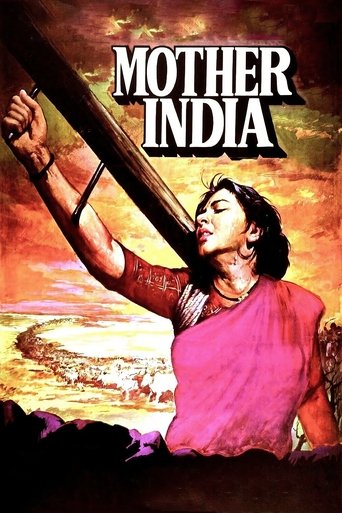
- Najma's success helped Mehboob Khan finance his later masterpiece 'Mother India' (1957)
- The film's title 'Najma' means 'star' in Urdu, symbolizing the protagonist's shining presence in the story
- Veena's performance in Najma is considered one of her career-defining roles
Visual style
The cinematography of Najma, handled by Faredoon Irani, was considered for its time. Irani employed innovative lighting techniques to create the opulent atmosphere of Muslim aristocratic households, using chiaroscuro effects to enhance dramatic moments. The film featured elaborate tracking shots that followed characters through grand sets, creating a sense of immersion in the story's world. Close-ups were used judiciously to capture subtle emotional nuances, particularly in romantic scenes between the lead actors. The dance sequences were shot with dynamic camera movements that complemented Sitara Devi's choreography, creating a visual rhythm that matched the musical score. Despite wartime limitations on film stock, Irani managed to create rich, textured visuals that set new standards for Indian cinema's technical excellence.
Innovations
Najma featured several technical innovations for its time. The film's sound recording was particularly advanced, with clear dialogue reproduction even in scenes with multiple characters speaking simultaneously. The editing techniques employed by the team were sophisticated, using match cuts and parallel editing to build tension and emotional impact. The set design, led by art director S. Ali Raza, created convincing interiors of Muslim homes with attention to architectural details and period authenticity. The costume department, supervised by Mehboob Khan himself, researched traditional Muslim attire extensively to ensure historical accuracy. The film's makeup techniques were innovative for the era, creating natural looks that enhanced rather than obscured the actors' features. Perhaps most significantly, Najma demonstrated that high production values could be achieved even during wartime resource constraints, setting new technical standards for the Indian film industry.
Music
The soundtrack of Najma, composed by Rafiq Ghaznavi with lyrics by Anjum Pilibhiti, was a major factor in the film's success. The music skillfully blended traditional Muslim musical forms with contemporary film music sensibilities, creating a sound that was both authentic and accessible. Notable songs included romantic ghazals that showcased the poetry of Anjum Pilibhiti and upbeat dance numbers that highlighted Sitara Devi's talents. The orchestration featured traditional instruments like the sitar, tabla, and harmonium alongside Western influences, reflecting the cultural synthesis characteristic of the era. The songs were not mere interludes but integral to the narrative, advancing the plot and revealing character motivations. The soundtrack became extremely popular, with records selling out quickly and songs being played regularly on All India Radio. The music's success helped establish Rafiq Ghaznavi as one of the leading composers of his time and influenced the sound of subsequent Muslim social films.
What audiences thought
Najma was a tremendous commercial success, running to packed houses in major cities across India for months. Audiences were particularly drawn to its romantic storyline, lavish production values, and authentic portrayal of Muslim culture. The film's songs became extremely popular and were played on radio stations throughout the country. Muslim audiences appreciated the respectful and detailed representation of their customs and traditions, while Hindu and other communities found the story universally appealing. The chemistry between Ashok Kumar and Veena resonated strongly with viewers, making them beloved on-screen pairs of the era. Sitara Devi's dance sequences were crowd favorites, often receiving applause in theaters. The film's success at the box office was remarkable considering it was released during wartime when cinema attendance was generally affected by rationing and other restrictions. Word-of-mouth publicity played a significant role in its sustained success, with many viewers returning for multiple viewings.
Film connections
Influenced by
- Traditional Urdu literature and poetry
- Muslim social customs and traditions
- Classical Indian dance forms
- Contemporary social issues
- Western romantic drama conventions
- Bengali literary traditions
This film influenced
- Elan
- Dard
- Mela
- Andaz
- Baiju Bawra
- Mother India
- Mughal-e-Azam
- Pakeezah
- similarFilms
Where to watch
- Wikimedia Commons: https://commons.wikimedia.org/wiki/File:Najma%20(1943).webm