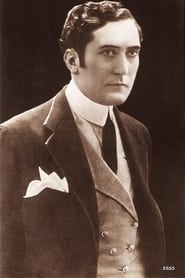
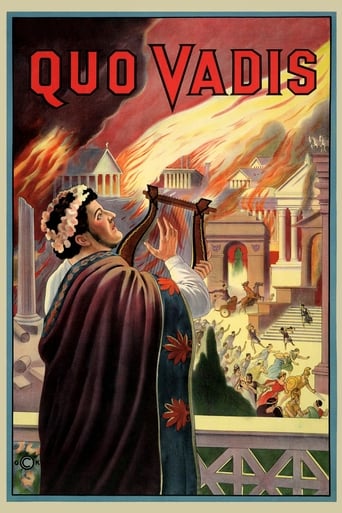
Nero and Agrippina
"Nero and Agrippina scheme in ancient Roman costume."
Keys: Space play/pause · ←/→ 10s · F fullscreen · M mute · </> speed
About this film
Short costume picture on the infamous Roman Emperor.
Cast & crew
More films like this
More History films
View all →


More from Mario Caserini
View all →
More about this film
About the production
Release date1913
ProductionCines
Filmed inRome, Italy
Produced during the golden age of Italian historical epics, this film was part of a wave of Roman-themed productions that established Italian cinema's international reputation. The film featured elaborate costumes and sets typical of Cines studio productions of the era. Director Mario Caserini cast his wife Maria Caserini in the title role of Agrippina, a common practice in early Italian cinema.
Themes
Power and corruptionMaternal ambitionPolitical intrigueFamily dysfunctionHistorical tragedy
Themes & topics
Roman EmpireAncient RomeEmperorMother-son relationshipPolitical manipulationHistorical dramaTragedyPower struggle
Historical background
By 1913, Nero and Agrippina was shaped by the silent era technology, distribution, and audience expectations.
Why this film matters
Nero and Agrippina (1913) helps trace genre evolution, performer careers, and exhibition practices of its period.
Making of
The production took place during the peak of Italy's early film industry, when studios like Cines were competing internationally with lavish historical productions. Director Mario Caserini was an established figure in Italian cinema by 1913, having directed numerous films since the early 1900s. The casting of his wife Maria Caserini as Agrippina reflected the common practice of using family members in productions. The film would have been shot on studio sets with painted backdrops and elaborate costumes designed to evoke ancient Roman splendor. Like most films of this era, it was shot in black and white with intertitles to convey dialogue and narrative information.
What critics said
Where contemporary reviews survive, Nero and Agrippina is read against the tastes of 1913; revival screenings keep it in circulation.
Did you know?
- Director Mario Caserini was married to Maria Caserini, who played Agrippina in the film
- Mario Bonnard, who played Nero, would later become a prominent director himself
- The film was produced by Cines, one of Italy's most important early film studios
- This was one of many Roman-themed films produced during Italy's cinematic golden age
- The film was made during the same period as other famous Italian epics like 'Quo Vadis' (1913)
- Silent films of this era were typically accompanied by live orchestral music during screenings
- Many Italian historical films of this period were exported internationally, particularly to the United States
- The film likely used painted backdrops and elaborate set designs common in Italian productions of the time
Visual style
The cinematography would have utilized the techniques common to Italian productions of 1913, including static camera positions typical of the era, carefully composed tableaux vivants, and the use of depth through staged set designs. The film likely employed painted backdrops and elaborate set constructions to create the illusion of ancient Roman grandeur. Black and white photography would have emphasized the dramatic contrasts in the story of imperial power and corruption.
Innovations
The film represents the technical capabilities of Italian studios in 1913, particularly in set design and costume creation. While not groundbreaking in technical terms, it contributed to the refinement of cinematic techniques for historical storytelling. The production would have utilized the growing expertise of Italian filmmakers in creating convincing period atmospheres through visual design and staging.
Music
As a silent film, 'Nero and Agrippina' would have been accompanied by live musical performances during theatrical screenings. The score likely consisted of classical pieces or original compositions performed by piano or small orchestra, chosen to match the dramatic and historical nature of the film. The music would have emphasized the grandeur of Roman settings and the emotional intensity of the mother-son conflict.
Famous quotes
No recorded quotes survive from this silent film
Memorable scenes
- The confrontation between Nero and Agrippina as their relationship deteriorates, likely staged with dramatic gestures and intertitles to convey the emotional intensity of their conflict
What audiences thought
Audience reception in 1913 is not specifically documented, though Roman-themed films were popular with contemporary viewers. The spectacle of ancient Rome, combined with the dramatic story of imperial intrigue, would have appealed to early cinema audiences seeking both entertainment and educational content. The film's release during the peak of Italian historical epic popularity suggests it likely found appreciative audiences, particularly in Italy and among international viewers fascinated by classical antiquity.
Film connections
Influenced by
- Contemporary Italian historical epics
- Classical Roman historical sources
- Stage melodrama traditions
- Earlier Italian costume dramas
This film influenced
- Later Roman historical films
- Italian epics of the 1920s
- International historical costume dramas
Film restoration
The preservation status of 'Nero and Agrippina' (1913) is uncertain, and the film may be partially or completely lost. Many films from this early period of Italian cinema have not survived, making complete viewing impossible for modern audiences. Some fragments or still photographs may exist in film archives, but a complete version is likely unavailable.
Where to watch
- Due to its age and likely lost status, the film is not commercially available. Potential viewing would be limited to film archives or special screenings if any surviving material exists.