Never Weaken
"Love, scaffolding, and near disaster"
Keys: Space play/pause · ←/→ 10s · F fullscreen · M mute · </> speed
About this film
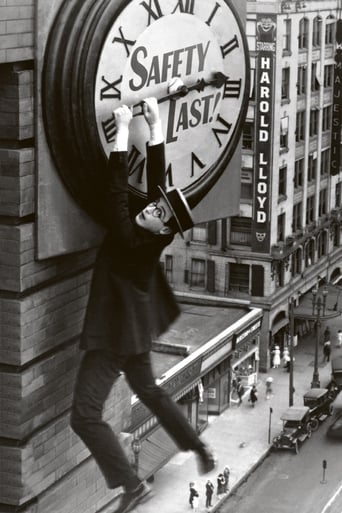
Office worker Harold arranges fake injuries so an osteopath can impress his employer, then believes his sweetheart is marrying another and attempts suicide—only to dangle from a skyscraper beam. Fred Newmeyer and Sam Taylor directed Harold Lloyd's 1921 feature comedy.
Cast & crew
More films like this

More Comedy films
View all →






More from Fred C. Newmeyer
View all →
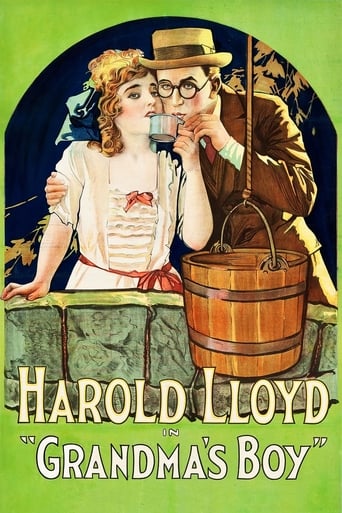
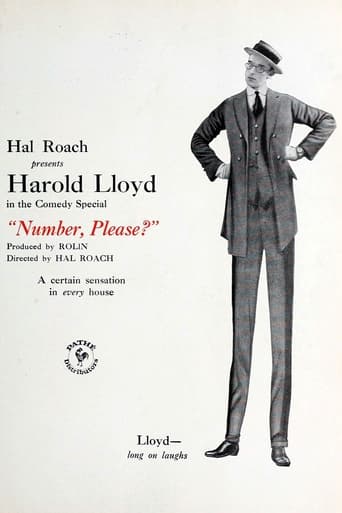
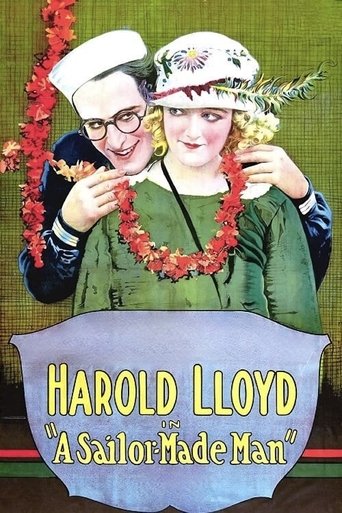
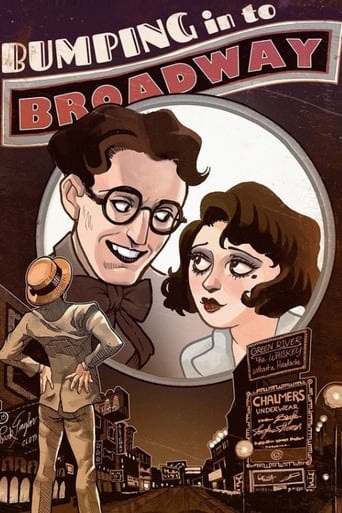
More about this film
About the production
Release dateSeptember 4, 1921
Box officeVery successful; helped establish Lloyd as a major comedy star alongside Chaplin and Keaton
ProductionHal Roach Studios, Pathe Exchange
Filmed inLos Angeles, California, Downtown LA skyscrapers, Hal Roach Studio lot
was one of the first to showcase Harold Lloyd's signature 'thrill comedy' style, combining humor with genuinely dangerous stunts. The skyscraper sequence was filmed on actual building construction sites, with Lloyd performing many of his own stunts without safety nets or harnesses. The film was shot in just a few weeks, typical of the rapid production schedule of silent comedy shorts. Mildred Davis, who played the love interest, was Harold Lloyd's real-life wife, having married him in February 1921, the same year was released.
Themes
Love and romanceSuicide and depressionUrban modernityPerseverance and resilienceThe American Dream
Themes & topics
suicide attemptskyscraperconstructionosteopathmistaken identitylove trianglestunt comedythrill comedyoffice romancedangerrescuemisunderstanding
Historical background
Never Weaken followed Safety Last! in Lloyd's climb to feature stardom. The dangling sequence extended his thrill-comedy brand in the early 1920s.
Why this film matters
'Never Weaken' represents a crucial milestone in the evolution of screen comedy, helping establish Harold Lloyd's unique blend of relatable everyman character and death-defying stunts. The film contributed to the development of the 'thrill comedy' genre, which would influence countless future filmmakers. Lloyd's portrayal of the determined, optimistic American character resonated deeply with 1920s audiences and helped define the era's cultural values of perseverance and ingenuity. The film's urban setting and focus on modern life captured the spirit of the Roaring Twenties, a period of rapid modernization and social change. Its success demonstrated that audiences craved both laughter and genuine thrills, a combination that would become a staple of action comedies for decades to come.
Making of
The production of 'Never Weaken' marked a significant turning point in Harold Lloyd's career, representing his transition from simple gag-based comedies to more elaborate stunt-driven narratives. The most challenging aspect was filming the skyscraper sequence, which required Lloyd to perform dangerous stunts on actual construction sites. The production team had to coordinate with real construction crews to gain access to the buildings, often filming during actual construction work. Lloyd insisted on performing his own stunts, believing it would appear more authentic to audiences. The film's success led to more ambitious projects, with Lloyd and his team constantly pushing the boundaries of what could be achieved in comedy filmmaking. The relationship between Lloyd and co-star Mildred Davis added authenticity to their on-screen chemistry, as they were newlyweds during filming.
What critics said
Critics praised Lloyd's athletic humor; the skyscraper gag is still anthologized in comedy history surveys.
Did you know?
- This was one of Harold Lloyd's earliest 'thrill comedies,' a genre he would perfect with his later masterpiece 'Safety Last!' (1923)
- The dangerous building sequences were filmed on actual construction sites in downtown Los Angeles, with Lloyd performing his own stunts
- Mildred Davis and Harold Lloyd were married in real life during the production of (February 1921)
- The film was originally titled 'The Suicide Club' but was changed to 'Never Weaken' to avoid controversy
- Lloyd lost the thumb and index finger of his right hand in a 1919 accident, which he cleverly hid with a special glove in all his films
- The actor playing the fake patient, Noah Young, was a former strongman and regular in Lloyd's films
- The film's success helped establish Lloyd as the third major comedy star of the silent era, alongside Charlie Chaplin and Buster Keaton
- The osteopath office scenes were filmed on a detailed set that replicated a real medical office of the period
- Lloyd's trademark glasses character became so popular that he reportedly received over 10,000 fan letters per week during his peak
- The building sequence required innovative camera techniques, including shots taken from actual construction scaffolding
Awards & recognition
- No major awards were given for short comedies in 1921, though the film was recognized by trade publications as one of the year's best comedy shorts
Visual style
The cinematography in 'Never Weaken' was for its time, particularly in the skyscraper sequences. Walter Lundin, the cinematographer, employed innovative techniques to capture the dizzying heights and danger of the construction site. The crew used custom-built camera platforms and daring positioning to achieve shots that emphasized both the scale of the buildings and the peril of Lloyd's stunts. The film utilized a combination of wide shots to establish the urban setting and close-ups to capture Lloyd's expressive reactions. The office scenes featured the typical lighting techniques of the era, while the exterior sequences took advantage of natural light to enhance the realism of the stunts. The camera work successfully balanced the need to show both the comedic elements and the genuine danger of the situations.
Innovations
'Never Weaken' featured several technical innovations for its time, particularly in the execution of its dangerous stunts. The film pioneered techniques for safely filming at extreme heights, including the use of hidden safety wires and carefully planned camera angles that maximized the illusion of danger while minimizing actual risk. The production team developed new methods for synchronizing action between the stunt performer and camera movements, crucial for maintaining continuity in the complex building sequences. The film also demonstrated advanced editing techniques for its era, effectively cutting between different perilous situations to build suspense. The successful integration of location shooting with studio work represented a significant technical achievement, showcasing the growing sophistication of film production methods in the early 1920s.
Music
As a silent film, 'Never Weaken' would have been accompanied by live musical performances during its original theatrical run. Typical scores for Lloyd comedies included popular songs of the era, classical pieces, and original compositions tailored to the on-screen action. The music would have ranged from romantic melodies during the scenes with Mildred to tense, dramatic compositions during the suicide attempts and building sequences. Modern restorations of the film often feature newly composed scores by silent film specialists, who attempt to recreate the musical experience of the 1920s while incorporating contemporary musical sensibilities. The original cue sheets, if they exist, would have provided guidelines for theater musicians on when to play specific pieces to enhance the film's emotional impact.
Famous quotes
(Intertitle) 'I'll show her! I'll end it all!'
(Intertitle) 'A man's got to do what a man's got to do!'
(Intertitle) 'If I can't have her, nobody can!'
(Intertitle) 'This is the end! Goodbye, cruel world!'
Memorable scenes
- The opening sequence where Harold creates fake patients for the osteopath, featuring increasingly elaborate fake injuries
- The heartbreaking misunderstanding scene where Harold believes Mildred is marrying another man
- The multiple failed suicide attempts, each more comically elaborate than the last
- The climatic skyscraper sequence where Harold finds himself dangling from construction girders
- The final rescue scene where Harold is saved and discovers the truth about Mildred
- The romantic reunion scene that provides the film's happy ending
What audiences thought
Audiences in 1921 embraced 'Never Weaken' enthusiastically, with theaters reporting packed houses and strong repeat business. The film's combination of relatable romance and thrilling stunts proved to be a winning formula, cementing Harold Lloyd's status as a box office draw. Contemporary audience members were particularly impressed by the dangerous-looking stunts, which generated genuine gasps and screams in theaters, followed by relieved laughter. The film's success helped establish Lloyd's 'Glasses Character' as recognizable figures in silent cinema. Modern audiences rediscovering the film through restorations and home video releases continue to appreciate its innovative blend of comedy and suspense, with many noting how well the stunts and gags hold up nearly a century later.
Film connections
Influenced by
- Charlie Chaplin's early comedies
- Buster Keaton's stunt work
- Mack Sennett's slapstick traditions
- Douglas Fairbanks' adventure films
This film influenced
- Safety Last! (1923)
- The Freshman (1925)
- Speedy (1928)
- The General (1926)
- Modern Times (1936)
Film restoration
The film is well-preserved with complete copies existing in several film archives, including the Library of Congress, the Museum of Modern Art, and the UCLA Film & Television Archive. A restored version is available on DVD and Blu-ray as part of Harold Lloyd collections. The film has survived in excellent condition, with clear image quality that presents the impressive stunt work and cinematography.
Where to watch
- The Criterion Channel (as part of Harold Lloyd collections)
- DVD/Blu-ray collections: 'Harold Lloyd: The Third Genius' and 'The Harold Lloyd Collection'
- Various streaming services specializing in classic films
- Film archive screenings and special events
- Some public domain versions available on YouTube (though quality varies)