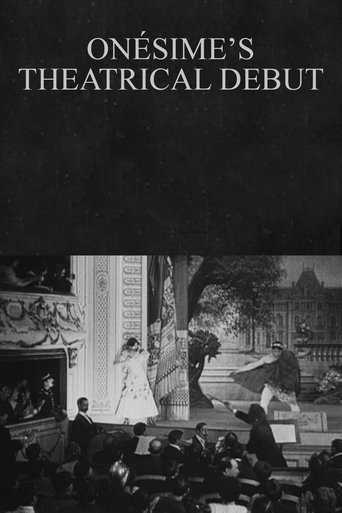
Onésime et l'étudiante
Plot
Onésime, the long-running comic character associated with Jean Durand's shorts, becomes entangled with a young student in a light farce typical of early French slapstick. The story plays as a rapid sequence of misunderstandings, flirtation, pursuit, and comic mishap, with Onésime's clumsy attempts to manage the situation only making it worse. As with many films in the series, the humor depends less on dialogue than on gesture, timing, and escalating physical complications. The short builds toward a final comic payoff in which Onésime's antics undermine any hopes of dignified behavior, leaving the student and the surrounding characters caught up in the chaos he creates.
Director
Jean DurandAbout the Production
This is a one-reel French comic short directed by Jean Durand as part of the Onésime series built around Ernest Bourbon's recurring screen persona. Like many Pathé comedies of the period, it was produced quickly and economically, relying on a familiar stock character, concise plotting, and outdoor or studio-set physical comedy rather than elaborate production design. Surviving documentation is limited, so precise budgetary figures, shooting locations, and release logistics are not well established in readily accessible sources. The film belongs to the early phase of French comic cinema when series characters were used to build audience recognition and repeat business.
Historical Background
The film was produced in 1912, during the rapid expansion of narrative cinema in Europe and the United States, when the one-reel comedy remained a dominant format. France was still one of the leading centers of world cinema, and Pathé Frères was among the most influential production and distribution companies in the industry. This was also a transitional era in film style: while features were beginning to emerge, short comedies with familiar characters continued to be commercially important and widely exported. The Onésime series sits within the broader history of serial comic performance, helping establish the idea that audiences would return for the same character in new situations much as they did in later series-based entertainment.
Why This Film Matters
Although not a canonical masterpiece, the film is culturally significant as part of the early development of recurring comic character filmmaking in France. The Onésime shorts contributed to the standardization of screen comedy by showing how a familiar persona could anchor multiple self-contained stories, a practice that anticipated later sitcom logic and series comedy structures. Its survival in film history matters because it documents the industrial and performance styles of the silent era, when comic identity was built through physical expressiveness rather than dialogue. The film also has value for historians tracking the careers of performers like Gaston Modot, whose later work would help define some of the most important French cinema of the interwar period.
Making Of
Onésime et l'étudiante was made during a period when Pathé and other French studios were producing large numbers of short comedies built around recurring characters. Jean Durand specialized in this kind of brisk, crowd-pleasing material, often directing with an emphasis on movement, gags, and clear visual storytelling that could travel easily across language barriers. The casting of Ernest Bourbon as Onésime gave the series continuity, while the inclusion of Gaston Modot reflects the practice of using younger or emerging performers in supporting roles before they became better known. Because the film is a short from 1912, behind-the-scenes documentation is limited, but its production almost certainly followed the efficient assembly-line methods common to Pathé's output at the time, with minimal shooting time and an emphasis on dependable comic formula.
Visual Style
The film would have employed the straightforward visual grammar of early 1910s French comedy: static or lightly mobile camera setups, medium-distance framing that keeps bodies and actions legible, and staging built around entrances, exits, and physical business. Jean Durand's comedies often favored clarity and momentum over elaborate camera tricks, allowing the performers' gestures to carry the humor. Since it is a silent short, the cinematography would have had to communicate character relationships and comic beats through composition and movement alone. The likely result is a clean, efficient visual style designed to maximize the readability of the gag.
Innovations
The film's significance lies less in technical innovation than in the polished efficiency of early studio comedy production. It demonstrates the mature use of recurring-character branding, visual gag construction, and concise storytelling within a one-reel format. Any technical achievements would have been those typical of Pathé comedies of the period, including clean staging, clear shot composition, and economical editing that served the rhythm of the joke. Its value today is as an example of established silent-era comic technique rather than a landmark of technical experimentation.
Music
As a silent film, Onésime et l'étudiante had no synchronized recorded soundtrack. In 1912 it would typically have been accompanied by live music in the theater, often improvised or selected by the exhibitor to match the comic action. No original cue sheet or commissioned score is widely documented in accessible sources.
Memorable Scenes
- Onésime's repeated attempts to handle the student situation with confidence, only to turn each action into a larger comic problem.
- The escalating chain of misunderstandings and physical mishaps that drives the short toward its final payoff.
- The visual comedy of Onésime trying to maintain dignity while everything around him becomes increasingly chaotic.
Did You Know?
- The film is part of the Onésime comedy series, one of the recurring-character comic cycles popular in early French cinema.
- Ernest Bourbon played Onésime, making the character instantly recognizable to contemporary audiences who followed the series.
- Jean Durand was a prolific director of Pathé comedies and adventure shorts, known for energetic staging and broad physical humor.
- Gaston Modot appears in the cast; he would later become a major figure in French cinema, especially in films associated with the avant-garde and with directors such as Luis Buñuel.
- The film is a silent short, so its original presentation would have depended on live musical accompaniment in theaters rather than a synchronized score.
- As with many films from 1912, detailed production records are sparse, and much of the film's surviving historical identity comes from catalog listings and film archives rather than extensive contemporary reviews.
- The title suggests a university or academic-comedy scenario, a common comic setup in early cinema that allowed for class play, flirtation, and misunderstanding.
- The film is an example of how Pathé used a recognizable comic brand to sustain audience interest across multiple shorts.
- No major award records are known for the film, which is typical for commercial short comedies from the silent era.
- The exact plot details are not widely documented in English-language sources, making it a film primarily known through archival and catalog references.
What Critics Said
Contemporary critical reception is not well documented in surviving accessible sources, which is common for many short comedies from 1912. At the time, films like this were usually reviewed less individually than as part of a studio's regular output, and their success was measured more by audience response and booking frequency than by detailed critical analysis. Modern assessment tends to view the film primarily as an archival artifact: a representative example of Pathé-era comic production, Jean Durand's directorial style, and the Onésime series' place in early French popular culture. Because the film is obscure today, it is discussed more by film historians and archivists than by mainstream critics.
What Audiences Thought
No precise audience records are known, but the film was made for the broad mass audience that attended short comic programs in the silent era. The Onésime character was designed to be immediately readable and entertaining, and films in the series likely benefited from the familiarity of the recurring role. Audience enjoyment would have come from the rapid-fire visual gags, the social comedy implied by the title, and the pleasure of seeing a known comic figure fail in amusing ways. Like many shorts of the period, its appeal would have been strongest in theater programs where it was shown alongside other comedies, news items, and short dramas.
Film Connections
Influenced By
- French vaudeville and stage farce
- Early Pathé comic shorts
- Recurring comic character formats of the 1900s and early 1910s
This Film Influenced
- Later French comic shorts built around recurring characters
- Series-based silent slapstick comedies
More from Jean Durand
View allFilm Restoration
The film appears to survive in archival holdings or cataloged records, though access is limited and preservation details are not widely published in accessible sources. It is not commonly available as a widely circulated restored title, and information about a definitive restoration is not readily confirmed. As with many silent shorts, its current status is best described as partially preserved or archived rather than broadly available to the public.