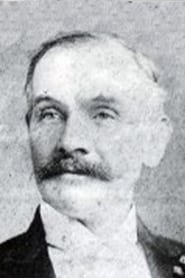
1895 · null

Also available on: YouTube
Opening of the Kiel Canal

Opening of the Kiel Canal

1895 null United Kingdom

"null"

Historical record and eyewitness documentationModernity, empire, and state spectacleTechnology and engineering achievementPublic ceremony and political power

Plot

This very early actuality film records the ceremonial opening of the Kiel Canal in Germany on 20 June 1895, an event of major naval and political importance in Imperial Europe. The film presents the state occasion as a public record rather than a dramatized narrative, capturing Kaiser Wilhelm II and the official festivities surrounding the opening of the waterway. As with many films of the 1890s, the emphasis is on observation and spectacle: the camera documents the event as it unfolds, allowing audiences far from Germany to witness a significant contemporary news event. Because it is a short nonfiction film, the image itself carries the entire story, with the significance lying in the historic occasion and the novelty of seeing it preserved on motion picture film.

Director

Birt Acres Birt Acres

About the Production

Release Date 1895
Budget null
Box Office null
Production Birt Acres
Filmed In Kiel, Germany

This is an early actuality film shot during a real public ceremony rather than staged on a set, which makes it an important example of cinema’s first years as a recorder of current events. It was filmed at the opening of the Kiel Canal, a prominent political and military event attended by Kaiser Wilhelm II, giving the footage immediate news value for contemporary audiences. As with many films of 1895, no detailed production paperwork has survived in common circulation, so precise data on crew size, equipment setup, or financing is not well documented. The film’s historical importance lies less in industrial scale than in its role as an early motion-picture record of a major international event.

Historical Background

The film was made in 1895, a landmark year in cinema history and a period of rapid experimentation with motion-picture technology and exhibition. In Europe, the opening of the Kiel Canal on 20 June 1895 was a highly symbolic imperial and naval event, marking a major engineering achievement that strengthened maritime passage between the North Sea and the Baltic Sea. The presence of Kaiser Wilhelm II made the occasion especially significant, as such state ceremonies were often used to project power, modernity, and national prestige. Filmmakers quickly recognized that audiences were eager to see news events, public ceremonies, and royal appearances reproduced on screen, and this film sits squarely within that early newsreel and actuality tradition. Its importance today is not only as a record of one ceremony but also as evidence of how cinema emerged as a tool for documenting modern history in real time.

Why This Film Matters

The film is culturally significant as an early example of cinema’s ability to preserve and circulate public events beyond the place and moment in which they occurred. It belongs to the tradition of actuality films that helped establish motion pictures as a medium for news, documentation, and civic spectacle before fiction filmmaking became dominant. By recording a ceremony involving an emperor and a major engineering project, it reflects the late-19th-century fascination with empire, technology, and national achievement. For film historians, it represents the transitional stage between simple moving photographs and the later development of newsreels and documentaries. Its value lies in showing how audiences at the dawn of cinema encountered the world through brief, direct visual records of notable events.

Making Of

The film was made in the context of cinema’s earliest years, when filmmakers such as Birt Acres traveled to important public events and recorded them as actuality views. Rather than constructing a narrative, the production depended on access to the ceremonial site, timely camera placement, and the ability to expose and process film under practical field conditions. The subject matter suggests a mobile, documentary-style approach that prioritized immediacy and authenticity, a hallmark of 1895 film practice. Because the event was a one-day historical occasion, the filming had to be coordinated around the ceremony itself, and the value of the work came from its timeliness as much as from its visual content. Surviving behind-the-scenes detail is limited, but the film exemplifies the working method of early exhibitors and cinematographers who turned public life into moving-image spectacle.

Visual Style

The cinematography is characteristic of very early actuality filming: a fixed camera position, a composed wide view, and an emphasis on capturing the event clearly rather than manipulating perspective or creating dramatic effects. The image likely functions as a visual document, allowing the audience to observe the ceremony in a straightforward, almost reportorial way. Lighting would have depended entirely on available daylight, and camera placement would have been determined by access to the public event and the need for an unobstructed view. The style reflects the aesthetic of early cinema, where the camera acted as an observer of reality rather than an interpreter of it.

Innovations

Its main technical achievement is its use of cinema to capture a major public event on location in 1895, demonstrating the practical mobility of early film apparatus. As an actuality film, it shows how moving pictures could serve documentary and news functions almost immediately after the medium’s invention. The work also belongs to the earliest phase of British nonfiction filmmaking, helping establish the model for later newsreels and travel/event films. While not an innovation in editing or effects, it is technically notable for preserving a real historical ceremony with the limited portable technology available at the time.

Music

The film was made as a silent motion picture, and no original synchronized soundtrack is known. In period exhibition, it would likely have been accompanied by live music, a lecturer, or other theater accompaniment depending on the venue and exhibitor practice. No specific surviving score is associated with the film.

Memorable Scenes

  • The ceremonial recording of the opening of the Kiel Canal, with the camera capturing the official public proceedings and the presence of Kaiser Wilhelm II.
  • The broad observational framing that turns a real state event into a moving historical document, allowing viewers to witness a moment of imperial pageantry.

Did You Know?

  • The film documents the opening of the Kiel Canal, a major imperial ceremony held in Germany on 20 June 1895.
  • It is one of the many actuality subjects filmed by Birt Acres, who was among the pioneering British filmmakers of the 1890s.
  • Because it captures a real event, the film functions as both a news record and an early example of cinema as public memory.
  • The subject, Kaiser Wilhelm II, was central to the political spectacle of the ceremony and helped make the footage newsworthy across Europe.
  • Like many films from 1895, it is extremely short and likely shown as part of a program of multiple brief attractions rather than as a stand-alone feature.
  • The film is associated with the earliest phase of non-fiction cinema, before narrative filmmaking became dominant.
  • No surviving marketing campaign or promotional tagline is commonly documented for the film, which was typical for many early actuality titles.
  • The film’s title is sometimes encountered in archival and catalog contexts as a straightforward description of the event rather than as a creative brand.
  • Its survival status is not always consistently documented in popular sources, reflecting the fragmentary preservation record of very early cinema.
  • The film is historically notable because the Kiel Canal itself was a strategically important engineering project connecting the North Sea and the Baltic Sea.

What Critics Said

Contemporary critical reception is not well preserved in the form of detailed reviews, which is common for films of this era. Early audiences and exhibitors likely valued the film for its topical interest, novelty, and the prestige of seeing a major international event on screen. In modern historical assessment, the film is regarded as an important actuality record and an artifact of Birt Acres’s pioneering work. Critics and historians now tend to evaluate it primarily for its documentary significance, its role in early film exhibition culture, and its contribution to the emergence of cinema as a medium for news and observation.

What Audiences Thought

Specific audience reaction records are scarce, but films like this were generally well received by early cinema audiences because they offered the thrill of witnessing current events and distant places. The ceremonial and imperial subject matter would have had particular appeal to viewers interested in news, royalty, and technological progress. At a time when motion pictures were still a novel attraction, even a brief actuality could produce strong curiosity and excitement. Today, the film is mainly appreciated by archival audiences, historians, and silent-film enthusiasts rather than mass audiences.

Film Connections

Influenced By

  • Early actuality and topographical films
  • The emerging practice of filming public events and royal ceremonies
  • The broader 1890s tradition of photographic and moving-image news documentation

This Film Influenced

  • Early newsreels and event recordings
  • Later documentary actuality traditions
  • Public-event cinematic records in the 20th century

Film Restoration

The film is an extremely early actuality from 1895 and is generally regarded as an archival historical item; exact preservation details are not widely standardized in popular sources. It is associated with film-historical catalogs and archival references, but available public information about whether a complete print survives, whether it has been restored, or whether only fragments remain is limited.

Themes & Topics