Peanuts and Bullets
“A Nutty Comedy of Love and Larceny”
About Peanuts and Bullets
Charley Chase portrays a destitute, starving artist living in a cramped tenement who is constantly hounded by his aggressive landlady for overdue rent. In a desperate attempt to find sustenance, he tries to pilfer fruit from a street vendor's cart, only to be thwarted in a series of slapstick mishaps. His life becomes more complicated when a beautiful young woman arrives at the building, sparking an intense and comedic rivalry between Charley and his downstairs neighbor, a physically imposing professional weightlifter. The two men engage in a series of escalating stunts and confrontations to win her favor, culminating in a chaotic display of physical comedy that highlights Charley's early 'bumbling' persona.
Cast & crew
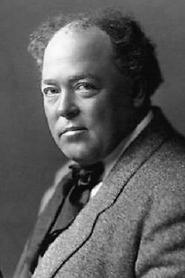
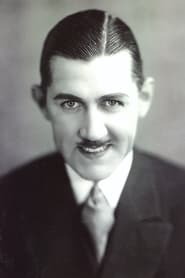
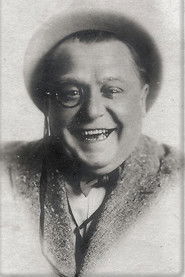
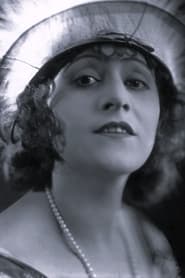
More films like this
More from Nick Cogley
View all →

More about Peanuts and Bullets
Production
- Release date
- February 27, 1915
- Country
- United States
- Production
- Keystone Film Company
- Filmed in
- Edendale, Los Angeles, California
The film was produced during the peak of Mack Sennett's influence at Keystone, utilizing the studio's signature 'rough and tumble' style of comedy. It was directed by Nick Cogley, who was primarily known as a character actor but took the helm for several short subjects during this period. The production relied heavily on improvisational physical comedy rather than a rigid script, which was standard practice for Keystone shorts at the time.
Themes & topics
Historical background
In 1915, the American film industry was transitioning from short 'one-reelers' to longer feature films, but the slapstick short remained the bread and butter of the nickelodeon circuit. This was the year that 'The Birth of a Nation' was released, changing cinema forever, yet small comedies like 'Peanuts and Bullets' provided the necessary escapism for working-class audiences. The film reflects the urban anxieties of the time, such as poverty, high rent, and the struggle for food in rapidly growing American cities.
Why this film matters
The film is significant as an early showcase for Charley Chase, who would later become one of the most sophisticated comedians of the 1920s at Hal Roach Studios. It represents the 'Keystone Style' of comedy—fast-paced, violent, and irreverent—before it was refined by performers like Buster Keaton or Charlie Chaplin. It also documents the early architectural landscape of Los Angeles before the massive urban developments of the mid-20th century.
Making of
The production was filmed on the streets of Edendale, which served as the backdrop for many early Keystone comedies. Because the studio operated on a high-volume schedule, the film was likely shot in just a few days. The rivalry between the slim Charley Chase and the burly Fritz Schade was intentionally designed to create a visual 'David vs. Goliath' dynamic, which was a favorite trope of director Nick Cogley. Much of the fruit-stand sequence was filmed using 'guerrilla' style tactics, capturing the reactions of actual passersby who were unaware a movie was being filmed.
What critics said
At the time of its release, trade publications like The Moving Picture World noted it as a standard but effective Keystone comedy that would 'keep the audience in stitches.' Modern critics and film historians view it primarily as a developmental piece for Chase, noting that while the comedy is broader than his later work, his unique screen presence is already beginning to emerge. It is often cited in retrospectives of the Keystone Film Company as a quintessential example of their 1915 output.
What audiences thought
1915 audiences responded well to the relatable themes of dodging the landlady and competing for a girl's attention. The physical comedy involving the weightlifter was a particular crowd-pleaser in nickelodeons. Today, it is mostly appreciated by silent film enthusiasts and historians who enjoy the raw energy of early slapstick.
Visual style
The film utilizes static camera setups typical of the era, with most of the action taking place in wide shots to capture the full range of physical movement. There is a notable use of deep focus in the street scenes, allowing the audience to see the vendor, the thief, and the approaching police simultaneously. The lighting is entirely natural, as was common for Keystone's outdoor 'run-and-gun' filming style.
Innovations
The film features early examples of 'under-cranking' the camera—filming at a slower frame rate so that when projected at standard speed, the action appears unnaturally fast and frantic. This became a hallmark of the Keystone aesthetic.
Music
As a silent film, there was no recorded soundtrack. Original screenings would have been accompanied by a live pianist or organist playing upbeat, frantic ragtime music to match the pace of the slapstick.
Film restoration
The film is considered partially lost or extremely rare. While fragments and some prints exist in private archives and specialized film libraries, it is not widely available in a fully restored high-definition format.
Did you know?
- This film features Charley Chase in his early career when he was still performing under his birth name, Charles Parrott.
- The director, Nick Cogley, also appears in the film as the fruit vendor who thwarts Charley's theft attempt.
- Fritz Schade, who plays the rival weightlifter, was a staple of the Keystone troupe and often played the 'heavy' or antagonist to smaller leads.
- The film is a classic example of the 'starving artist' trope that was popular in early silent comedies to garner audience sympathy.
- Charley Chase was only 21 years old when this film was released, showing his early mastery of physical timing.
- The title 'Peanuts and Bullets' refers to the chaotic nature of the street scenes and the 'projectiles' used during the slapstick fights.
- Fontaine La Rue, the female lead, was one of the early 'Keystone Girls' before moving on to more dramatic roles in the 1920s.
Memorable scenes
- The fruit-stealing sequence where Charley attempts to use a series of distractions to snatch an apple, only to be caught by the vendor's surprisingly fast reflexes.
- The showdown between Charley and the weightlifter where Charley tries to prove his strength by lifting a heavy prop, leading to a disastrous collapse of the set.
- The final chase scene involving the landlady pursuing Charley through the tenement hallways.
Influenced by
- The work of Mack Sennett
- French slapstick shorts from Pathé Frères
- Vaudeville stage sketches
This film influenced
- Mighty Like a Moose (1926)
- The Rent Collector (1921)
- Later Charley Chase shorts at Hal Roach Studios
Where else to watch
- Specialized silent film archives
- Occasional screenings at silent film festivals (e.g., Pordenone Silent Film Festival)
- Public domain collections on YouTube (low-quality transfers)
Famous quotes
Intertitle: 'A genius with an empty stomach and a full heart.'
Intertitle: 'The landlady's favorite hobby—collecting rent that isn't there.'