
Queen Kelly
"In the original ending"
Keys: Space play/pause · ←/→ 10s · F fullscreen · M mute · </> speed
About this film
In the original ending, Kelly goes to German East Africa to visit her dying aunt and is forced to marry a repulsive man named Jan. The aunt dies after the wedding and Kelly refuses to live with him, instead becoming the madam of her aunt's brothel. Her extravagances and style earn her the name "Queen Kelly".
Cast & crew
More films like this


More Drama films
View all →







More from Erich von Stroheim
View all →
More about this film
About the production
Release dateNever properly released; European version premiered January 1931
Budget$1,000,000 (enormous sum for 1928, equivalent to over $16 million today)
Box officeThe film never completed its theatrical run due to production shutdown; later truncated versions had limited release
ProductionGloria Swanson Productions, Joseph P. Kennedy Enterprises
Filmed inCulver City Studios, California, Lake Arrowhead, California, San Juan Capistrano, California
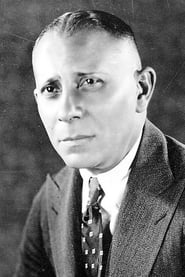
Production was plagued by conflicts between director Erich von Stroheim and star/producer Gloria Swanson. Von Stroheim's obsessive perfectionism led to extravagant sets and shooting schedules that far exceeded budget constraints. After filming approximately 200,000 feet of footage (enough for a 6-hour film), Swanson halted production. The footage was stored for years before being partially released. The African sequences were never filmed, though von Stroheim had already built elaborate sets.
Themes
Forbidden loveClass conflictPower and corruptionInnocence versus decadenceMadness and jealousy
Themes & topics
Historical background
Queen Kelly (1928) emerged during the silent-film era. In the original ending, Kelly goes to German East Africa to visit her dying aunt and is forced to marry a repulsive man named Jan. Archival records and catalog entries help place the work within film-history surveys of the period.
Why this film matters
Preserved under Wikidata ID Q288491, Queen Kelly is valued as a screen drama within catalog and archive collections. Wikipedia's "Queen Kelly" entry connect it to broader histories of cinema exhibition and restoration.
Making of
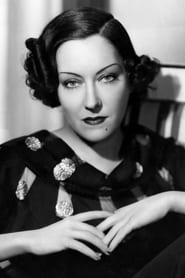
The production of 'Queen Kelly' became in Hollywood as a symbol of artistic excess and creative conflict. Erich von Stroheim, known as 'the man you love to hate,' demanded absolute control and insisted on shooting in chronological order. He built enormous, historically accurate sets, including a full-scale European palace and an African village complete with imported animals. Gloria Swanson, who had previously worked successfully with von Stroheim on 'The Merry Widow,' found his methods increasingly intolerable. The breaking point came when von Stroheim insisted on filming a scene where Swanson's character would appear in a brothel wearing nothing but a fur coat. Swanson, who had carefully cultivated her public image, refused. The conflict escalated until Joseph P. Kennedy, who was both financing the film and romantically involved with Swanson, stepped in and fired von Stroheim. The director reportedly wept when told he was being replaced. The remaining footage was locked away for years, with Swanson occasionally showing it to private guests but refusing any commercial release.
What critics said
Trade and archival sources offer limited day-one review coverage for Queen Kelly. Modern reception rests on its availability in collections, repertory screenings, and reference works that document 1928 cinema.
Did you know?
- The film was never completed in its intended form, making it one of Hollywood's most famous unfinished productions
- Erich von Stroheim was fired during production, the second time this happened on a Gloria Swanson film (after 'The Merry Widow')
- The original footage contained approximately 200,000 feet of film, enough for a 6-hour epic
- Gloria Swanson kept the film's footage in her garage for decades, refusing to release it
- The film is prominently featured in 'Sunset Boulevard' (1950), where Swanson's character watches clips from her lost masterpiece
- Joseph P. Kennedy, Swanson's lover at the time, financed the production and eventually forced its shutdown
- Von Stroheim had built elaborate African sets costing $250,000 that were never used
- The film's troubled production contributed to the end of Swanson's career as an independent producer
- A 1985 restoration by Kino International used existing footage and still photographs to reconstruct as much as possible
- The character of Queen Kelly was inspired by the real-life Queen Marie of Romania
Visual style
The cinematography, primarily by Ben Reynolds and William H. Daniels, represents some of the most sophisticated work of the late silent era. Von Stroheim demanded naturalistic lighting and deep focus compositions that were revolutionary for the time. The palace sequences feature elaborate tracking shots and complex camera movements that enhance the film's epic scope. The use of light and shadow creates a gothic atmosphere, particularly in scenes with Queen Regina. The cinematography emphasizes the contrast between the opulent palace and the humble convent, visually reinforcing the class themes. Despite being incomplete, the surviving footage showcases remarkable technical achievement in visual storytelling.
Innovations
The film showcased several technical innovations for its time, including the use of enormous, historically accurate sets that were unprecedented in scale. Von Stroheim employed advanced lighting techniques to create naturalistic effects, particularly in the night scenes. The production utilized the latest camera equipment for smooth tracking shots through the elaborate palace sets. The film also featured some of the most sophisticated makeup effects of the era, particularly for Queen Regina's increasingly unhinged appearance. Although the African sequences were never filmed, the preparation for these scenes included technical planning for jungle effects and animal handling that would have been groundbreaking.
Music
As a silent film, 'Queen Kelly' originally had no synchronized soundtrack. However, various musical scores have been composed for different restorations. The 1985 restoration featured a new score by composer Robert Israel, who created music that reflected the film's romantic and dramatic elements while acknowledging its incomplete nature. Earlier versions used compiled classical pieces typical of silent film exhibition. The music choices have always emphasized the film's European setting, incorporating waltzes and classical pieces that complement the story's aristocratic milieu.
Famous quotes
I am Queen Kelly... and I command you to love me!
Queen Regina V (spoken in intertitles)
In the convent, we learned that love is a sin... but with you, it feels like salvation.
Kitty Kelly
A queen's jealousy is more dangerous than a serpent's bite.
Prince Wolfram
Memorable scenes
- The grand ballroom sequence where Prince Wolfram first encounters Kitty Kelly, featuring sweeping camera movements through an elaborately decorated palace
- Queen Regina's mad scene where she smashes mirrors in her chambers, showcasing Seena Owen's dramatic performance
- The convent garden scene where Kitty and Wolfram declare their love, contrasting innocence with royal decadence
- The dramatic confrontation between Queen Regina and Kitty in the palace throne room
What audiences thought
Original audience reception is difficult to gauge due to the film's limited release. The European version that appeared in 1931 found modest success, but audiences were confused by the incomplete narrative. Modern audiences, particularly classic film enthusiasts, have shown tremendous interest in the film, largely due to its connection with 'Sunset Boulevard.' The restored versions have been popular at film festivals and revival houses, where viewers appreciate seeing the footage that was once thought lost. The film's mystique and the story behind its production have made it a cult favorite among silent film aficionados.
Film connections
Influenced by
- The Merry Widow (1925)
- Greed (1924)
- The Blue Angel (1930)
This film influenced
- Sunset Boulevard (1950)
- The Last Emperor (1987)
- The Fall (2006)
Film restoration
The film exists in various incomplete forms. Approximately 75-90 minutes of footage survives, stored at the George Eastman Museum. The 1985 restoration compiled available footage with still photographs and intertitles to create the most complete version possible. The original negative was destroyed, but preservationists have saved what remains. The film represents especially significant preservation efforts for an incomplete silent film.
Where to watch
- The Criterion Collection (DVD/Blu-ray)
- Kino Lorber (DVD)
- The Film Foundation screenings
- Classic film streaming services like The Criterion Channel
- Various public domain versions online
- Film archives and museum screenings