

Ramona
"This was the first United Artists film to be released with a recorded soundtrack."
Keys: Space play/pause · ←/→ 10s · F fullscreen · M mute · </> speed
About this film
Based on the Helen Hunt Jackson novel of 1884 about a young woman of partial Native American descent, who experiences love and loss in 1800s California. This was the first United Artists film to be released with a recorded soundtrack. The novel had been previously filmed by D. Griffith in 1910 with Mary Pickford, remade in 1916 with Adda Gleason, and again in 1936 with Loretta Young.
Cast & crew
More Drama films
View all →






More about this film
About the production
Release dateMarch 20, 1928
Box officeCommercially successful, though exact figures are not documented; it was one of United Artists' more profitable releases of 1928
ProductionUnited Artists, Edwin Carewe Productions
Filmed inSan Diego County, California, Temecula Valley, California, Mission San Juan Capistrano, California
Shot on location in California to capture the authentic landscape described in Jackson's novel. Director Edwin Carewe, who had Native American ancestry himself, was particularly invested in portraying the story with cultural sensitivity. The production employed numerous Native American extras from local tribes to ensure authenticity in the tribal scenes.
Themes
Interracial romanceCultural identityPrejudice and discriminationTragedy and lossCultural collision
Themes & topics
Historical background
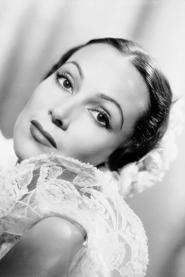
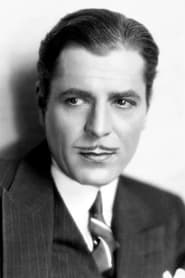
Made in 1928, in United States, under Edwin Carewe, Ramona belongs to drama film filmmaking amid the silent era's rapid stylistic experiments. Ramona is a 1928 American synchronized sound drama film directed by Edwin Carewe, based on Helen Hunt Jackson's 1884 novel Ramona, and starring Dolores del Río and Warner Baxter.
Why this film matters
Within drama film history, Edwin Carewe's name attaches to the work; surviving prints help researchers study silent-era craft; 1928 film by Edwin Carewe.
Making of
The making of 'Ramona' was marked by Edwin Carewe's personal commitment to telling a story he felt was important for American audiences. Carewe, who had directed the earlier 1916 version, wanted to create a more faithful adaptation of Jackson's novel that would highlight the injustices faced by Native Americans. The casting of Dolores del Río was considered, as she was one of the few non-white actresses given leading roles in Hollywood during this era. The production faced challenges filming on location in rural California, with the crew having to transport equipment to remote areas to capture the authentic landscapes. The romantic scenes between del Río and Warner Baxter were carefully choreographed to convey passion while adhering to the strict moral codes of the time. The film's tragic elements, particularly the death scenes, were shot with sensitivity to avoid being overly melodramatic while still conveying the emotional weight of the story.
What critics said
Contemporary reviews of Ramona are sparse in open sources; later catalog entries chiefly summarize plot and credits.
Did you know?
- Dolores del Río, a Mexican actress of Spanish descent, was cast as the half-Native American Ramona, showcasing Hollywood's tendency to cast ethnically ambiguous actors in diverse roles during this period
- The third screen adaptation of Helen Hunt Jackson's novel, following 1910 and 1916 versions
- Director Edwin Carewe claimed some Chickasaw heritage, which influenced his decision to make this film with particular attention to Native American representation
- Warner Baxter, who played Alessandro, would win the Academy Award for Best Actor the following year for 'In Old Arizona' (1929)
- The film's release coincided with the transition to sound films, making it one of the last major silent romantic dramas
- Real members of the Luiseño and Cahuilla tribes were used as extras in the tribal scenes
- The production faced criticism from some groups who felt the film romanticized the treatment of Native Americans
- Dolores del Río's performance in 'Ramona' helped establish her as one of Hollywood's first Latin American superstar actresses
- The film's costumes were designed to be historically accurate, with extensive research into 1850s California attire
- A special premiere was held in San Diego, near where the story takes place, with many local dignitaries attending
Awards & recognition
- Photoplay Magazine Medal of Honor - 1928 (won)
Visual style
The cinematography of 'Ramona' was handled by William Rees, who employed the romantic pictorial style common in late silent films. The film features sweeping landscape shots of the California countryside, utilizing natural lighting to create a dreamlike, nostalgic atmosphere. Rees used soft focus techniques for the romantic scenes, particularly in close-ups of Dolores del Río, enhancing her ethereal beauty. The camera work during the tribal scenes was more documentary-style, aiming for authenticity in the portrayal of Native American life. The film makes effective use of location shooting, with the California missions and landscapes serving almost as characters in the story. The cinematography successfully captures the contrast between the civilized world of the Spanish rancho and the natural world of the Native American tribes, visually reinforcing the film's themes of cultural collision.
Innovations
While 'Ramona' was primarily a black and white film, it featured some tinted sequences, particularly in the romantic scenes, which was a common practice in late silent films to enhance emotional impact. The film utilized the then-new panchromatic film stock, which provided better tonal reproduction and was particularly flattering for Dolores del Río's complexion. The production employed some of the earliest location sound recording equipment for ambient sounds, though the film remained primarily visual. The makeup techniques used to transform Warner Baxter into a convincing Native American character were considered advanced for the period. The film also featured some of the most elaborate location shooting of its era, with the production company building temporary structures in remote areas to maintain authenticity.
Music
As a silent film, 'Ramona' was accompanied by a musical score performed live in theaters during its initial release. The score was composed by Hugo Riesenfeld, one of the leading composers of silent film music. The music incorporated Spanish and Native American musical themes to reflect the cultural elements of the story. The romantic scenes were accompanied by lush, sweeping melodies, while the tragic moments featured more somber, minor-key compositions. Some theaters used pre-recorded phonograph records of the score, while others employed live orchestras. The music was an integral part of the film's emotional impact, helping to convey the story's romantic and tragic elements without dialogue. The score was considered innovative for its incorporation of authentic folk melodies alongside traditional romantic film music.
Famous quotes
I would rather die with my people than live without them." - Alessandro (intertitle)
Love knows no color, no race, no creed." - Ramona (intertitle)
The purest hearts often suffer the most." - Opening narration (intertitle)
California was paradise then, but even paradise had its serpents." - Opening narration (intertitle)
Memorable scenes
- The first meeting between Ramona and Alessandro at the sheep camp, where their eyes meet across the valley and sparks fly instantly
- The secret wedding scene in the chapel, where Ramona and Alessandro defy social conventions to marry
- The heartbreaking scene where Ramona discovers her dead child in Alessandro's arms after their journey through the mountains
- The final confrontation where Alessandro is murdered by the white settler, leading to Ramona's complete breakdown
- The closing scene where Felipe finds Ramona and brings her back to the rancho, symbolizing her return to civilization and hope
What audiences thought
Enthusiastically received by audiences upon its release, becoming popular films of 1928. Moviegoers were particularly drawn to the romantic chemistry between Dolores del Río and Warner Baxter, as well as the film's sweeping California landscapes. The tragic elements of the story resonated with viewers, and many reported being moved to tears by the film's emotional climax. The film's success at the box office demonstrated that audiences were receptive to stories that addressed social issues, particularly when presented in a romantic framework. The popularity of 'Ramona' also boosted tourism to Southern California, with many fans wanting to visit the locations depicted in the film. Audience appreciation for Dolores del Río's performance helped establish her as a major star, leading to increased demand for her in subsequent productions.
Film connections
Influenced by
- Helen Hunt Jackson's 1884 novel 'Ramona'
- Earlier 1910 and 1916 film adaptations
- Contemporary social reform movements
- Romantic literature of the American West
This film influenced
- 'Ramona' (1936 remake with Loretta Young)
- 'Laughing Boy' (1934)
- 'The Squaw Man' (1931)
- Later films featuring sympathetic Native American characters
Film restoration
In its complete form and has been preserved by the Library of Congress and the Museum of Modern Art. A restored version was released on DVD as part of the Warner Archive Collection. Some original nitrate prints were discovered in European archives, contributing to the restoration efforts. The film is considered to be in good preservation condition for a film of its era.
Where to watch
- Warner Archive DVD/Blu-ray
- Classic film streaming services
- Film archives and museums
- Occasional broadcasts on Turner Classic Movies
- Public domain versions available online