Salomé
About Salomé
Herod has killed his brother, taken the throne of Judea, and married Herodias. Jokanaan comes out of the desert, denounces her, and is locked up. Salome persuades the captain Narraboth to bring the prophet up. She tries to kiss him, he refuses, and Narraboth stabs himself. At a banquet Herod begs Salome to dance and swears to give her whatever she asks. She dances the Dance of the Seven Veils and demands Jokanaan's head. She kisses the head. Herod orders the guards to kill her. The last title reads, "The Mystery Of Love Is Greater Than The Mystery Of Death."
Cast & crew
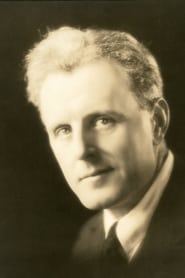
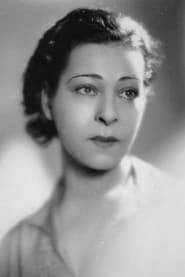
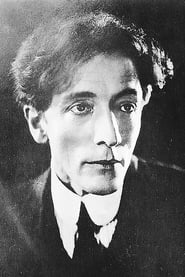
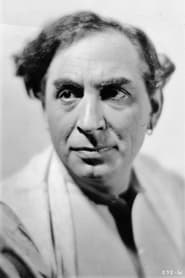
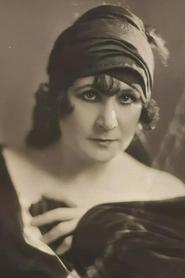


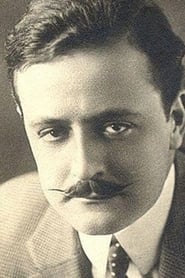
More about Salomé
Charles Bryant directed. Alla Nazimova produced, starred, and wrote the scenario under the name Peter M. Winters, from Oscar Wilde's play. Natacha Rambova designed the sets and the costumes after Aubrey Beardsley's drawings, and she had the cloth brought from Maison Lewis in Paris. Charles Van Enger photographed, with Paul Ivano assisting. Ulderico Marcelli arranged the music. Nazimova paid for the film herself. Published figures put the cost between $350,000 and $400,000. It was shot in January and February 1922, shown privately at The Town Hall in New York on July 12, 1922, and premiered at the Criterion Theatre in New York on December 31, 1922. Allied Producers and Distributors put it into general release on February 15, 1923. Copyright claims LP18586 and LP18655 are dated December 15, 1922. The negative is six reels, 5,595 feet.
Themes
Making
Rambova's sets stay close to Beardsley's black-and-white drawings. The banquet is played outdoors so Herod can watch Salome, and the dance is the one fast passage in a film that otherwise holds to a single courtyard.
Reviews
Robert E. Sherwood wrote in Life that the people who made Salome deserved "the whole-souled gratitude of everyone who believes in the possibilities of the movie as an art." Thomas Craven, in The New Republic, called it "degrading and unintelligent" and said Nazimova had taken a part she could not play. Alan Dale, in the New York American, wrote that she was "witheringly unusual."
Audiences
Allied held the picture back, and it did poor business once it opened. Nazimova stopped producing.
Look
Charles Van Enger lit the courtyard and the banquet to flatten Nazimova's age in the longer shots. Paul Ivano assisted on the court scenes and on a Shadow of Death sequence that needed long lighting setups.
Music
Ulderico Marcelli arranged the music for the silent release.
Preservation
Prints are at the George Eastman Museum and in the Cohen Media Group's Raymond Rohauer collection. The Museum of Modern Art in New York also holds a print. It was named to the National Film Registry in 2000. Kino Lorber included a digital restoration in the November 2018 box Pioneers: First Women Filmmakers.
Notes
- Mitchell Lewis plays Herod, Rose Dione plays Herodias, Nigel De Brulier plays Jokanaan, Earl Schenck plays Narraboth, Arthur Jasmine plays Herodias's page, Frederick Peters plays the executioner Naaman, and Louis Dumar plays Tigellinus.
- Nazimova was 42 and wanted Salome played as a girl of about fourteen. For the dance she wore a white satin sheath with a rubber lining made by a tire manufacturer. Van Enger lit her to hide her age.
- Ivano recalled cold nights, half-dressed actors, and fifteen large electric stoves used to heat the stage.
- The New York censor board called the picture a story of depravity with a biblical background and ordered cuts, including a relationship between two soldiers.
- Nazimova left films in 1925 and returned in 1940.
- The Library of Congress added it to the National Film Registry on December 28, 2000.
Scenes
- Narraboth brings Jokanaan up from the cistern, and Salome asks to kiss his mouth. The captain then stabs himself.
- Salome dances the Dance of the Seven Veils and names her price as Jokanaan's head on a silver platter.
- She kisses the head under her train, and the guards spear her.
Influenced by
- Oscar Wilde's Salome (1891)
- Aubrey Beardsley's illustrations for the play
Also available
- Internet Archive (Salomfebruary151923)
- Kino Lorber, Pioneers: First Women Filmmakers (2018)
Quotes
The Mystery Of Love Is Greater Than The Mystery Of Death.