






Sinners in Paradise
"Shipwrecked souls, savage paradise."
Keys: Space play/pause · ←/→ 10s · F fullscreen · M mute · </> speed
About this film
The survivors from a plane crash are washed up on an island where the only inhabitants are Mr. Taylor and his servant, Ping. The mismatched group must learn to get along and work together if they are to convince Taylor to let them borrow his boat and return to the main land. In 1966, the film entered the public domain in the United States because the claimants did not renew its copyright registration in the 28th year after publication.
Cast & crew
More films like this
More Adventure films
View all →


More from James Whale
View all →
More about this film
About the production
Release dateNovember 18, 1938
Budget273,670
ProductionUniversal Pictures
Filmed inUniversal Studios backlot, Universal City, California
This was one of James Whale's final films at Universal Pictures before his departure from the studio. The film was shot quickly and on a modest budget, typical of Universal's B-unit productions of the late 1930s. The island sequences were created using studio sets and matte paintings rather than on-location filming.
Themes
Redemption and second chancesClass conflict and social hierarchyHuman nature under pressureCooperation vs. self-interestIsolation and community
Themes & topics
plane crashdeserted islandsurvivalcastawaysmillionaireredemptionsocial conflictcooperationescapetropical settingdiverse groupsecretspast sinshuman natureclass differences
Historical background
By 1938, sound cinema, wartime mobilization, and changing censorship norms were reshaping what audiences expected from narrative features. Archival sources describe Sinners in Paradise as 1938 film by james whale. Contemporary context can be traced through sources such as the Wikipedia article on Sinners in Paradise.
Why this film matters
Sinners in Paradise remains part of the screen heritage of its era, offering evidence of prevailing genres, production methods, and audience tastes. Later revivals, archive screenings, and digitization have kept such titles accessible to researchers and dedicated viewers long after their first commercial runs.
Making of
James Whale directed this film during a difficult period in his career, as his relationship with Universal Pictures had become strained following his earlier successes with horror films. The production was rushed and made with a limited budget, typical of Universal's B-unit productions. Whale, known for his meticulous visual style and innovative camera work, had to work within these constraints while still trying to maintain his artistic vision. The casting reflected Universal's strategy of using established contract players rather than expensive stars. The film's tropical setting was created entirely on the studio backlot using sets and matte paintings, a common practice of the era. Despite these limitations, Whale managed to infuse the film with his characteristic touches, including subtle visual symbolism and attention to character dynamics.
What critics said
Reception records for Sinners in Paradise are uneven; interest today is concentrated among archivists, historians, and viewers of older cinema. Modern assessment tends to emphasize historical value, craft, and cultural context rather than box-office performance.
Did you know?
- This was one of James Whale's least-known films, made after his classic horror period but before his retirement from directing
- The film is sometimes considered lost or extremely rare, with few surviving prints in circulation
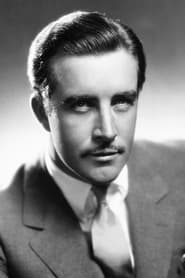
- Madge Evans, who plays the female lead, was a former child star who had successfully transitioned to adult roles
- John Boles was a popular leading man in the 1930s, known for his singing voice in musical films
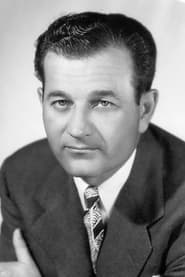
- Bruce Cabot, who plays a supporting role, was famous for his role as Jack Driscoll in the original 'King Kong' (1933)
- The film was released just as James Whale's relationship with Universal Pictures was deteriorating
- Despite Whale's reputation for visual style, this film was made with limited resources compared to his earlier Universal productions
- The character of Ping was played by Chinese-American actor Keye Luke, who would later become famous as the first Kato in the Green Hornet series
- The film's themes of redemption and second chances reflected common motifs in 1930s cinema during the Great Depression
- This was one of the last films Whale would direct before effectively retiring from Hollywood in 1941
Visual style
The cinematography in Sinners in Paradise was handled by Charles Van Enger, a veteran Universal cameraman who had worked on several of Whale's earlier films. While the film lacks the dramatic lighting and innovative camera angles that characterized Whale's horror classics, Van Enger employed effective techniques to create the illusion of a tropical island setting using studio resources. The use of matte paintings and forced perspective helped establish the remote location within budget constraints. The lighting schemes became more dramatic during key emotional moments, reflecting Whale's influence despite the limited resources. The camera work was functional rather than experimental, focusing on clear storytelling rather than visual innovation, which was typical of Universal's B-unit productions of this period.
Innovations
Sinners in Paradise did not feature significant technical innovations, as it was produced as a modest B-movie within Universal's standard production practices. The film utilized existing studio sets and conventional cinematography techniques of the late 1930s. The most notable technical aspect was the creation of the island setting through the combination of studio sets, matte paintings, and rear projection techniques, which were standard industry practices but executed competently. The sound recording used the standard Western Electric sound system that Universal had adopted for its talkies. While the film did not push technical boundaries, it demonstrated the efficiency of Hollywood's studio system in producing atmospheric settings within budget constraints.
Music
The musical score for Sinners in Paradise was composed by Charles Previn, Universal's music director during the late 1930s. Previn's score provided appropriate atmospheric support for the tropical setting and dramatic moments, though it was not particularly innovative or memorable. The music followed the conventional Hollywood practice of using leitmotifs for different characters and emotional states. As was typical of the era, the score was performed by Universal's studio orchestra and recorded using the standard sound-on-film technology of the period. No original songs were featured in the film, which was unusual given John Boles' reputation as a singer, suggesting that the film was conceived purely as a dramatic adventure rather than a musical drama.
Famous quotes
On this island, we're all equal - equally desperate!
Paradise can be hell when you're trapped in it with your past.
Money can buy you an island, but it can't buy you escape from yourself.
We came here as strangers, but we'll leave as either comrades or corpses.
In paradise, the biggest sin is giving up hope.
Memorable scenes
- The opening plane crash sequence, which effectively establishes the premise using model work and studio effects typical of the period
- The tense confrontation between the survivors when their class differences and personal secrets begin to emerge
- The climactic scene where the characters must make their final decision about trust and cooperation
- Mr. Taylor's revelation about why he chose to live in isolation, providing the film's moral center
- The final departure from the island, where characters must leave behind their old selves
What audiences thought
Audience reception to Sinners in Paradise was lukewarm upon its release. The film performed modestly at the box office, primarily serving as the second feature on double bills rather than as a main attraction. Contemporary audience reports suggest that while viewers found the premise engaging, the film failed to generate significant word-of-mouth or repeat business. The lack of major stars and the film's relatively short running time may have limited its appeal to audiences seeking more substantial entertainment. Over time, the film has largely faded from public memory, with even classic film enthusiasts often unaware of its existence. Among the small community of James Whale enthusiasts and classic film collectors, the film is valued more for its rarity and its place in Whale's filmography than for its entertainment value.
Film connections
Influenced by
- Robinson Crusoe literature
- 1930s survival films
- Stagecoach-style ensemble dynamics
- Great Depression-era social commentary
- Hollywood's tropical adventure genre
This film influenced
- Five Came Back (1939)
- The Hurricane (1937)
- Lost Horizon (1937)
- Later survival and castaway films
Film restoration
Sinners in Paradise is considered an extremely rare film with limited preservation status. Few original prints are known to exist, and it has not received a commercial home video release or digital restoration. The film survives primarily through archival copies held by film preservation institutions and private collectors. Its rarity has made it one of the more difficult James Whale films for modern audiences to access. Some film historians consider it partially lost, though complete versions do exist in archives. The lack of preservation reflects its status as a minor B-movie from Universal's catalog rather than any deliberate neglect.
Where to watch
- The film is extremely difficult to find through commercial channels
- Occasionally screened at specialized film archives and classic film festivals
- Available through some private collector circles and film preservation societies
- May be accessible through university film libraries or specialized archives
- Not currently available on major streaming platforms or home video formats