
Stella Dallas
"An eccentric lower class woman struggles to gain respect in high."
Keys: Space play/pause · ←/→ 10s · F fullscreen · M mute · </> speed
About this film
An eccentric lower class woman struggles to gain respect in high society after marrying a wealthy man, and the problem gets worse when their daughter starts growing up.
Cast & crew
More films like this
More Drama films
View all →







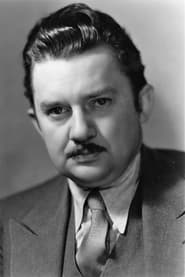
More from Henry King
View all →

More about this film
About the production
Release dateNovember 16, 1925
Box officeUnknown - box office tracking was not standardized in 1925, but the film was reported as a commercial success
ProductionSamuel Goldwyn Productions
Filmed inSamuel Goldwyn Studio, Los Angeles, California
The film was one of Samuel Goldwyn's early prestige productions, shot during the transition period when Hollywood was establishing itself as the center of American cinema. The production faced challenges in adapting the complex novel for silent film, requiring careful visual storytelling to convey the nuanced social commentary and emotional depth of the source material.
Themes
Maternal sacrificeSocial class and mobilityMother-daughter relationshipsSocial conformity vs. authenticitySelfless love
Themes & topics
silent filmmelodramasocial classmotherhoodsacrificeBoston societyworking classupper classfamily dramacoming of age
Historical background
By 1925, distribution was widening and Stella Dallas reached audiences through the theatrical channels dominant before television.
Why this film matters
Reference works on 1925 cinema cite Stella Dallas when tracing genre and regional production patterns.
Making of
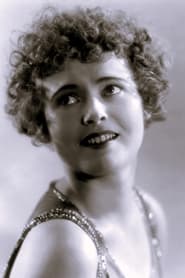
Director Henry King worked closely with screenwriter Frances Marion to adapt the complex novel for the silent screen, focusing on visual storytelling techniques to convey the emotional depth and social commentary of the source material. Belle Bennett underwent extensive preparation for her role, studying the mannerisms and speech patterns of both working-class and upper-class women of the era. The production design was particularly crucial, with elaborate sets created to contrast Stella's humble origins with the opulent world of the Dallas family. The film was shot during a transitional period in Hollywood when studios were beginning to establish more sophisticated production methods, though still working within the technical limitations of silent cinema.
What critics said
Audience data from 1925 is sparse; reception for Stella Dallas is inferred from reissue and archival interest.
Did you know?
- This was the first film adaptation of Olive Higgins Prouty's 1923 novel, which was considered controversial for its frank depiction of class differences in America
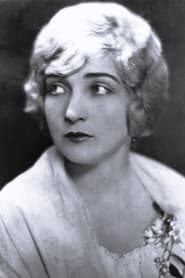
- Belle Bennett's performance as Stella was critically acclaimed at the time but has been largely overshadowed by Barbara Stanwyck's performance in the 1937 remake
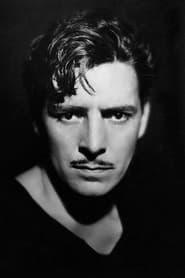
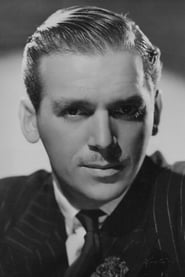
- Ronald Colman was already a major matinee idol when he was cast as Stephen Dallas, bringing significant star power to the production
- The film's intertitles were written by Frances Marion, among the leading prominent and respected screenwriters of the silent era
- The movie was categorized as a 'woman's picture' and was particularly popular with female audiences who related to Stella's maternal struggles
- Samuel Goldwyn considered this film one of his prestige productions, investing heavily in sets and costumes to accurately depict the contrast between working-class and upper-class lifestyles
- The film's theme of maternal sacrifice resonated strongly with 1920s audiences, reflecting the era's complex attitudes toward motherhood and social mobility
- This was one of the early films to directly address class consciousness in American society, a relatively bold topic for mainstream cinema of the time
- The success of this film helped establish Samuel Goldwyn as a major independent producer in Hollywood
- The original novel was inspired by Prouty's observations of social stratification in Boston society
Visual style
The cinematography by Ray Rennahan utilized the visual language of silent film to convey social contrasts and emotional states. The film employed sophisticated lighting techniques to distinguish between the warm, intimate world of Stella's origins and the cool, formal atmosphere of upper-class society. Camera work emphasized facial expressions and gestures, crucial for conveying emotion in the absence of dialogue. The visual style incorporated the soft focus and romantic lighting typical of mid-1920s melodramas, while also using composition and framing to highlight the social divisions central to the story.
Innovations
While not groundbreaking in technical terms, the film demonstrated sophisticated use of silent film techniques for emotional storytelling. The production utilized advanced lighting equipment to create visual contrasts between different social environments. The film also employed effective use of location shooting and studio sets to establish the social divisions central to the narrative. The intertitles, written by Frances Marion, were particularly well-crafted, providing necessary exposition while maintaining the emotional flow of the story.
Music
As a silent film, Stella Dallas was accompanied by live musical performances in theaters. The original score was composed by Louis F. Gottschalk, Samuel Goldwyn's musical director, who created themes that emphasized the emotional journey of the characters. Theater orchestras would receive cue sheets with musical suggestions for different scenes, ranging from lively popular songs for Stella's early scenes to more classical and somber pieces for moments of sacrifice and loss. The music was crucial in establishing mood and enhancing the emotional impact of key scenes.
Famous quotes
As a silent film, dialogue was conveyed through intertitles. Key intertitles included: 'She who had nothing, gave everything', and 'A mother's love knows no social bounds'
Memorable scenes
- The emotional climax where Stella watches from a distance as her daughter Laurel enters high society, realizing her sacrifice has allowed Laurel to succeed where she could not
- Stella's attempts to fit into upper-class society at a formal dinner party, ending in embarrassment
- The tender mother-daughter moments between Stella and young Laurel before the social divisions become apparent
- Stella's decision to leave her daughter's life for the girl's own good
What audiences thought
The film was a commercial success, particularly popular with female audiences who connected deeply with Stella's maternal struggles and sacrifices. Theater reports from the time indicated that many viewers were moved to tears by the film's emotional climax. The movie's themes of social aspiration and family dynamics resonated strongly with 1920s audiences, many of whom were experiencing their own journeys of social mobility in America's rapidly changing society. The film's success helped establish it as a property worthy of future adaptations, ultimately leading to the more famous 1937 version.
Film connections
Influenced by
- Olive Higgins Prouty's 1923 novel
- Contemporary social realist literature
- Victorian melodrama tradition
- American literary naturalism
This film influenced
- Stella Dallas (1937)
- Imitation of Life (1934)
- Mildred Pierce (1945)
- Other maternal melodramas of the 1930s-40s
Film restoration
The film survives in archives and has been preserved by film institutions, though complete pristine versions may be limited. Prints exist in the Library of Congress and other film archives. Some versions may be incomplete or show signs of deterioration typical of films from this era.
Where to watch
- Available through specialized silent film archives
- Some film societies and museums occasionally screen this version
- May be accessible through academic film collections
- Occasionally appears on classic film streaming services specializing in silent cinema