
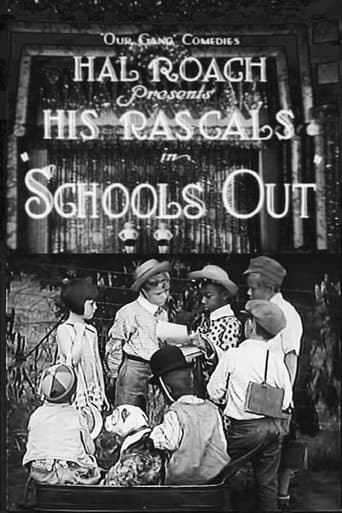
Teacher's Pet
"Caught between short and gang"
Keys: Space play/pause · ←/→ 10s · F fullscreen · M mute · </> speed
About this film
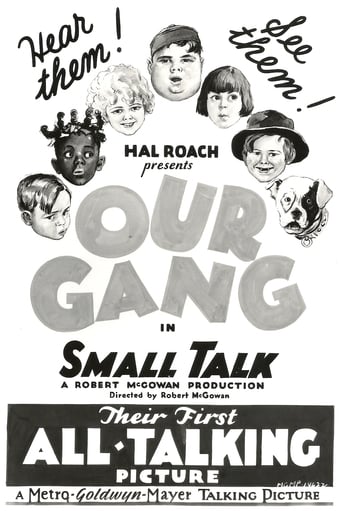
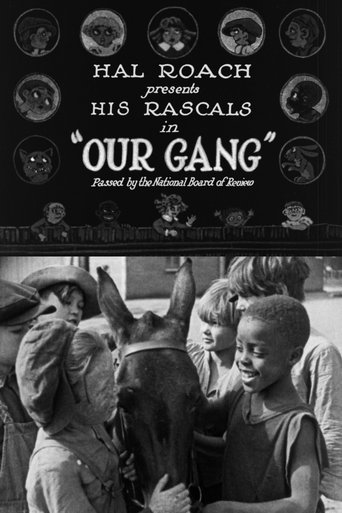
Two-reel comedy short, part of the Our Gang series. It was produced by Hal Roach, directed by Robert F. McGowan, and originally released to theatres by Metro-Goldwyn-Mayer on October 11, 1930.
Cast & crew
More films like this
More Family films
View all →

More from Robert F. McGowan
View all →

More about this film
About the production
Release dateOctober 11, 1930
BudgetApproximately $25,000 - $30,000 (estimated based on standard Hal Roach two-reeler costs of the era)
ProductionHal Roach Studios, Metro-Goldwyn-Mayer (MGM)
Filmed inHal Roach Studios - 8822 Washington Blvd, Culver City, California, Beverlywood, Los Angeles (Road scenes), Venice Blvd and La Cienega Blvd (Viaduct scene)
Filmed between May 21 and May 29, 1930, this short was the 101st entry in the Our Gang series. It was a pivotal production as it marked the transition to more character-driven, emotional storytelling rather than just slapstick. The production utilized 'talking titles' where the credits were spoken by Beverly and Betty Mae Crane instead of using traditional title cards. The film's production number was G-35.
Themes
Childhood InnocenceAuthority and RebellionFirst CrushesForgivenessSocial Integration
Themes & topics
first day of schoolschoolteacherprankred antssneezing powderwhite mousecrushremorseice creamOur Gang
Historical background
Teacher's Pet (1930) emerged during the studio-system peak and early sound decades, when exhibition habits and national film industries were still taking shape.
Why this film matters
Teacher's Pet remains accessible through digital archives, giving modern viewers a direct link to 1930 screen culture.
Making of
Director Robert F. McGowan was known for his ability to coax natural performances out of children by treating them as 'little adults' rather than stage actors. During the filming of the ride to school, the audio recording was notoriously difficult due to the primitive mobile sound equipment of 1930, resulting in some slight distortion in surviving prints. The chemistry between Jackie Cooper and June Marlowe was genuine; Marlowe later recalled that Cooper actually had a bit of a 'schoolboy crush' on her during production, which McGowan utilized to enhance the realism of the emotional scenes.
What critics said
Modern write-ups on Teacher's Pet (1930) tend to focus on preservation status, stylistic choices, and placement within director or studio filmographies.
Did you know?
- This film marks the first appearance of June Marlowe as the schoolteacher Miss Crabtree.
- It is the first appearance of Matthew 'Stymie' Beard, though in this short his character is named 'Hercules'.
- The famous Our Gang theme song, 'Good Old Days' by Leroy Shield, made its series debut in this film.
- The winding road where Jackie meets Miss Crabtree was also used in the Laurel and Hardy short 'The Hoose-Gow'.
- Jackie Cooper's performance was so impressive it led to him being cast in the feature film 'Skippy', for which he earned an Oscar nomination.
- A Spanish-language version titled 'Comenzo la escuela' was produced but never officially released by MGM.
- The film was remade in 1936 as the Academy Award-winning short 'Bored of Education'.
- The character 'Miss Crabtree' became so popular she appeared in five subsequent shorts.
- The 'talking titles' opening was an experimental sound technique used by Hal Roach to replace silent-era intertitles.
- William Courtright, who plays the old man at the store, made his final film appearance here.
Awards & recognition
- National Board of Review - Top Ten Shorts (1930)
Visual style
Art Lloyd utilized a mix of studio sets and authentic Los Angeles locations. The use of deep focus in the classroom scenes allowed for multiple sight gags to happen simultaneously in the foreground and background, such as the children's reactions to the loose ants.
Innovations
The film is notable for its 'talking titles'—a creative solution to the transition from silent to sound film where actors introduced the cast and crew verbally. It also demonstrated sophisticated location sound recording for 1930, despite the inherent challenges of filming in a moving vehicle.
Music
The score features the debut of 'Good Old Days' by Leroy Shield. Other notable tracks by Shield included in the film are 'Crabtree' (also known as 'Girl & Stick'), 'Ezra', and 'Little Dancing Girl'. The music is jazz-influenced and serves to punctuate the comedic timing of the children.
Famous quotes
Jackie: 'I bet she's a skinny old toad with a wart on her nose!'
Wheezer: 'Mama wants Jack home right away.. She's gonna shoot Papa!'
Jackie: 'Gee, you're pretty, Miss Crabtree. You're even prettier than Miss McGillicuddy.'
Miss Crabtree: 'I understand you have some presents for the new teacher. You can bring them to the desk.'
Jackie: 'I'm too ashamed.. I can't ever go back.'
Memorable scenes
- The 'Double Take' Scene: Jackie's face when he walks into the classroom and realizes the beautiful woman who gave him a ride is actually the 'Crabtree' he was just insulting.
- The Sneezing Powder Incident: Farina accidentally releases the powder, causing the entire class (and the teacher) to erupt into a synchronized sneezing fit.
- The Ending: Miss Crabtree finding a sobbing Jackie under a tree and offering him a plate of cake and ice cream, signaling her forgiveness.
What audiences thought
The film was an immediate hit with audiences, making Miss Crabtree a household name and turning Jackie Cooper into a major child star. The 'Miss Crabtree' trilogy (Teacher's Pet, School's Out, and Love Business) remains the most beloved sequence in the entire 22-year run of the franchise for many fans.
Film connections
Influenced by
- The early silent Our Gang shorts
- Hal Roach's slapstick tradition
- The transition from vaudeville-style gags to narrative sound cinema
This film influenced
- Bored of Education (1936)
- Skippy (1931)
- The Little Rascals (1994)
- The Wonder Years (TV Series)
Film restoration
The film is fully preserved and has been restored. It is widely available in both its original black-and-white format and a colorized version produced by King World Productions in the 1970s.
Where to watch
- HBO Max (The Little Rascals Collection)
- Amazon Prime Video (Selected volumes)
- YouTube (Public Domain uploads)
- DVD/Blu-ray: 'The Little Rascals: The Classic Flagg Collection'