

Teremok
"The Frog."
Keys: Space play/pause · ←/→ 10s · F fullscreen · M mute · </> speed
About this film
The Frog, the Mouse, the Hedgehog and the Rooster settle in and live together in the little house. The attempt of the Wolf, the Bear and the Fox to enter the mansion meets with organized resistance...
Cast & crew
More films like this
More Animation films
View all →



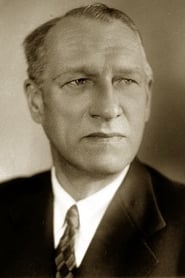
More from Pyotr Nosov
View all →

More about this film
About the production
Release date1945
ProductionSoyuzmultfilm
Filmed inMoscow, Soviet Union
This film was produced during the final year of World War II, reflecting the Soviet Union's emphasis on collective values and unity against external threats. The animation was created using traditional hand-drawn cel animation techniques typical of the era. The production team worked under challenging wartime conditions, with limited resources and personnel shortages due to the war effort. Despite these constraints, the film showcases the high artistic standards maintained by Soyuzmultfilm even during difficult times.
Themes
Unity and cooperationCollective defenseHome and communityCourage in the face of adversityThe triumph of the weak over the strong through organization
Themes & topics
animalsfairy talecooperationhome defensefriendshipforestteamworkcouragecommunitybullyingunityRussian folkloreanimatedchildren's filmmoral lesson
Historical background
Viewers in 1945 encountered Teremok alongside competing releases that were collectively teaching new cinematic grammar.
Why this film matters
Archivists revisit Teremok (1945) for performance styles and craft choices later mainstream releases refined.
Making of
The production of 'Teremok' took place at the Soyuzmultfilm studio in Moscow, which had been evacuated during the war but returned to the capital by 1945. The animation team worked under the direction of Pyotr Nosov, who brought his distinctive artistic vision to this adaptation of the classic tale. Voice actors Vladimir Popov, Klavdiya Koreneva, and Yuliya Yulskaya provided the character voices, bringing life to the anthropomorphic animals. The animation process involved thousands of hand-drawn cels, each carefully painted and photographed to create the fluid motion characteristic of Soviet animation of this era. The film's score was composed to complement the on-screen action, with musical themes that helped distinguish between the friendly protagonists and threatening antagonists. Despite the challenging wartime conditions, including rationing and limited supplies, the production team managed to create a visually appealing and emotionally engaging film that has endured as a classic of Soviet animation.
What critics said
Modern retrospectives screen Teremok to illustrate 1945 pacing and camera norms.
Did you know?
- The film is based on a traditional Russian folk tale that has been told to generations of Russian children, making it culturally significant as a preservation of oral tradition in animated form.
- Director Pyotr Nosov was one of the pioneering animators at Soyuzmultfilm, contributing significantly to the development of Soviet animation style.
- The 1945 version of 'Teremok' is considered one of the earliest animated adaptations of this classic tale, setting the standard for subsequent versions.
- The film was created during Stalin's era, when children's animation was heavily regulated but also heavily funded as an important tool for ideological education.
- The character designs reflect the distinctive style of 1940s Soviet animation, with rounded, friendly features for the protagonists and more angular, threatening designs for the antagonists.
- Despite its short runtime, the film contains sophisticated visual storytelling techniques that were innovative for its time.
- The voice cast included some of the most prominent voice actors of Soviet cinema, who lent their talents to multiple animated productions.
- The film's color palette, while limited by wartime technical constraints, uses symbolic colors to distinguish between the friendly animals and the threatening predators.
- This adaptation emphasizes themes of collective defense and unity, reflecting the Soviet propaganda narrative of the time period.
- The original film elements were preserved in the Gosfilmofond archive, ensuring their survival for future generations.
Visual style
The cinematography of 'Teremok' showcases the distinctive visual style of 1940s Soviet animation, characterized by smooth, flowing movement and carefully composed frames that maximize visual storytelling. The animators employed traditional cel animation techniques with meticulous attention to detail, creating fluid character movements that convey emotion and personality effectively. The color palette, while somewhat limited by wartime technical constraints, uses warm, inviting tones for the interior of the little house and its friendly inhabitants, contrasting with cooler, more threatening colors for the predatory animals attempting to invade. The film makes effective use of perspective and scale to emphasize the small size of the protagonists and their home, making their successful defense against larger aggressors more impressive. Background designs are detailed yet uncluttered, focusing attention on the characters while still establishing a rich forest environment. The animation team employed innovative techniques for creating depth and dimension within the two-dimensional format, using layered backgrounds and careful shading to give the scenes greater visual complexity. The visual storytelling is enhanced by thoughtful camera angles that highlight important emotional moments and build tension during the confrontation scenes.
Innovations
For its time, 'Teremok' demonstrated several technical achievements in Soviet animation, particularly in the fluidity of character movement and the effective use of limited color palettes. The animators developed innovative techniques for creating expressive character animations with relatively few drawings per second, maximizing the impact of each frame while working under wartime resource constraints. The film showcases advanced lip-syncing techniques for the era, with character mouth movements carefully matched to the dialogue in a way that enhances the illusion of living, breathing characters. The production team also implemented sophisticated multi-layered background techniques that created a sense of depth and dimension within the two-dimensional animation format. The film's color separation and printing processes were particularly noteworthy, achieving vibrant colors despite the technical limitations of the period. The animation team developed specialized methods for creating convincing animal movements, studying real animal behavior to inform their animated characters. The sound recording and synchronization techniques employed in the film were also advanced for the Soviet animation industry of the 1940s, resulting in clear dialogue and well-balanced music and effects. These technical achievements contributed to the film's enduring visual appeal and its status as a milestone in the development of Soviet animation techniques.
Music
The musical score for 'Teremok' was composed to complement the film's narrative and emotional arc, using leitmotifs to distinguish between the different characters and their intentions. The music for the friendly animals features light, playful melodies using woodwind instruments that create a sense of warmth and community, while the themes for the wolf, bear, and fox employ lower brass and percussion instruments to convey threat and menace. The soundtrack incorporates elements of Russian folk music, connecting the animated adaptation to its cultural roots and enhancing the fairy tale atmosphere. The score was performed by a small orchestra typical of film productions of this era, with careful attention to balancing the music with dialogue and sound effects. The film's sound design includes carefully crafted character voices that match the personalities of each animal, from the frog's cheerful croaking to the wolf's menacing growl. Background sounds of the forest environment are subtly integrated to create an immersive atmosphere without overwhelming the main action. The musical themes recur throughout the film, providing continuity and emotional resonance, particularly during the climactic defense of the little house. The soundtrack's effectiveness lies in its ability to enhance the storytelling while remaining appropriate for the film's young target audience.
Famous quotes
Кто в теремочке живёт? Кто в невысоком живёт?" (Who lives in the little house? Who lives in the low house?)
Я лягушка-квакушка, а ты кто?" (I am the frog-croaker, and who are you?)
Пустите меня к себе жить!" (Let me live with you!)
Будем дружно жить, все вместе!" (We will live in friendship, all together!)
Сила в единстве!" (Strength is in unity!)
Memorable scenes
- The opening scene where the frog discovers the empty little house and joyfully claims it as her home, establishing the setting and the film's optimistic tone.
- The sequence where each new animal arrives and is welcomed into the house, showing the growing community and the expansion of their collective family.
- The tense confrontation scene where the wolf, bear, and fox attempt to force their way into the house, creating suspense and highlighting the threat to the peaceful community.
- The climactic defense sequence where the small animals work together to repel their larger aggressors, demonstrating the power of unity and cooperation.
- The final scene where the victorious residents celebrate their successful defense of their home, reinforcing the film's themes of community and mutual support.
What audiences thought
The film was warmly received by Soviet audiences upon its release in 1945, particularly by children and families who were hungry for wholesome entertainment during the difficult post-war period. The familiar story of animals working together resonated with viewers who had experienced the importance of collective effort during the war years. Many parents appreciated how the film taught valuable lessons about cooperation, courage, and standing up to bullies in an accessible and entertaining format. The charming character designs and engaging storyline made it a favorite among children, leading to frequent television broadcasts in subsequent decades. Over the years, 'Teremok' has become a nostalgic classic for generations of Russians and former Soviet citizens, with many adults recalling it fondly from their childhood. The film's enduring popularity is evidenced by its continued inclusion in animation festivals and retrospective programs celebrating the history of Soviet and Russian animation. Modern audiences, both in Russia and internationally, continue to appreciate the film's simple yet powerful storytelling and its timeless message about the strength of unity and cooperation.
Film connections
Influenced by
- Traditional Russian folk tales
- Soviet animation style of the 1940s
- Stalin-era cultural policies on children's entertainment
- Wartime propaganda emphasizing collective defense
This film influenced
- Subsequent Soviet adaptations of 'Teremok'
- Other Soyuzmultfilm productions featuring animal characters
- Post-war Soviet animated films emphasizing collective values
Film restoration
The film has been preserved in the Gosfilmofond (State Film Fund of the Russian Federation), the national film archive of Russia. Original film elements have been maintained and the film has undergone digital restoration for modern viewing. Several restored versions are available on various platforms, ensuring that this classic piece of Soviet animation remains accessible to contemporary audiences. The preservation efforts have maintained both the visual quality and the original Russian soundtrack, allowing modern viewers to experience the film as intended by its creators.
Where to watch
- Russian Film Archives online collections
- Soyuzmultfilm official streaming platforms
- Classic Soviet animation compilations on DVD/Blu-ray
- Various Russian streaming services featuring classic animation
- Film festival retrospectives of Soviet animation
- Educational film archives and university collections