Tess of the Storm Country
"Taken and bottom"
Keys: Space play/pause · ←/→ 10s · F fullscreen · M mute · </> speed
About this film
Wealthy Elias Graves builds his home on the top of a hill, where a group of squatters have taken up residence at the bottom. Many of the men in the squatters' village have their eyes on young Tess, and one of them, Ben Letts, frames Tess's father for murder. While maintaining her father's innocence, Tess must keep her love for Graves' son a secret, while caring for Elias' daughter's illegitamate child.
Cast & crew
More films like this
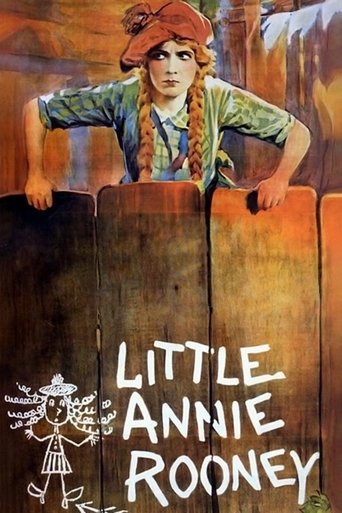
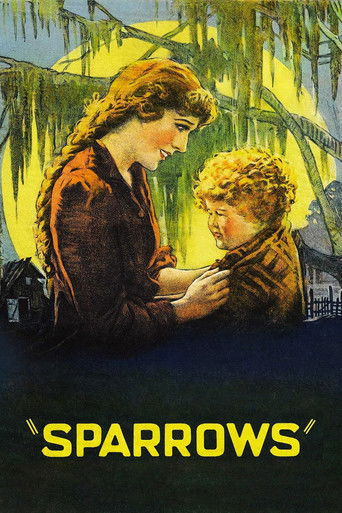
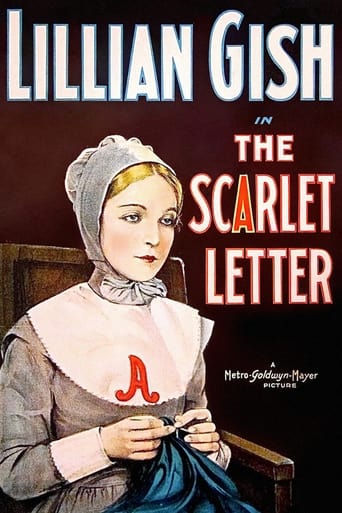
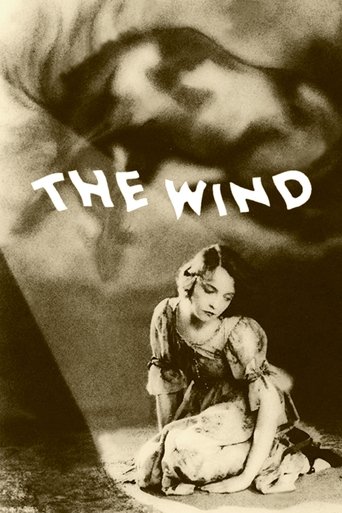
More Romance films
View all →




More from John S. Robertson
View all →
More about this film
About the production
Release dateDecember 24, 1922
BudgetExact budget figures are not documented, but as a Mary Pickford production, it was among the costliest films of 1922, estimated at over $200,000 (equivalent to over $3 million today)
Box officeThe film was a tremendous commercial success, grossing approximately $1.5 million at the box office, making it one of the highest-grossing films of 1922
ProductionMary Pickford Corporation, United Artists
Filmed inPickford-Fairbanks Studios, Hollywood, California, Big Bear Lake, California (for storm scenes), Santa Monica Mountains, California
The film was notable for its extensive location shooting, particularly the storm sequences which were filmed during actual weather conditions to achieve maximum authenticity. Mary Pickford, as co-founder of United Artists and head of her own production company, had complete creative control and insisted on reshooting several scenes multiple times until they met her exacting standards. The production employed over 300 extras for the squatter village scenes, and elaborate sets were constructed to represent both the wealthy mansion and the impoverished squatter community.
Themes
Themes & topics
squatterswealthy vs poorfalse accusationillegitimate childstormmelodramasocial commentaryromanceclass differencesredemption
Historical background
Contemporary records classify Tess of the Storm Country (1922) as 1922 film, placing it within late silent cinema and the transition toward sound.
Why this film matters
Tess of the Storm Country (1922) helps trace genre evolution, performer careers, and the material conditions of silent exhibition.
Making of
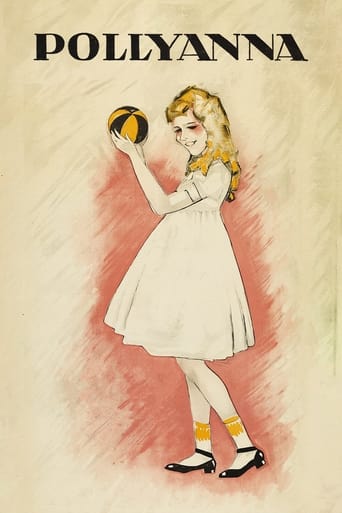
The production of 'Tess of the Storm Country' was marked by Mary Pickford's meticulous attention to detail and her determination to create a superior version to her 1914 original. Pickford personally selected director John S. Robertson, with whom she had previously worked on 'Pollyanna' (1920). The filming of the storm sequences presented major technical challenges, requiring special effects teams to create wind, rain, and lightning effects using early 1920s technology. Pickford insisted on performing many of her own stunts, including scenes where she had to wade through rushing water and climb steep cliffs. The relationship between Pickford and co-star Lloyd Hughes extended off-screen, with the two actors maintaining a professional friendship that lasted throughout their careers. The production team spent weeks constructing the elaborate squatter village set, complete with authentic shacks and period-appropriate props. Pickford's involvement extended to every aspect of production, from costume design to final editing, reflecting her growing power as both an actress and producer in Hollywood.
What critics said
Where contemporary reviews survive, Tess of the Storm Country is discussed in terms of audience appeal at release; later criticism often reframes it through archive restoration and festival programming.
Did you know?
- This was actually a remake of Mary Pickford's own 1914 film of the same name, making her one of the first stars to remake her own hit film
- Pickford was 30 years old during filming but convincingly played a teenager, showcasing her remarkable range as 'America's Sweetheart'
- The film was based on Grace Miller White's 1909 novel, which had already been adapted for the stage before the first film version
- The storm sequences were so realistic that audience members reportedly gasped and ducked in their seats during premieres
- Pickford's contract for this film included a record-breaking salary of $10,000 per week, plus a percentage of profits
- The illegitimate baby in the film was played by twin infants to allow for longer shooting hours
- This was one of the first films to deal with the subject of illegitimate children in a relatively sympathetic manner
- The film's success helped establish United Artists as a major force in Hollywood
- Pickford wore a specially designed wig for the role that cost $1,500, an enormous sum for the time
- The film's title was later used for a 1932 sound remake starring Janet Gaynor, though with significant plot changes
Awards & recognition
- Photoplay Magazine Medal of Honor (1923) - Winner
Visual style
The cinematography by Charles Rosher was groundbreaking for its time, featuring innovative camera movements and lighting techniques that enhanced the film's emotional impact. Rosher employed dramatic chiaroscuro lighting to contrast the wealth of the Graves mansion with the poverty of the squatter village. The storm sequences featured some of the most ambitious special effects of the era, including multiple exposure techniques and carefully coordinated lighting to create realistic lightning effects. The film also made effective use of location shooting, particularly in the outdoor scenes that provided a sense of authenticity rarely seen in studio-bound productions of the period.
Innovations
The film was notable for its advanced special effects, particularly in the storm sequences which required innovative techniques for creating wind, rain, and lightning effects on camera. The production team developed new methods for simulating flooding, using hidden water tanks and carefully timed releases. The film also featured sophisticated editing techniques, including cross-cutting between parallel actions to build suspense during the climactic scenes. The makeup effects used to age characters over time were particularly advanced for the period, with Pickford's transformation from young girl to young woman considered especially convincing.
Music
As a silent film, 'Tess of the Storm Country' was accompanied by live musical scores during its original theatrical run. The film's distributor, United Artists, provided suggested cue sheets for theater orchestras, indicating appropriate music for each scene. The score incorporated popular songs of the era as well as classical pieces, with particular emphasis on dramatic music during the storm sequences. For the film's revival screenings, modern composers have created new scores, including a 2015 version by the Mont Alto Motion Picture Orchestra that attempts to recreate the authentic silent-era moviegoing experience.
Famous quotes
Tess: 'I may be poor, but I'm not a thief!' (spoken through title cards)
Frederick: 'Your father may be a squatter, Tess, but you have more honor than all the wealthy men in this town combined'
Elias Graves: 'The law is the law, whether it serves the rich or the poor'
Ben Letts: 'We'll show them what happens when they push us too far!'
Tess: 'Love knows no class boundaries, Father. It only knows truth'
Memorable scenes
- The dramatic storm sequence where Tess climbs the cliff to save the baby, battling torrential rain and lightning while demonstrating extraordinary courage and maternal devotion
- The courtroom scene where Tess passionately defends her father's innocence, moving even the wealthy jurors with her emotional testimony
- The secret meeting between Tess and Frederick by the waterfall, where they declare their love despite their class differences
- The confrontation scene where Tess faces down Ben Letts and his gang, protecting the innocent with nothing but her moral courage
- The final reconciliation scene where Elias Graves acknowledges Tess's virtue and welcomes her into his family
What audiences thought
The film was a massive popular success, breaking box office records across the United States and internationally. Audiences were particularly moved by Tess's plight and the film's emotional climax during the storm sequence. The film's themes of social justice and redemption resonated strongly with working-class audiences, while its romantic elements appealed to all demographic groups. Many theaters reported sold-out performances for weeks, with some venues adding additional showings to meet demand. The film's success was such that it remained in circulation for over a year, unusually long for a silent film of the period.
Film connections
Influenced by
- The novel 'Tess of the Storm Country' by Grace Miller White (1909)
- The 1914 film version starring Mary Pickford
- Stage adaptations of the novel
- Contemporary social realist literature
- Victorian melodrama tradition
This film influenced
- Tess of the Storm Country (1932)
- Stella Dallas (1937)
- The Grapes of Wrath (1940)
- A Place in the Sun (1951)
- The River (1951)
Film restoration
The film is well-preserved with complete copies existing at the Library of Congress, the Museum of Modern Art, and the George Eastman Museum. A restored version was released in 2015 by the Mary Pickford Foundation, featuring newly struck 35mm prints and digitally restored footage. The restoration process involved combining the best elements from several surviving prints to create the most complete version possible. Some minor deterioration is visible in certain scenes, but overall the film survives in excellent condition for a production of its age.
Where to watch
- The Criterion Channel (streaming)
- The Mary Pickford Foundation website (free streaming)
- Kino Lorber DVD/Blu-ray release
- Turner Classic Movies (periodic broadcasts)
- Film archives and museums with screening facilities
- Public domain streaming sites (lower quality versions)