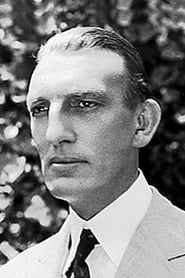
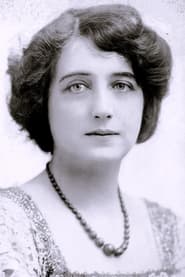


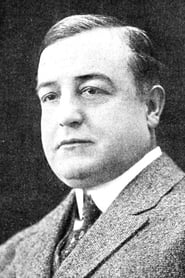
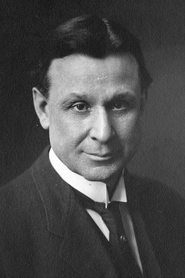
The Ambassador's Daughter
"Theft important document from the"
Keys: Space play/pause · ←/→ 10s · F fullscreen · M mute · </> speed
About this film
The theft of an important document from the ambassador's residence leads his daughter to investigate the crime.
Cast & crew
More films like this
More from Charles Brabin
View all →
More about this film
About the production
Release dateMarch 3, 1913
ProductionEdison Manufacturing Company
Filmed inEdison Studios, Bronx, New York City, New York, USA
The film was produced during a period when the Edison Manufacturing Company was transitioning its branding to Thomas A. Edison, Inc. It was filmed on 35mm black and white stock using the standard silent frame rate of the era. Director Charles Brabin was known for his meticulous attention to set detail, often insisting on authentic-looking props to simulate the opulence of an ambassadorial residence. The production utilized the sophisticated indoor lighting systems available at the Bronx studio, which allowed for more controlled dramatic shadows than earlier open-air stages.
Themes
Diplomatic EspionageFemale EmpowermentFamily HonorSocial Class and ResponsibilityDeception and Truth
Themes & topics
Historical background
Made in 1913, The Ambassador's Daughter reflects production norms of the silent era before feature-length dominance—shorter runtimes, regional audiences, and limited preservation infrastructure.
Why this film matters
Historians reference The Ambassador's Daughter (1913) when discussing 1913 film by Charles Brabin.
Making of
The production was managed under the strict oversight of the Edison Studio system, which emphasized efficiency and high output. Charles Brabin worked closely with cinematographer Henry Cronjager to create a sense of depth within the interior sets, which was a burgeoning technique in 1913. The cast, being part of the Edison stock company, had worked together on numerous projects, leading to a highly disciplined and rehearsed performance style. Despite the short runtime, the production required several days of rehearsal to ensure the complex blocking of the 'theft' scene was captured perfectly on the limited film stock available.
What critics said
Trade and revival screenings have kept The Ambassador's Daughter (1913) on the map for collectors and scholars rather than mass first-run promotion.
Did you know?
- The film is a 'one-reeler,' a standard format for the early 1910s before the feature-length film became the industry norm.
- Lead actress Miriam Nesbitt was among the leading prominent stars of the Edison Studio and was married to her frequent co-star James Lessey in real life.
- Director Charles Brabin later became famous for directing the 1925 version of 'Ben-Hur' before being replaced by Fred Niblo.
- The film was released on a split-reel in some markets, shared with a short educational or comedic subject.
- Miriam Nesbitt was known for her 'Gibson Girl' appearance, which made her a favorite for roles involving high-society characters.
- The plot reflects the 'New Woman' archetype emerging in silent cinema, where female protagonists took active roles in solving mysteries rather than being passive victims.
- The Edison Company promoted the film through 'The Edison Kinetogram,' a trade publication that provided exhibitors with synopses and promotional cuts.
- Robert Brower, who played the Ambassador, was a veteran character actor who appeared in over 400 films during his career.
Visual style
The cinematography is characterized by static camera placements, which was typical for the era, but features sophisticated 'deep staging' where action occurs in both the foreground and background. The use of natural light from the studio's glass roof, supplemented by early electric lamps, creates a bright, high-key aesthetic that emphasizes the cleanliness and wealth of the Ambassador's home.
Innovations
The film utilized advanced set construction for the time, featuring 'flats' with realistic textures and functional doors and windows, moving away from the painted backdrops of the previous decade. The editing shows an early understanding of 'continuity editing,' ensuring that the spatial logic of the residence remained clear to the audience as characters moved between rooms.
Music
As a silent film, there was no recorded soundtrack. Original screenings would have been accompanied by a live pianist or organist playing from a 'cue sheet' that suggested suspenseful music for the theft and triumphant melodies for the resolution.
Famous quotes
Intertitle: 'The Ambassador's daughter suspects that all is not as it seems.'
Intertitle: 'I will find the papers and save my father's honor!'
Memorable scenes
- The theft scene: A tense moment where the thief is seen in silhouette entering the study through a window, utilizing the 'low-key' lighting possibilities of the Edison studio.
- The discovery: The daughter finds a dropped glove or clue near the safe, a classic trope of early detective cinema.
- The confrontation: The daughter traps the thief in a high-society ballroom setting, contrasting the elegance of the environment with the tension of the capture.
What audiences thought
Audiences in 1913 responded well to the film's blend of mystery and high-society glamour. It was a popular choice for 'nickelodeons' and early dedicated movie palaces, often drawing in female viewers who identified with Nesbitt's proactive character. The film's short length made it an ideal 'filler' or 'short subject' in a varied program of newsreels, comedies, and travelogues.
Film connections
Influenced by
- The detective stories of Arthur Conan Doyle
- Stage melodramas of the late 19th century
- Early French 'Film d'Art' movement
This film influenced
- The 'Perils of Pauline' serials (1914)
- Later female-led espionage thrillers of the 1920s
Film restoration
The film is considered extremely rare. While some Edison shorts from 1913 are preserved in the Library of Congress and the Museum of Modern Art (MoMA) archives, 'The Ambassador's Daughter' is often cited as a film that requires further preservation efforts or may only exist in fragmentary form.
Where to watch
- Film archives (Library of Congress)
- Specialized silent film festivals
- May be available on niche historical DVD collections of Edison Company shorts