
The Butcher Boy
"Roscoe Arbuckle's store chaos introduces Buster Keaton."
Keys: Space play/pause · ←/→ 10s · F fullscreen · M mute · </> speed
About this film
Customers and clerks frolic in a general store. Roscoe walks out of the freezer wearing a fur coat, then does some clever cleaver tossing. In Buster's film debut he buys a pail of molasses.
Cast & crew
More films like this

More Comedy films
View all →







More from Roscoe 'Fatty' Arbuckle
View all →
More about this film
About the production
Release dateMarch 18, 1917
Box officeUnknown - but was commercially successful as part of Arbuckle's popular comedy series
ProductionComique Film Corporation
Filmed inLos Angeles, California, Keystone Studios facilities
This was the first film produced under Arbuckle's Comique Film Corporation contract with Paramount. The film was shot in just a few days, typical of the rapid production schedule of silent comedy shorts. The general store set was constructed specifically for the production and reused in subsequent productions. The freezer scene required special effects for the frost appearance on Arbuckle's costume.
Themes
Friendship and mentorshipChaos in orderEveryday absurdityPhysical comedy as art formThe comedy of errors
Themes & topics
general storebutchermolassesfreezercleaverslapsticksilent comedydebutchasephysical comedy
Historical background
The Butcher Boy (1917) reached screens through Comique Film Corporation. Exhibitors of the time built silent-era bills that mixed shorts, features, and live acts, so a clear premise helped The Butcher Boy travel between cities and exchange markets.
Why this film matters
Archivists and revival programmers still cite The Butcher Boy (1917) when tracing studio habits, casting pools, and the visual rhetoric audiences once took for granted. Even modest surviving prints help map how The Butcher Boy fit beside competing releases of its day.
Making of
The making of 'The Butcher Boy' represents a pivotal moment in comedy history. Arbuckle had just formed his own production company, Comique Film Corporation, giving him unprecedented creative control. He discovered Buster Keaton when he saw him performing in vaudeville at the Tivoli Theatre in New York. Keaton was initially hesitant to leave his successful stage career, but Arbuckle convinced him by offering $40 per week. The chemistry between the two comedians was immediate, and Arbuckle recognized Keaton's unique stone-faced persona as a perfect complement to his own more expressive style. The film was shot quickly, but Arbuckle insisted on multiple takes to perfect the physical gags, particularly the cleaver tossing sequence which required precise timing and coordination.
What critics said
Trade coverage around 1917 discussed The Butcher Boy for pacing, clarity, and program fit rather than blockbuster grosses. Later writers value it as evidence of period style and as a reference point beside other films from the same era.
Did you know?
- the production marks Buster Keaton's official screen debut, though he had previously appeared without on-screen billing in Arbuckle films
- The molasses scene with Keaton became so iconic that he later referenced it in his autobiography
- Roscoe Arbuckle personally discovered Buster Keaton and brought him into films
- The cleaver tossing sequence was performed by Arbuckle himself without any special effects or camera tricks
- The film was part of a series of 16 two-reel comedies Arbuckle made for Comique in 1917
- Al St. John, who appears in the film, was Arbuckle's nephew and regular comedy partner
- The fur coat Arbuckle wears in the freezer scene was actually made of real fur, quite expensive for a comedy short
- the production was preserved by the Library of Congress and selected for the National Film Registry in 2001
- The general store set was designed to allow for maximum physical comedy possibilities
- Keaton was paid only $40 per week when he started working with Arbuckle
Visual style
The cinematography, credited to George Peters, employs the straightforward approach typical of comedy shorts of the era, with wide shots to capture the full range of physical action. The camera work emphasizes clarity and visibility of the gags, with medium shots used for the character interactions and close-ups reserved for reaction shots, particularly Keaton's famous stone-faced expressions. The general store setting allowed for multiple levels of action, with the cinematography taking advantage of the vertical space for various comedic situations. The lighting is bright and even, ensuring that all the physical comedy is clearly visible to the audience.
Innovations
While not technically groundbreaking, the film demonstrates sophisticated use of the two-reel format to develop character and comedy beyond simple gag sequences. The cleaver tossing sequence highlights impressive practical stunt work without special effects. The film makes effective use of the general store set to create multiple comedic situations simultaneously, demonstrating advanced spatial awareness in comedy staging. The pacing of the gags and the integration of Keaton's character into the established Arbuckle format represents an achievement in comedy construction and character development.
Music
As a silent film, 'The Butcher Boy' would have been accompanied by live music in theaters, typically piano or organ. The original score would have been compiled from popular musical pieces of the era, with faster tempos for chase sequences and more playful melodies for the general store scenes. Modern restorations have been accompanied by newly composed scores, including a notable 2015 restoration with music by the Mont Alto Motion Picture Orchestra, which uses authentic period-appropriate selections to recreate the original theatrical experience.
Famous quotes
(Intertitle) 'Fresh meat today!' - Store advertisement
(Intertitle) 'One pail of molasses, please' - Keaton's character
(Intertitle) 'Careful with that cleaver!' - Warning to customers
Memorable scenes
- Arbuckle emerging from the freezer wearing a fur coat and frost-covered face
- The elaborate cleaver tossing sequence where Arbuckle juggles multiple cleavers with increasing complexity
- Buster Keaton's debut scene buying molasses and the subsequent sticky situation
- The chase sequence through the general store involving all three main characters
- The final confrontation scene with Arbuckle, Keaton, and Al St. John creating escalating chaos
What audiences thought
The film was enormously popular with audiences in 1917, drawing large crowds to theaters across America. Audiences were particularly delighted by the new face of Buster Keaton, whose deadpan reactions to Arbuckle's antics created immediate chemistry. The film's success led to increased demand for more Arbuckle-Keaton collaborations. Contemporary audience reports from trade papers indicate that the film generated significant laughter and applause, especially during the freezer and molasses sequences. Modern audiences at revival screenings and film festivals continue to respond enthusiastically to the film's physical comedy, demonstrating its timeless appeal.
Film connections
Influenced by
- Keystone comedy style
- Vaudeville performance traditions
- Mack Sennett production methods
- Charlie Chaplin's tramp character development
This film influenced
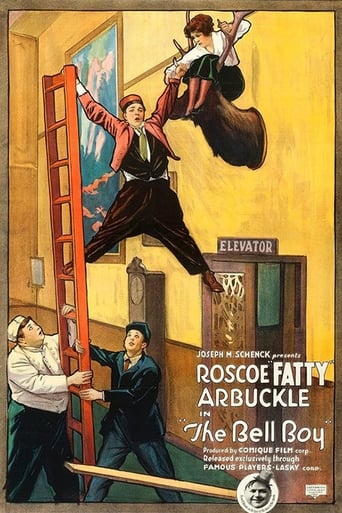
- The Bell Boy (1918)
- Coney Island (1917)
- The Rough House (1917)
- All subsequent Arbuckle-Keaton collaborations
- Modern physical comedy films
Film restoration
The film is preserved in 16mm and 35mm prints at the Library of Congress, the Museum of Modern Art, and the UCLA Film and Television Archive. It was selected for preservation in the United States National Film Registry in 2001 for its cultural, historical, and aesthetic significance. A restored version was released by Kino International as part of 'The Arbuckle & Keaton Collection' DVD set in 2005, featuring improved image quality and appropriate musical accompaniment.
Where to watch
- Available on DVD in 'The Arbuckle & Keaton Collection' from Kino Lorber
- Streaming on The Criterion Channel
- Available for purchase or rental on Amazon Prime Video
- Viewable on YouTube through authorized archives
- Part of the Library of Congress's online catalog for on-site viewing
- Included in various silent film compilation DVDs and Blu-ray sets