



The Fall of Babylon
"Griffith re-cut Babylon from Intolerance for theaters."
Keys: Space play/pause · ←/→ 10s · F fullscreen · M mute · </> speed
About this film
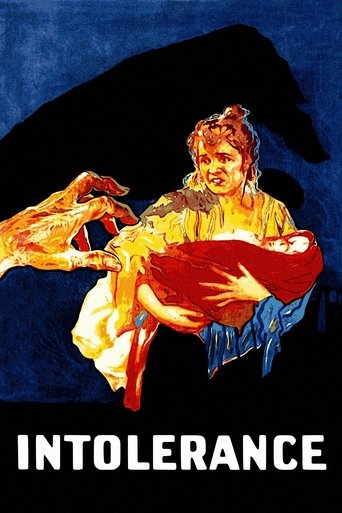
After the relatively low box office takings of 'Intolerance', D. W. Griffith would revisit his epic film three years later by releasing two of the film's interlocking stories as standalone features, with some new additional footage. The first of the two was 'The Fall of Babylon'.
Cast & crew
More films like this

More Drama films
View all →







More from D.W. Griffith
View all →

More about this film
About the production
Release dateMarch 30, 1919
BudgetApproximately $500,000 (for the new footage and re-editing of the Babylonian segment from Intolerance)
Box officeModest success, performing better than the original Intolerance but still not recouping the full investment
ProductionD.W. Griffith Productions, Fine Arts Film Company
Filmed inHollywood, California, Griffith's studio lot at Sunset Boulevard
The film reused the massive Babylonian set originally built for Intolerance, which was one of the largest film sets ever constructed at the time, standing over 300 feet high and covering several acres. Griffith shot approximately 20-30 minutes of new footage specifically for this standalone version, including additional character development scenes and expanded battle sequences. The re-editing process took several months as Griffith restructured the narrative to work as an independent feature rather than as part of the complex intercut structure of Intolerance.
Themes
Intolerance and religious persecutionThe fall of empires and human hubrisLove and sacrificeWar and its devastating consequencesThe cyclical nature of human history
Themes & topics
ancient Babylonepic battlesiegeforbidden lovebetrayalprophecydestructionhistorical dramawarsacrifice
Historical background
The Fall of Babylon (1919) reached screens through D.W. Griffith Productions. Exhibitors of the time built silent-era bills that mixed shorts, features, and live acts, so a clear premise helped The Fall of Babylon travel between cities and exchange markets.
Why this film matters
Archivists and revival programmers still cite The Fall of Babylon (1919) when tracing studio habits, casting pools, and the visual rhetoric audiences once took for granted. Even modest surviving prints help map how The Fall of Babylon fit beside competing releases of its day.
Making of
The creation of The Fall of Babylon was primarily a business decision by D.W. Griffith to recoup some of the massive financial losses from Intolerance. After the original film's disappointing box office performance, Griffith realized that its complex, intercut narrative was too challenging for many audiences. He spent months carefully re-editing the Babylonian segment into a standalone narrative, adding new scenes to provide clearer character motivations and a more linear story progression. The production team faced the challenge of making the footage feel fresh despite being shot years earlier. Griffith worked closely with cinematographer Billy Bitzer to enhance the visual impact of the battle sequences and added new title cards to clarify the story. The re-editing process was meticulous, with Griffith reportedly spending hundreds of hours in the cutting room to perfect the pacing and dramatic impact of this new version.
What critics said
Trade coverage around 1919 discussed The Fall of Babylon for pacing, clarity, and program fit rather than blockbuster grosses. Later writers value it as evidence of period style and as a reference point beside other films from the same era.
Did you know?
- The original Babylonian set for Intolerance cost over $250,000 to build (equivalent to over $6 million today) and was so massive that it could be seen from miles away.
- The film featured over 3,000 extras in the battle sequences, making it one of the largest crowd scenes in silent cinema.
- Griffith kept the massive Babylonian set standing for over a year after Intolerance's release, hoping it would become a tourist attraction, though it was eventually dismantled.
- The famous 'elephant tower' sequence was recreated with additional footage for this standalone version, showcasing Griffith's mastery of spectacle.
- The Mountain Girl character, played by Constance Talmadge, was so popular that Griffith gave her more screen time in this version compared to Intolerance.
- The film's innovative use of camera movement, particularly the crane shots over the massive sets, influenced epic filmmaking for decades.
- Some of the new footage shot for this version included scenes that had been cut from Intolerance due to length concerns.
- The Fall of Babylon was released simultaneously with The Mother and the Law, another standalone feature created from Intolerance footage.
- The film's special effects, particularly the scenes of the city's destruction, were considered groundbreaking for their time.
- Despite being released three years after Intolerance, the film's visual style and techniques were still considered cutting-edge in 1919.
Awards & recognition
- No major awards were given for the production, as it was considered a re-release of existing material
Visual style
The cinematography, primarily by G.W. Bitzer, showcased revolutionary techniques for the era. The film employed innovative camera movements, including sweeping crane shots that soared over the massive Babylonian sets, creating a sense of epic scale rarely seen in cinema at the time. Bitzer used multiple cameras to capture the complex battle sequences, allowing for dynamic editing and varied perspectives. The lighting techniques were particularly advanced, with carefully controlled illumination creating dramatic shadows and highlights that emphasized the architectural grandeur of the sets. The cinematography also featured early examples of deep focus photography, keeping both foreground and action in the distance sharp and clear. The film's visual style influenced how historical epics would be photographed for decades, establishing techniques that would become standard in the genre.
Innovations
The Fall of Babylon showcased numerous technical innovations that pushed the boundaries of early cinema. The massive Babylonian set, originally built for Intolerance, represented an unprecedented achievement in production design, featuring working elevators, movable walls, and intricate architectural details. The film employed pioneering special effects techniques, including miniatures, matte paintings, and carefully coordinated explosions to depict the city's destruction. The battle sequences featured thousands of extras and complex choreography, requiring sophisticated planning and coordination. The camera work included innovative crane shots and tracking movements that created a sense of grand scale and dynamic action. The film's editing techniques, particularly in the battle scenes, demonstrated advanced understanding of rhythm and pacing. These technical achievements not only enhanced the film's impact but also established new standards for epic filmmaking.
Music
As a silent film, The Fall of Babylon would have been accompanied by live musical performances during its original theatrical run. The score was typically provided by theater orchestras or organists, who used compiled music or original compositions to match the film's dramatic moments. Griffith's productions often included detailed musical cue sheets suggesting appropriate pieces for various scenes. For the Babylonian sequences, music likely included classical pieces with Middle Eastern or exotic themes, along with dramatic orchestral works for the battle scenes. Some theaters may have used Joseph Carl Breil's original compositions from Intolerance, adapted for this standalone version. The music was crucial in establishing the epic tone and emotional impact of the film, particularly during the spectacular destruction sequences.
Famous quotes
He who would be great must first learn to be humble" - Prince Belshazzar
The walls of Babylon shall fall, but truth shall endure forever" - The Mountain Girl
In the heart of every man lies the seed of his own destruction" - Narrator title card
Love knows no boundaries, not even those of palace walls" - Intertitle
When empires fall, it is not by the hand of the enemy, but by the weight of their own pride" - Opening title card
Memorable scenes
- The spectacular siege of Babylon featuring thousands of extras and complex battle choreography
- The Mountain Girl's dramatic warning to Prince Belshazzar in the palace throne room
- The breathtaking shot of the massive Babylonian walls and towers, showcasing the incredible scale of the production
- The climactic destruction sequence showing the fall of the great city with innovative special effects
- The emotional farewell scene between the Mountain Girl and her beloved before the final battle
- The elaborate procession and feast scenes in the Babylonian palace, demonstrating Griffith's mastery of crowd staging
What audiences thought
Audiences responded more positively to The Fall of Babylon than they had to Intolerance, likely due to its simpler, more straightforward narrative structure. The film performed moderately well at the box office, though it didn't achieve the blockbuster success Griffith had hoped for. Contemporary audience reports indicate that viewers were particularly impressed by the massive battle sequences and the spectacular depiction of Babylon's destruction. The Mountain Girl character proved popular with audiences, and Constance Talmadge's performance was widely praised. However, by 1919, audience tastes were beginning to shift toward more contemporary stories, and the ancient setting may have limited the film's broad appeal. The film found its most enthusiastic reception among audiences who appreciated technical spectacle and grand scale in cinema.
Film connections
Influenced by
- The Birth of a Nation (1915) - Griffith's previous epic
- Cabiria (1914) - Italian epic that influenced Griffith's spectacle
- Intolerance (1916) - The source material for this re-edited version
- Classical historical literature and biblical accounts
- Victorian melodrama traditions
This film influenced
- Ben-Hur (1925)
- The Ten Commandments (1923 and 1956)
- The Sign of the Cross (1932)
- Cleopatra (1934 and 1963)
- Spartacus (1960)
- The Last Days of Pompeii (1935)
- Quo Vadis (1951)
Film restoration
The Fall of Babylon exists in various archives and has been preserved by several institutions including the Museum of Modern Art and the Library of Congress. While complete prints exist, some versions show varying degrees of deterioration due to the age of the nitrate film stock. The film has been restored and digitized by several organizations, with different versions available depending on the source material used. The most complete versions combine footage from various archives to create the most comprehensive reconstruction possible. Some scenes from the original 1919 release may be lost, but the core narrative is intact and available for viewing.
Where to watch
- Available on DVD and Blu-ray from various classic film distributors
- Streaming on The Criterion Channel
- Available for viewing on YouTube through public domain uploads
- Can be accessed through university film archives and library collections
- Occasionally screened at film festivals and classic cinema revival houses
- Available for streaming on some classic film subscription services