

The Foundling
"Lost child, Moscow, unexpected grace"
Keys: Space play/pause · ←/→ 10s · F fullscreen · M mute · </> speed
About this film
A lost little girl wanders Moscow, innocently upending strangers she meets until at least one man's life is changed for good.
Cast & crew
More Comedy films
View all →






More from Tatyana Lukashevich
View all →
More about this film
About the production
Release date1939-10-20
ProductionMosfilm Studio
Filmed inMoscow, Soviet Union
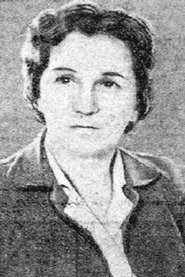
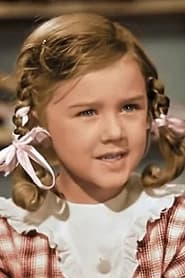
The film was produced during the height of Stalin's era, when Soviet cinema was heavily regulated but also well-funded. Director Tatyana Lukashevich was one of the few prominent female directors working in the Soviet film industry at the time. The production faced challenges in portraying everyday Moscow life authentically while adhering to Soviet censorship requirements. Child actress Veronika Lebedeva was discovered through a talent search and this marked her film debut.
Themes
Innocence and wisdomUrban alienation and communityThe transformative power of childhoodFinding family in unexpected placesThe individual vs. society
Themes & topics
lost childMoscowurban adventurehuman connectioncomedy-dramafamily separationcommunitytransformationinnocencecity life
Historical background
Viewers who saw The Foundling in 1939 experienced it within the conventions of pre-war filmmaking. The film was a production of Mosfilm based on the script by Rina Zelyonaya and Agniya Barto and was released on 27 January 1940. It was one of the first Russian family films.
Why this film matters
Film clubs and archives revisit The Foundling as part of broader pre-war programming. The Foundling (Russian: Подкидыш, romanized: Podkidysh) is a 1940 comedy drama directed by Tatyana Lukashevich.
Making of
The making of 'The Foundling' occurred during a complex period in Soviet cinema history. Director Tatyana Lukashevich fought to maintain the film's gentle humanistic tone against pressure to include more overt socialist realism elements. The casting of young Veronika Lebedeva involved an extensive search through Moscow schools, as Lukashevich wanted a natural, untrained child performance. The production team received special permission to film on actual Moscow streets, a rare privilege that required government approval due to security concerns. Faina Ranevskaya, already a celebrated stage actress, was convinced to take a supporting role through the personal intervention of the studio director. The film's score was composed by Isaak Dunayevsky, one of the Soviet Union's most famous composers, who created a memorable theme that became popular in its own right.
What critics said
Surviving reviews and later retrospectives treat The Foundling as representative pre-war fare—valued for craft even when not hailed as a masterpiece.
Did you know?
- This was one of the last Soviet films released before World War II heavily impacted Soviet cinema production
- Director Tatyana Lukashevich was one of only three women directing feature films in the Soviet Union during the 1930s
- Faina Ranevskaya, who appears in the film, would later become one of the Soviet Union's most beloved comic actresses
- The film was temporarily withdrawn from circulation during the war years but was re-released in 1945
- Child actress Veronika Lebedeva never appeared in another film after this one, choosing to pursue education instead
- The Moscow street scenes were filmed on location, which was unusual for Soviet films of the period that typically used studio sets
- The film's theme of finding family in unexpected ways resonated with wartime Soviet audiences
- Original prints of the film featured color tinting in certain scenes, though most surviving copies are black and white
- The film was screened at the 1939 Venice Film Festival, though it did not win any awards
- Pyotr Repnin, who plays the bachelor, was a renowned stage actor from the Moscow Art Theatre
Visual style
The cinematography by Yuri Rozkov employed naturalistic lighting techniques that were relatively advanced for Soviet cinema of the period. The film features extensive location shooting in Moscow, capturing the city's architecture and street life with documentary-like precision. Rozkov used deep focus compositions to emphasize the relationship between characters and their urban environment. The camera work during the child's wandering sequences employs a lower angle perspective, helping viewers experience Moscow from a child's point of view. The film's visual style balances the gritty realism of street photography with the polished look of studio scenes, creating a seamless narrative flow. The cinematography also makes effective use of Moscow's changing light conditions throughout the day, using natural light to enhance the emotional tone of different scenes.
Innovations
The Foundling demonstrated several technical innovations for Soviet cinema of its era. The film pioneered the use of portable sound equipment for location shooting in Moscow's busy streets, allowing for more authentic ambient sound in urban scenes. The production team developed new techniques for filming with child actors, including special camera mounts that could follow a small child at eye level. The film's editing style, which crosscuts between the searching parents and the wandering child, was considered sophisticated for its time and influenced later Soviet films. The movie also experimented with subtle sound design techniques to create emotional subtext, using background city noises to enhance the feeling of isolation in certain scenes. These technical achievements contributed to the film's reputation as one of the more professionally crafted Soviet productions of 1939.
Music
The musical score was composed by Isaak Dunayevsky, one of the Soviet Union's most celebrated composers known for his work on popular musicals and comedies. The soundtrack features a memorable main theme that became popular in its own right and was often played on Soviet radio. Dunayevsky's score masterfully balances light, playful motifs for the child's scenes with more melancholic themes for the lonely adults she encounters. The music incorporates elements of Russian folk melodies while maintaining a contemporary Soviet sound characteristic of the period. The soundtrack also includes several diegetic music sequences, such as street musicians and festival music, that enhance the film's authentic Moscow atmosphere. The score's emotional range and accessibility contributed significantly to the film's popular success and remains one of its most praised elements.
Famous quotes
In this big city, even a small person can leave big footprints
Sometimes getting lost is how you find what you're looking for
A child's laughter is the only language everyone understands
Moscow is big enough to lose yourself, but small enough to be found
Memorable scenes
- The opening festival scene where Nastya becomes separated from her parents in the crowd
- The sequence where the little girl helps the lonely bachelor organize his apartment
- The emotional reunion scene in Moscow's central square
- The montage of Nastya's journey through different Moscow neighborhoods
- The final scene showing how all the characters' lives have been transformed
What audiences thought
The Foundling was popular with Soviet audiences upon its release, particularly with families who appreciated its gentle humor and emotional story. The film's re-release in 1945 after the war was met with even greater enthusiasm, as audiences found comfort in its message of hope and community during difficult times. The character of the lost child resonated deeply with viewers who had experienced family separations during the war years. In later decades, the film became a nostalgic favorite for those who remembered pre-war Moscow, serving as a visual document of the city's appearance before wartime destruction and reconstruction. The film's television broadcasts in the 1960s and 1970s introduced it to new generations, maintaining its popularity well into the Soviet era. Modern Russian audiences continue to discover the film through festival screenings and television broadcasts, with many praising its timeless themes and emotional authenticity.
Film connections
Influenced by
- Soviet socialist realism cinema
- Charlie Chaplin's 'The Kid' (1921)
- Italian neorealism aesthetics
- Moscow Art Theatre acting traditions
This film influenced
- Post-war Soviet family films
- Later Soviet films featuring child protagonists
- Contemporary Russian films about Moscow life
Film restoration
The film has been preserved in the Gosfilmofond archive in Russia. Several restoration projects have been undertaken, most notably in the 1990s and again in 2015. While the original camera negatives are believed to be lost, good quality 35mm prints exist. Some early color-tinted versions have been reconstructed from surviving elements. The film is considered to be in good preservation condition with complete visual and audio elements intact.
Where to watch
- Available on Russian streaming platforms like Kinopoisk
- Occasionally screened at Russian film festivals and retrospectives
- Available through specialized Soviet film distributors
- Screenings at film archives and cinematheques with Soviet film collections
- Some versions available on international art house streaming services