The Greatest Question
"Based upon a novel by William Hale, the film has a plot involving spiritualism"
Keys: Space play/pause · ←/→ 10s · F fullscreen · M mute · </> speed
About this film
Based upon a novel by William Hale, the film has a plot involving spiritualism.
Cast & crew
More films like this
More Drama films
View all →







More from D.W. Griffith
View all →
More about this film
About the production
Release dateOctober 26, 1919
Box officeModest commercial success, though not as profitable as Griffith's major epics
ProductionD.W. Griffith Productions, Artcraft Pictures Corporation
Filmed inHollywood, California, Griffith's studio at Sunset Boulevard
Filmed during Griffith's most productive period following 'Broken Blossoms' and before 'Way Down East'. The production utilized Griffith's stock company of actors and technicians. The film was shot relatively quickly, typical of Griffith's output during this period where he often produced multiple films simultaneously.
Themes
Themes & topics
orphanmurder witnessadoptionpovertymoral dilemmafamily bondsconfrontationredemptionchild protagonistmelodrama
Historical background
The Greatest Question (1919) circulated in the silent era. Based upon a novel by William Hale, the film has a plot involving spiritualism. Contemporary trade papers and later preservation notes document its place among nickelodeon and cinema-club programs.
Why this film matters
The Greatest Question remains accessible to researchers and viewers as a screen title in museum, archive, and streaming collections. Programmers cite it when tracing regional production history and surviving early prints.
Making of
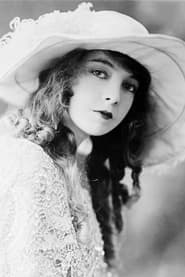
The production of 'The Greatest Question' took place during what many consider D.W. Griffith's creative peak period. Griffith was known for his meticulous attention to detail and often worked closely with his actors to develop their characters. Lillian Gish, who was Griffith's muse and frequent collaborator, brought particular depth to her portrayal of the young protagonist. The film was shot on Griffith's own studio lot, allowing him complete creative control. Griffith's working method during this period involved extensive rehearsals and multiple takes to achieve the emotional intensity he desired. The production team included cinematographer Billy Bitzer, Griffith's long-time collaborator who helped develop many of the visual techniques that became hallmarks of Griffith's style. The film's relatively modest scale allowed Griffith to focus on intimate character moments rather than the epic sequences that characterized his more famous works.
What critics said
Day-one reviews for The Greatest Question are sparse in digitized press archives; later criticism treats it as a reference point for 1919 cinema programming and preservation.
Did you know?
- This was one of several films D.W. Griffith made in 1919, demonstrating his incredible productivity during this period
- Lillian Gish and Robert Harron, who play siblings in the film, were frequent collaborators with Griffith and had appeared together in numerous films including 'The Birth of a Nation' and 'Intolerance'
- The film was released shortly after Griffith's major success with 'Broken Blossoms' (1919)
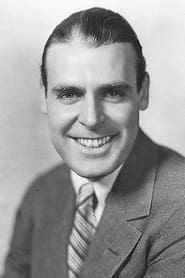
- Ralph Graves, who plays the romantic lead, would later become a successful actor in sound films and eventually a producer
- The film's title 'The Greatest Question' refers to the moral dilemma faced by the young protagonist about whether to reveal what she knows about the murder
- Unlike many of Griffith's epics, this was a more intimate, small-scale drama focusing on family dynamics and personal morality
- The film was part of Griffith's contract with Artcraft Pictures, a subsidiary of Paramount Pictures
- Contemporary reviews noted the film's emotional power despite its relatively simple plot
- The film's theme of an orphan finding a new family was one that Griffith would return to in later works
- The murder scene was considered particularly shocking for its time, though Griffith handled it with his characteristic restraint
Awards & recognition
- No major awards were given for this film as the Academy Awards were not established until 1929
Visual style
The cinematography by Billy Bitzer employs Griffith's characteristic use of close-ups to emphasize emotional moments, particularly in scenes featuring Lillian Gish. The film utilizes natural lighting for many interior scenes, creating a realistic atmosphere that contrasts with the more stylized lighting of Griffith's epics. Bitzer employs tracking shots to follow the young protagonist's movements through the Hilton home, creating a sense of intimacy and immediacy. The murder scene is shot with careful composition to suggest violence without explicit imagery, demonstrating Griffith's understanding of cinematic suggestion. The film's visual style is more restrained than Griffith's major works, focusing on subtle lighting changes and framing to convey emotional states.
Innovations
While not a groundbreaking technical achievement like some of Griffith's earlier works, 'The Greatest Question' demonstrates his refinement of existing techniques. The film makes effective use of cross-cutting between the innocent protagonist and the menacing antagonists, building tension through parallel editing. Griffith employs varying shot distances to control audience perspective, using long shots for establishing scenes and close-ups for emotional impact. The film's pacing shows Griffith's mastery of narrative rhythm, building gradually to its dramatic climax. The production also demonstrates the increasing sophistication of set design and lighting in 1919, with realistic interior settings that enhance the story's emotional authenticity.
Music
As a silent film, 'The Greatest Question' would have been accompanied by live musical performance during its original theatrical run. The typical score would have included classical pieces and popular songs of the era, selected to match the emotional tone of each scene. Griffith often provided detailed musical suggestions for his films, and this production likely included cues from composers like Chopin and Beethoven for dramatic moments. The score would have emphasized the film's emotional arc, with lighter themes for the family scenes and more dramatic music for the confrontation with the murderers. Some theaters may have used compiled scores while others employed organists or small orchestras to provide live accompaniment.
Famous quotes
'Little Miss Yes'm' - Nellie's nickname reflecting her polite, obedient nature
'The greatest question is whether to speak or remain silent' - implicit theme throughout the film
Memorable scenes
- The opening sequence where young Nellie witnesses the murder from hiding, establishing the film's central trauma. The scene where the Hilton family welcomes Nellie into their home despite their poverty, demonstrating the power of unconditional love. The climactic confrontation where Nellie must face her past while protecting her new family, showcasing her moral courage and growth.
What audiences thought
Audiences of 1919 responded positively to the film's emotional story and Lillian Gish's performance. The film performed respectably at the box office, particularly in smaller cities where Griffith's name still carried considerable weight. Contemporary newspaper accounts reported that audiences were moved to tears by the film's climax, indicating that Griffith's emotional storytelling techniques remained effective. The film's themes of family loyalty and moral courage resonated with post-war audiences seeking reassurance about traditional values. While it didn't generate the same level of public discussion as Griffith's more controversial works, it maintained his reputation as a director who could deliver both spectacle and intimate drama.
Film connections
Influenced by
- Victorian melodrama tradition
- 19th century literature about orphans
- Griffith's own earlier films about family
- Contemporary social reform movements
This film influenced
- Later Hollywood melodramas featuring child protagonists
- Films exploring trauma and memory in childhood
- Griffith's own later works with similar themes
Film restoration
The film exists in archives and has been preserved by film institutions including the Museum of Modern Art and the Library of Congress. While not as widely available as Griffith's major works, prints have been screened at film festivals and special retrospectives. Some versions may be incomplete or show signs of deterioration typical of films from this period.
Where to watch
- The film is occasionally screened at classic film festivals and special museum screenings
- Some archives may offer viewing access for research purposes
- Rare public domain versions may be found on specialized classic film websites
- DVD compilations of D.W. Griffith's lesser-known works sometimes include this film