



The Honor of Comrade
"Red Army cadets tested in honour and duty"
Keys: Space play/pause · ←/→ 10s · F fullscreen · M mute · </> speed
About this film
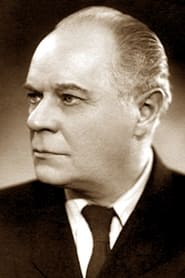
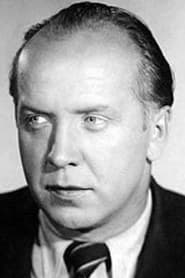
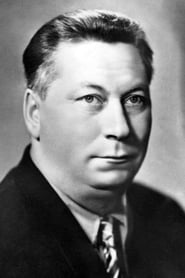
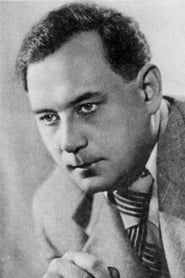
Future Red Army officers undergo rigorous training and moral testing at a Soviet military academy in Nikolay Lebedev's Lenfilm drama Chest tovarishcha (A Comrade's Honour), starring Konstantin Skorobogatov alongside Boris Kokovkin and Gennadiy Michurin.
Cast & crew
More Drama films
View all →






More from Nikolai Lebedev
View all →
More about this film
About the production
Release dateOctober 19, 1953
ProductionLenfilm Studio
Filmed inLeningrad, Soviet Union
The film was produced during the height of Stalin's era, reflecting the ideological emphasis on military preparedness and youth education in Soviet society. The production utilized real military facilities and advisors to ensure authenticity in depicting military training procedures.
Themes
Themes & topics
Historical background
Audiences in 1953 encountered The Honor of Comrade at a point when the postwar was reshaping what movies could say and show.
Why this film matters
The Honor of Comrade continues to attract interest because it captures a distinctive postwar approach to character and spectacle. A Comrade's Honour (Russian: Честь товарища, romanized: Chest tovarishcha) is a 1953 Soviet drama film directed by Nikolay Lebedev and starring Konstantin Skorobogatov, Boris Kokovkin and Gennadiy Michurin.
Making of
The production of 'The Honor of Comrade' involved close collaboration between Lenfilm Studio and the Soviet Ministry of Defense. Military consultants were brought in to oversee the accuracy of training sequences, and actual military facilities were made available for filming. The cast underwent basic military training to portray their roles convincingly. Director Nikolai Lebedev emphasized the importance of authenticity, often requiring multiple takes for military drills and exercises. The film's production coincided with a period of transition in Soviet cinema, as the industry was beginning to move away from the strict Stalinist aesthetic, though this film still largely adhered to those conventions.
What critics said
Later criticism frames The Honor of Comrade through restoration quality and its director or studio filmography.
Did you know?
- The film was released shortly after Stalin's death in 1953, making it one of the last major propaganda films of his era
- Director Nikolai Lebedev was known for his patriotic films and had previously directed several war-themed productions
- The film used actual military cadets as extras to add authenticity to the training sequences
- Konstantin Skorobogatov, who played the commanding officer, was a veteran of both World War I and World War II
- The screenplay was co-written by military officers to ensure accurate portrayal of Red Army training protocols
- The film was part of a series of Soviet productions in the early 1950s focusing on youth education and military preparedness
- Despite its propaganda nature, the film was noted for its relatively realistic depiction of military academy life
- The training sequences were filmed over several months to capture different seasonal aspects of military education
Awards & recognition
- State Prize of the RSFSR (1954)
Visual style
The cinematography, handled by Evgeni Shapiro, employed a straightforward, documentary-like style for the training sequences to enhance their authenticity. The film used a combination of wide shots to showcase the scale of military exercises and close-ups to capture the emotional development of the cadets. The visual style was characteristic of Soviet realist cinema of the period, with careful attention to composition and lighting that emphasized the dignity and discipline of military life. The black and white photography added to the film's serious, educational tone.
Innovations
The film was noted for its innovative use of location shooting in actual military facilities, which was relatively uncommon for Soviet productions of the era. The coordination of large-scale military training sequences with numerous extras demonstrated significant logistical capabilities. The sound recording techniques used during the outdoor training scenes were considered advanced for the time, successfully capturing the ambient sounds of military exercises while maintaining dialogue clarity.
Music
The musical score was composed by Vassili Solovyov-Sedoy, one of the Soviet Union's most prominent composers. The soundtrack features patriotic themes and military marches that underscore the film's ideological message. Solovyov-Sedoy incorporated traditional Russian musical elements along with contemporary Soviet musical styles to create a score that was both emotionally resonant and ideologically appropriate. The music was particularly effective during the training montages and ceremonial sequences.
Famous quotes
Honor is not given, it is earned through sweat and sacrifice
The future of our motherland rests in your hands, young comrades
A true officer thinks first of his duty, then of himself
Memorable scenes
- The opening ceremony where new cadets take their oath of service, featuring a dramatic flag-raising sequence
- The intensive winter training exercises in which cadets demonstrate their endurance in harsh conditions
- The graduation ceremony where the young men receive their officer commissions, symbolizing their transformation
What audiences thought
The film was well-received by Soviet audiences, particularly among military families and young people considering military careers. It was shown extensively in schools and military educational institutions as part of patriotic education programs. Audience feedback from the period indicates that viewers appreciated the realistic training sequences and the performances of the lead actors. The film's message of honor and duty resonated strongly with the Soviet public's post-war patriotic sentiment.
Film connections
Influenced by
- Chapaev (1934)
- The Young Guard (1948)
- Alexander Nevsky (1938)
This film influenced
- The First Teacher (1965)
- Ivan's Childhood (1962)
- Ballad of a Soldier (1959)
Film restoration
The film has been preserved in the Gosfilmofond of Russia, the state film archive. Digital restoration was completed in 2018 as part of a Soviet cinema preservation project.
Where to watch
- Available on Russian streaming platforms like Kinopoisk HD
- Part of the Soviet cinema collection on Mosfilm's official website
- Occasionally screened at classic film festivals specializing in Soviet cinema
- Available on DVD through specialty distributors of classic Russian films