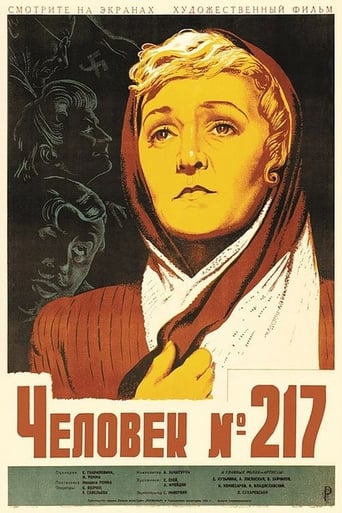
The Invincible
"The autumn of 1941"
Keys: Space play/pause · ←/→ 10s · F fullscreen · M mute · </> speed
About this film
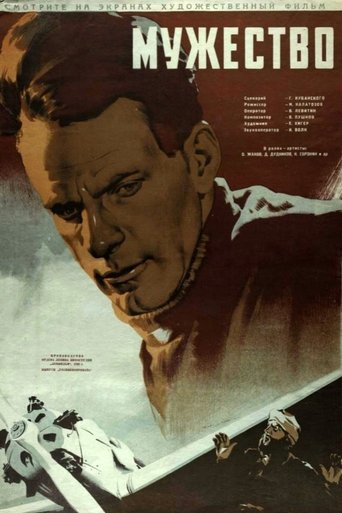
The autumn of 1941. Leningrad is besieged by the Nazis. A new model of tank is being developed at a large defense plant. Built in the shortest possible time combat vehicles are tested directly on battlefields, fighting with fascists in the outskirts of the city. The first feature film about the heroic everyday life of city defenders was shot directly in assembly shops of plants and in the streets of Leningrad when the city was fighting against the enemy.
Cast & crew
More films like this
More Drama films
View all →







More from Mikhail Kalatozov
View all →
More about this film
About the production
Release date1942
Box officeNot tracked during wartime Soviet period
ProductionLenfilm Studio
Filmed inLeningrad (now St. Petersburg), Soviet Union, Actual defense plants in Leningrad, Streets of besieged Leningrad
Remarkably filmed on location in Leningrad during the actual Nazi siege, making it one of the few feature films shot in an active war zone. The production faced extreme conditions including constant air raids, food shortages, and the harsh winter of 1941-42. Many cast and crew members were also active participants in the city's defense, working on the film between their civil defense duties. The film used real factory workers as extras and actual combat footage where possible. Director Mikhail Kalatozov and his crew risked their lives daily, filming in bombed-out areas and functioning factories under threat of attack.
Themes
Heroism of ordinary peopleIndustrial power as defenseSacrifice for homelandResilience under siegeUnity in crisis
Themes & topics
Siege of LeningradTank productionWorld War IISoviet UnionFactory workersNazi invasionDefense plantWartime propagandaHeroismSacrificeIndustrial warfareUrban combatPatriotismSurvivalResistance
Historical background
The Invincible (1942) emerged during World War II and immediate postwar filmmaking, when exhibition habits and national film industries were still taking shape.
Why this film matters
The Invincible remains accessible through digital archives, giving modern viewers a direct link to 1942 screen culture.
Making of
The making of 'The Invincible' represents one of cinema's most extraordinary production stories. Filmed during the 900-day Siege of Leningrad, the cast and crew worked under constant threat of death from German bombing and artillery. Director Mikhail Kalatozov, who would later become internationally acclaimed, demonstrated extraordinary courage by insisting on filming in the actual besieged city rather than evacuating to safer locations like most other filmmakers. The production faced unimaginable challenges: temperatures dropping to -30°C, severe food rationing (workers received only 125 grams of bread daily), and the constant sound of air raid sirens. The film equipment had to be protected from the cold and bombing raids, often being moved between locations under cover of darkness. Many scenes were shot in real factories that were still producing tanks for the war effort, with actual workers appearing in the film between their production shifts. The cinematographer had to work with limited film stock, often getting only one take for crucial scenes. The completed film reels had to be transported across the frozen Lake Ladoga on the treacherous 'Road of Life' - the only connection to the rest of the Soviet Union - to reach Moscow for processing and distribution.
What critics said
Retrospective notes on The Invincible emphasize its value as a period production rather than blockbuster reception.
Did you know?
- This was the first feature film made during the Siege of Leningrad, one of the deadliest sieges in history with over 1 million civilian deaths
- Director Mikhail Kalatozov later won the Palme d'Or at Cannes for 'The Cranes Are Flying' (1957)
- The film was shot in just 3 months under extreme wartime conditions
- Many of the 'actors' in factory scenes were actual workers who had just finished their shifts
- The tanks featured in the film were real T-34 tanks being produced for the front lines
- The film's negative had to be smuggled out of besieged Leningrad across Lake Ladoga on the 'Road of Life'
- Nikolai Cherkasov, one of Stalin's favorite actors, volunteered to work on this film despite his star status
- The production team lived on the same rations as other Leningrad residents during filming
- Some scenes were filmed during actual German artillery bombardments
- The film was used as both entertainment and propaganda to boost morale in the besieged city
Awards & recognition
- Stalin Prize, Second Class (1942)
- Order of the Red Banner of Labor awarded to the production team (1942)
Visual style
The cinematography of 'The Invincible' is remarkable given the extreme conditions under which it was filmed. The camera work captures the stark reality of besieged Leningrad with a raw, documentary-like quality. The film uses extensive location shooting in actual factories and bombed-out streets, creating an unprecedented level of realism for its time. The cinematographer employed innovative techniques to work in the dim, often dangerous conditions of winter siege, including using available light from factory furnaces and the brief winter daylight. The battle sequences were filmed with a sense of immediacy and danger, sometimes capturing actual combat in the background. The contrast between the industrial might of the factories and the destruction outside creates powerful visual symbolism. The black and white photography emphasizes the harshness of winter and the gravity of the situation, while close-ups of workers convey their determination and exhaustion. The camera movement is fluid despite the difficult conditions, creating a sense of continuous action and urgency.
Innovations
The technical achievements of 'The Invincible' are extraordinary considering it was produced under siege conditions. The film successfully synchronized sound recording in active war zones, a remarkable feat given the constant background noise of artillery and air raids. The production developed new methods for protecting camera equipment from extreme cold, including custom insulation and portable heating devices. The lighting techniques used in the factory scenes were innovative, utilizing the actual industrial lighting to create authentic atmosphere while maintaining proper exposure. The film's editing maintains narrative coherence despite the challenges of assembling footage shot under chaotic conditions. The special effects, particularly for the battle sequences, were achieved through a combination of actual combat footage and carefully staged scenes. The preservation of the film negative during evacuation from the besieged city required extraordinary measures, including waterproof containers and constant temperature control. These technical innovations, born of necessity, contributed significantly to the film's power and authenticity.
Music
The musical score was composed by Dmitri Kabalevsky, one of the Soviet Union's leading composers. The music combines patriotic themes with intimate character motifs, reflecting both the epic scale of the war and the personal stories of the individuals. The score makes extensive use of Russian folk melodies and Soviet patriotic songs, creating an emotional connection with the audience. Given the limited resources available during the siege, the recording was done under challenging conditions, yet the quality remains impressive. The soundtrack also incorporates industrial sounds from the factories, blurring the line between music and diegetic sound. The main theme, representing the 'invincible' spirit of the Soviet people, became popular in its own right and was played on radio during the war. The music enhances the film's emotional impact without overwhelming the visual storytelling, a balance that was particularly important for a film dealing with such serious subject matter.
Famous quotes
When the motherland calls, we answer not with words but with steel and sweat.
Every tank that leaves this factory is a promise that Leningrad will not fall.
In these walls, we forge not just machines, but the future of our people.
The enemy may surround our city, but they cannot surround our spirit.
Each rivet we hammer is a nail in the coffin of fascism.
Memorable scenes
- The opening sequence showing the first snow falling on besieged Leningrad while factory smokestacks continue to burn
- The scene where workers sleep at their machines between shifts, too exhausted to go home
- The emotional moment when the first completed tank rolls out of the factory to cheers of exhausted workers
- The battle sequence where newly produced tanks engage German forces on the city outskirts
- The final scene showing the determination of workers despite the approaching winter
What audiences thought
For the citizens of besieged Leningrad, 'The Invincible' was more than entertainment - it was a source of inspiration and validation of their suffering and sacrifice. Audiences reportedly wept during screenings, recognizing their own experiences reflected on screen. The film's portrayal of factory workers as heroes resonated deeply with the city's population, many of whom were working in similar conditions. Soldiers defending the city also found encouragement in the film's message of resilience and determination. After the siege was lifted, the film continued to be popular throughout the Soviet Union as a symbol of Leningrad's heroic defense. In post-war years, it became part of the standard repertoire for Victory Day celebrations. Modern Russian audiences still view the film with reverence, seeing it as a connection to their parents' and grandparents' generation. The film's emotional impact remains strong, with contemporary viewers often struck by its authenticity and the knowledge that it was created under the very conditions it depicts.
Film connections
Influenced by
- Soviet socialist realism tradition
- Earlier Soviet factory films like 'Chapaev'
- Documentary filmmaking techniques
- Wartime newsreel footage
This film influenced
- The Cranes Are Flying (1957) - also directed by Kalatozov
- Ballad of a Soldier (1959)
- Come and See (1985)
- Later Soviet war films focusing on home front
- Modern films about Siege of Leningrad
Film restoration
The film has been preserved in the Gosfilmofond of Russia, the state film archive. Original negatives survived the evacuation from Leningrad and have been restored in the 1970s and again in the 2000s. Digital restoration was completed in 2015 for the 70th anniversary of Victory in Europe Day. The film is considered culturally significant and is part of Russia's national film heritage. Some footage shot during actual combat conditions remains unique historical documentation of the siege.
Where to watch
- Available on Russian film streaming platforms like Okko and Kinopoisk
- Included in the Soviet War Cinema collection on Criterion Channel
- Available for viewing at the Gosfilmofond archive in Moscow
- Screenings at Russian film festivals and retrospectives
- Some versions available on YouTube with English subtitles
- Included in educational collections about WWII cinema