
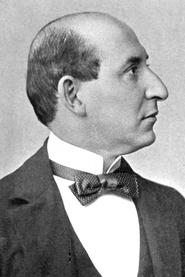
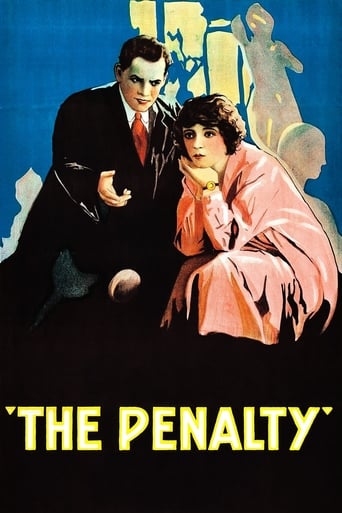
The Light in the Dark
"A young girl is struck and seriously injured by a wealthy society matron's car."
Keys: Space play/pause · ←/→ 10s · F fullscreen · M mute · </> speed
About this film
The woman brings the girl back to her house. Later, a hardened thief is told by the girl of a goblet, that could be the Holy Grail, which has healing powers and could help her. The thief, touched by h A still exists showing Lon Chaney in the role of Tony Pantelli.
Cast & crew
More films like this
More Drama films
View all →







More from Clarence Brown
View all →



More about this film
About the production
Release dateOctober 29, 1922
ProductionGoldwyn Pictures Corporation
Filmed inLos Angeles, California, Goldwyn Studios
The film was produced during the transition period when Samuel Goldwyn was forming his new studio. The production utilized elaborate sets for the society scenes and location shooting for the darker urban environments. The Holy Grail prop was reportedly crafted with great detail to appear authentic and mysterious on screen.
Themes
Themes & topics
Historical background
Made in 1922, in United States, under Clarence Brown, The Light in the Dark belongs to drama film filmmaking amid the silent era's rapid stylistic experiments. The Light in the Dark is a 1922 American silent drama film directed by Clarence Brown and stars Lon Chaney and Hope Hampton.
Why this film matters
Within drama film history, Clarence Brown's name attaches to the work; surviving prints help researchers study silent-era craft; 1922 film by Clarence Brown.
Making of
The production faced challenges in creating the contrast between the wealthy society world and the criminal underworld. Director Clarence Brown, who would later become renowned for his character-driven dramas, worked closely with his actors to develop the emotional depth of their performances. Lon Chaney, already developing his reputation for intense character work, reportedly studied real thieves and criminals to prepare for his role. The film's climax involving the Holy Grail required careful staging to maintain suspense while respecting the religious themes. The production design team created elaborate sets for Mrs. Van Twiller's mansion, which contrasted sharply with the grimy urban environments where Tony Bellardi operated.
What critics said
Contemporary reviews of The Light in the Dark are sparse in open sources; later catalog entries chiefly summarize plot and credits.
Did you know?
- This was one of Lon Chaney's earlier films before his breakthrough role in 'The Hunchback of Notre Dame' (1923)
- The film was based on a story by playwright Winchell Smith, who was known for his successful Broadway productions
- Hope Hampton was a former opera singer and socialite who transitioned to acting, making this one of her early film roles
- Director Clarence Brown was relatively new to directing at this time, having previously worked as an assistant to Maurice Tourneur
- The film's theme of redemption through faith was unusual for crime dramas of the early 1920s
- The Holy Grail element added a supernatural dimension that was rare in contemporary crime films
- E.K. Lincoln was a popular leading man of the silent era who would retire from acting in the late 1920s
- The film was released just as the Hollywood studio system was solidifying under major players like Goldwyn
- Contemporary advertisements emphasized the film's moral and spiritual elements alongside its dramatic crime plot
- The production coincided with the growing fascination in America with medieval legends and Arthurian mythology
Visual style
The film's cinematography, typical of early 1920s productions, used dramatic lighting to create contrast between the different worlds depicted in the story. The society scenes were shot with softer, more elegant lighting to convey luxury and refinement, while the criminal underworld sequences used darker, more shadowy techniques to create atmosphere and tension. The cinematographer employed close-ups effectively to capture the emotional states of the characters, particularly in scenes involving the injured child and the tormented thief. The Holy Grail sequences used special lighting effects to suggest the object's mystical properties.
Innovations
The film utilized standard technical practices of the early 1920s but was notable for its effective use of cross-cutting between parallel storylines to build suspense. The production design was particularly strong in creating the contrast between different social worlds. The film's special effects for the Holy Grail sequences, while modest by later standards, were effective in suggesting the object's mysterious properties. The makeup work, particularly for Lon Chaney's character transformation, demonstrated the growing sophistication of cosmetic techniques in silent cinema.
Music
As a silent film, 'The Light in the Dark' would have been accompanied by live musical performance during its theatrical run. The score likely combined popular songs of the era with classical pieces to match the film's emotional tone. For the dramatic crime sequences, tense, rhythmic music would have been used, while the more sentimental moments would have featured softer, more romantic themes. The Holy Grail scenes would have been accompanied by more mysterious, ethereal music to enhance the supernatural elements of the story.
Famous quotes
'The Grail can heal... it can save her...'
'Even a thief can find redemption in helping an innocent'
'Light... that's what they call me... but the darkness is coming'
Memorable scenes
- The dramatic car accident that sets the plot in motion
- The thief's emotional decision to steal the Holy Grail for the child
- The climactic confrontation as the thief presents the goblet to the dying girl
- The transformation of the hardened criminal as he witnesses the child's faith
What audiences thought
The film received moderate success at the box office, appealing to audiences who enjoyed both crime dramas and sentimental melodramas. Contemporary audience reports suggest that viewers were particularly moved by the relationship between the thief and the injured child, as well as the film's moral message about redemption. The combination of Lon Chaney's growing popularity and the unusual Holy Grail storyline helped generate interest in the film. However, it was not among the biggest hits of 1922, which was dominated by spectacles and major star vehicles. The film's themes resonated with audiences of the time who were drawn to stories of moral transformation and the possibility of redemption even for the most hardened individuals.
Film connections
Influenced by
- Victor Hugo's 'Les Misérables' (for the redemption theme)
- Arthurian legends (for the Holy Grail element)
- Contemporary crime dramas of the early 1920s
- Social melodramas contrasting rich and poor
This film influenced
- Later crime films with redemption arcs
- Films combining crime with supernatural elements
- Social dramas exploring class differences
Film restoration
Unfortunately, 'The Light in the Dark' (1922) is considered a lost film. No complete copies are known to exist in any film archives or private collections. This is not uncommon for silent films from this period, as many were destroyed due to the unstable nature of early film stock or were deliberately discarded when sound films became popular. Only a few production stills and promotional materials survive to give us some idea of the film's appearance.
Where to watch
- As a lost film, 'The Light in the Dark' is not available for viewing in any format. Film enthusiasts can only learn about it through historical documentation, production stills, and contemporary reviews available in film history archives and specialized cinema libraries.